
Travel destination
Leepa Valley: Red Rice and Wooden Houses on the Line of Control
A high, terraced valley in Azad Jammu and Kashmir's Jhelum Valley district, known for red rice, walnut and apple orchards and old Kashmiri timber houses.
- Jhelum Valley district, Azad Jammu and Kashmir
- Valley floor about 1,900 m
- Best season late April to November
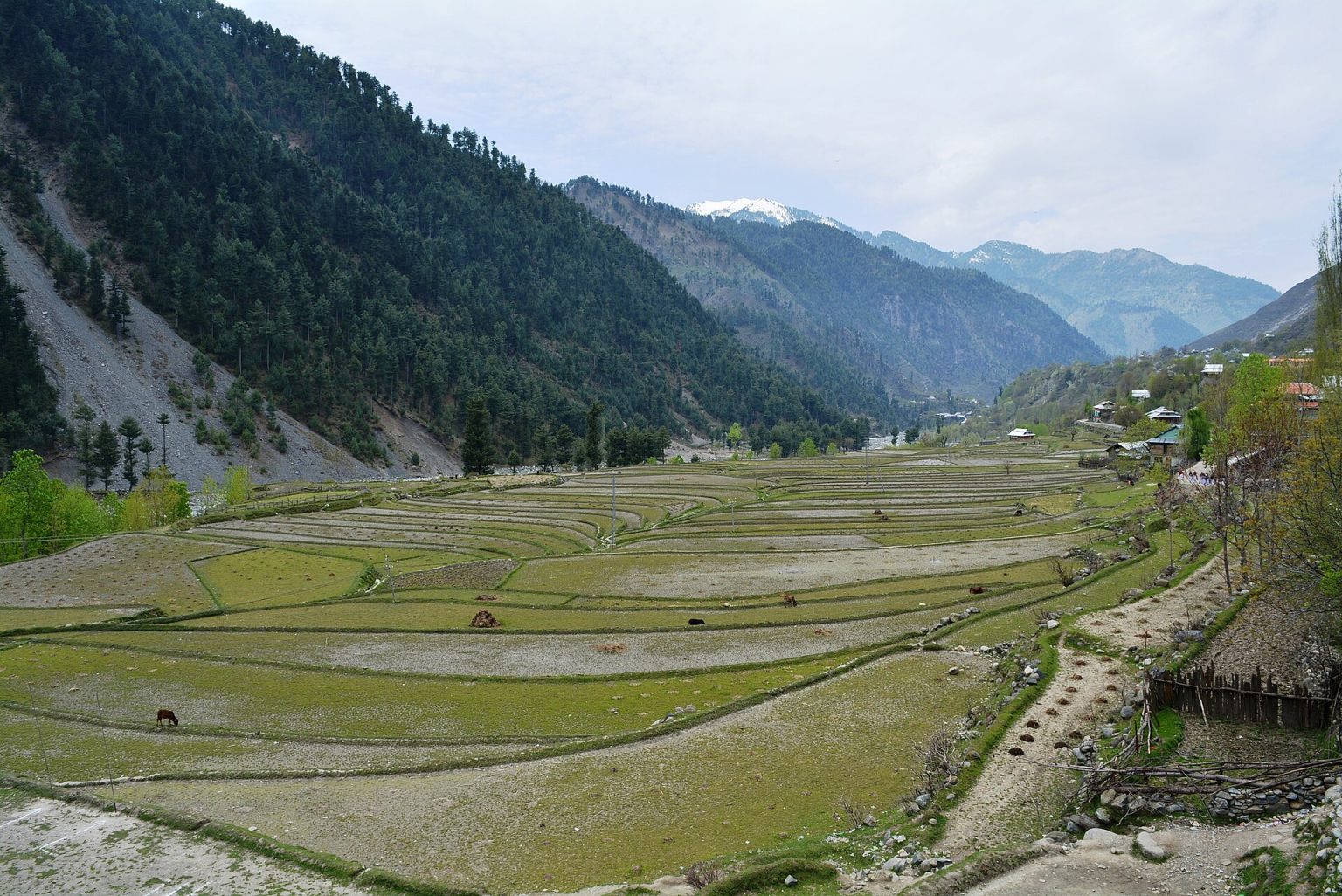
Rice terraces, Leepa Valley
About Leepa Valley
Leepa is a long, green valley east of Muzaffarabad, in the Jhelum Valley district of Azad Jammu and Kashmir, the part of Kashmir administered by Pakistan. It lies right against the Line of Control, the ceasefire line that divides the disputed region, and army posts on both sides can be seen from parts of the valley. That position kept Leepa off most travel itineraries for decades; it is a place to visit thoughtfully and only after checking the latest guidance.
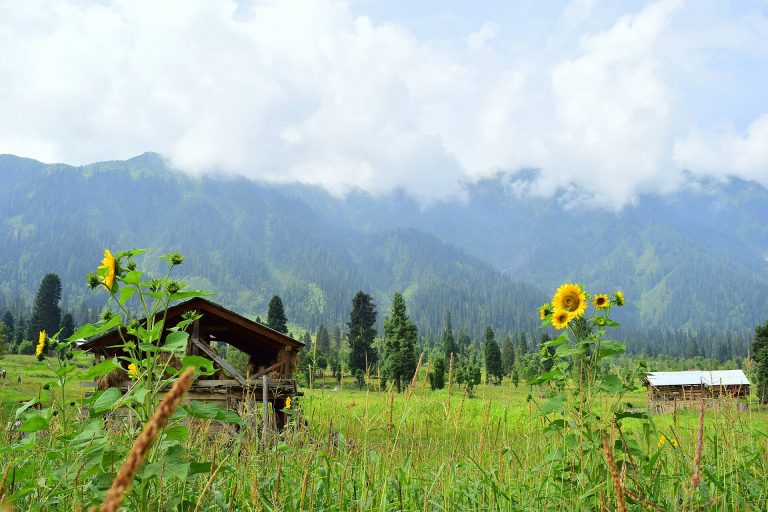
The reward is a landscape that feels quite unlike the busier Neelum Valley to the north. The road crosses forested ridges and the high meadows of Dao Khan before dropping to a valley floor at about 1,900 metres, where rice is grown in flooded terraces. Leepa is especially known for its red rice, along with red beans, wheat, walnuts, apples and apricots, and for honey from a small local bee. In May and June the paddies shine with water; by August they are a deep green, and the harvest falls around September and October.
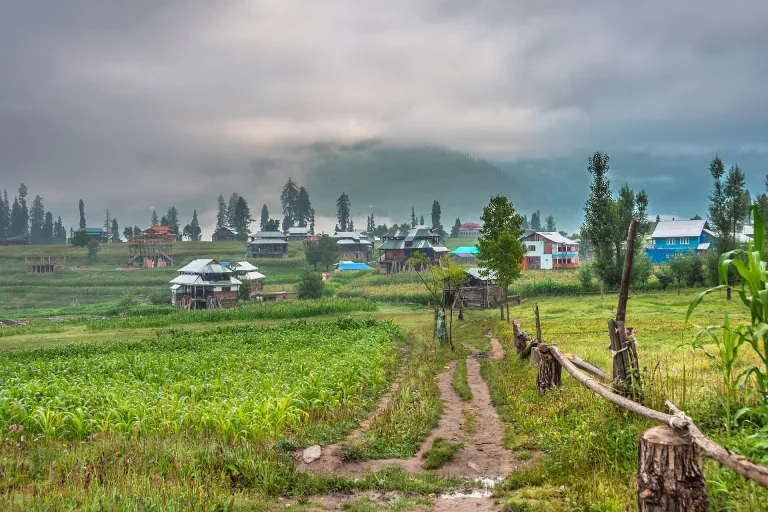
Villages here keep the traditional Kashmiri style of timber building, with carved wooden houses and water-powered mills for grinding rice and wheat. Kashmiri is widely spoken, alongside Pahari, Hindko and Gojri. Facilities are simple and the valley is snowbound in winter.
Highlights
 Nokot rice fieldsThe best-known terraces in the valley, at their greenest in August.
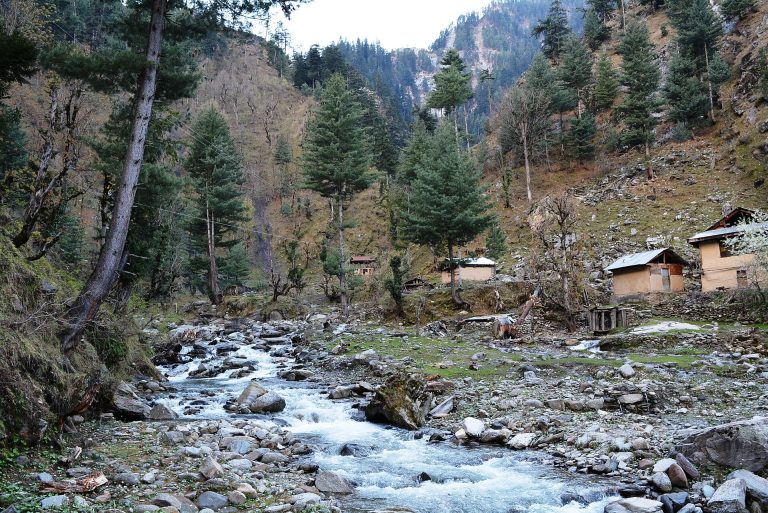 MojiThe first village reached on the new road into Leepa, with views over the valley floor.
Plan Your Trip
Best Time to Visit
Late April to November
Flooded paddies in May–June, lush green in August, harvest in September–October. In winter the valley is snowbound and reachable only by 4x4 when roads are open.
How to Reach
Muzaffarabad – Hattian Bala – Reshian
Follow the Jhelum road from Muzaffarabad past Hattian Bala, cross the river and climb to Reshian. From there, a newer metalled road runs via Moji into Leepa; an older jeep track descends to Nokot and needs a 4x4.
Where to Stay
Guest houses
The AJK Tourism Department runs a guest house at Dao Khan, and Leepa has a few small guest houses. Some lack hot water or modern washrooms, ask before booking.
Local Food
Red rice and Kashmiri cooking
Look for local red rice, lobia (red beans), walnuts and honey; meals are simple and home-style.
Documents
ID checked at Reshian
Identity documents are checked at the security post at Reshian. Carry your CNIC, or passport and visa.
Advisories
Line of Control area
Leepa lies on the Line of Control. Foreign governments advise against travel near it; see the advisory below.
Before You Go
Access to the valley depends on the security situation and roads, check with official sources close to your travel date.
- 1
Check whether the valley is open
Access has been suspended at times because of tension on the Line of Control, floods and road closures. Check with the AJK Tourism & Archaeology Department (ajktourism.gov.pk) and local authorities in Muzaffarabad or Hattian Bala before setting out.
- 2
Confirm permits and entry rules
The valley has been open to Pakistani nationals with a valid CNIC; foreigners face separate restrictions in AJK and near the LoC. An NOC is needed for some areas, such as Bara Hazari. Confirm rules with the AJK Tourism & Archaeology Department or the Pakistan Tourism Development Corporation (tourism.gov.pk).
- 3
Check road and weather status
Snow and landslides close the roads over Reshian and Dao Khan. Ask your guest house or driver the day before, and do not rely on map apps, which may show the old jeep track.
- 4
Read the travel advisories
Foreign visitors should read the UK FCDO (gov.uk/foreign-travel-advice/pakistan) and US State Department (travel.state.gov) advice for Pakistan, which can affect travel insurance, and follow local authority guidance.
Suggested Itinerary
Two to three days from Muzaffarabad.
- 1
Day 1: Into the valley
Drive from Muzaffarabad along the Jhelum to Hattian Bala and Reshian, cross Sher Gali and stop at Dao Khan before descending to Leepa.
- 2
Day 2: Villages and fields
Walk the Nokot terraces, visit the wooden houses near Kasirkot and the mills at Channian.
- 3
Day 3: Return
Drive back to Muzaffarabad, or continue to Pir Chinasi for views over the city.
Travel Responsibly
- Do not fly drones near the Line of Control, military posts or checkpoints; drone use is limited to a few places.
- Never photograph soldiers, posts or installations.
- Keep to paths along the edges of paddies and orchards.
- Ask before photographing people or entering homes.
- Buy local rice, honey and walnuts directly from growers.
Travel Advisories
Azad Jammu and Kashmir is administered by Pakistan within the wider disputed Kashmir region. The UK FCDO advises against all but essential travel to Azad Jammu and Kashmir and against all travel within 10 miles of the Line of Control, which covers Leepa. The US State Department tells its citizens not to travel to the immediate vicinity of the Line of Control for any reason. These warnings may affect travel insurance. Cross-border firing has affected the valley in the past; check current advisories and follow local authority guidance.
Frequently Asked Questions
Can foreigners visit Leepa Valley?
Leepa is on the Line of Control, where foreigners face restrictions and foreign governments advise against travel. Check with AJK authorities and read your government's advice before planning.
Do I need a 4x4?
A newer metalled road via Moji is passable by ordinary vehicles in good weather. The old jeep track to Nokot, and the roads in winter, need a 4x4.
When are the rice fields at their best?
Paddies are flooded in May and June, green in August and harvested around September and October.
Where can I stay?
The AJK Tourism guest house at Dao Khan and a few small guest houses in the valley. Facilities are basic.
What is Leepa known for?
Red rice, walnuts, apples, local honey and traditional Kashmiri wooden houses.
Keep Exploring
Related places and stories on DailyLife.pk
 Neelum ValleyNeelum Valley travel guide: Keran, Sharda Peeth, Kel, Arang Kel, Ratti Gali Lake and Taobat
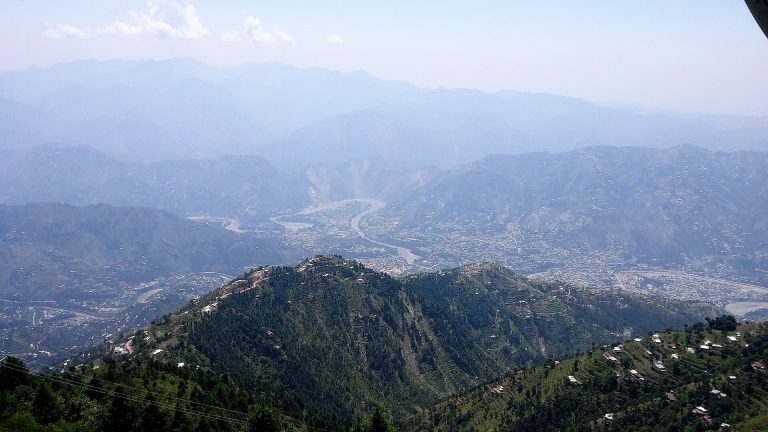 Pir ChinasiPir Chinasi near Muzaffarabad, AJK: altitude, the Bukhari shrine, road and trek, paragliding, best season, snow
 MuzaffarabadMuzaffarabad city guide: the Red Fort, Domel confluence, Pir Chinasi, the 2005 earthquakeHattian BalaHattian Bala, Azad Kashmir: Jhelum Valley district HQ, the 2005 landslide lakes, Zalzal Lake and Chikar
 Rivers and Lakes of PakistanPakistan's rivers and lakes: the Indus and its tributaries, the Indus Waters Treaty, Attabad, Saiful Muluk
 Architecture of PakistanPakistan's architecture: Indus cities, Gandhara monasteries, Multan tombs, Mughal Lahore, Makli, mountain forts
How we know this
- Type Travel guide
- Sources 8 (4 official/academic)
- Reviewed October 2026
- Disputed points None
Rules and fees change, confirm with the official links below before you act.
8 sources
- Leepa Valley – a hidden vale of Kashmir, The Express Tribune
- Snow, landslides: roads leading to Leepa, Neelum valleys blocked, The Express Tribune
- Leepa Valley (archived page), Azad Jammu & Kashmir Council
- AJK Tourism & Archaeology Department, Government of Azad Jammu and Kashmir
- Pakistan Tourism Development Corporation, Government of Pakistan
- Leepa Valley (used to locate primary sources), Wikipedia
- Pakistan travel advice – warnings and insurance, UK Foreign, Commonwealth & Development Office
- Pakistan Travel Advisory, U.S. Department of State
Photo credits (5)
- Rice Terraces in Leepa Valley.jpg, Obaid Hassan Qureshi, CC BY-SA 4.0, via Wikimedia Commons
- Moji, Leepa Valley.jpg, Obaid Hassan Qureshi, CC BY-SA 4.0, via Wikimedia Commons
- Muzaffarabad, Azad Kashmir, Pakistan.jpg, Fiaz3300, CC BY-SA 4.0, via Wikimedia Commons
- View of Muzaffarabad from Pir Chinasi.jpg, Abdul Moueed Haroon, CC BY-SA 4.0, via Wikimedia Commons
- Arang Kel, Neelum Valley, Azad Jammu & Kashmir, Pakistan.jpg, Nadeem Riaz, CC BY-SA 4.0, via Wikimedia Commons
