
Travel · Attractions
Look beyond the dining square
Look closely at thresholds, religious buildings and later presentation work in a village that remains someone’s neighbourhood.
- Read the details
- Plan the approach
- Respect the fabric
Saidpur Village, Islamabad
Begin with the settlement, before choosing a table
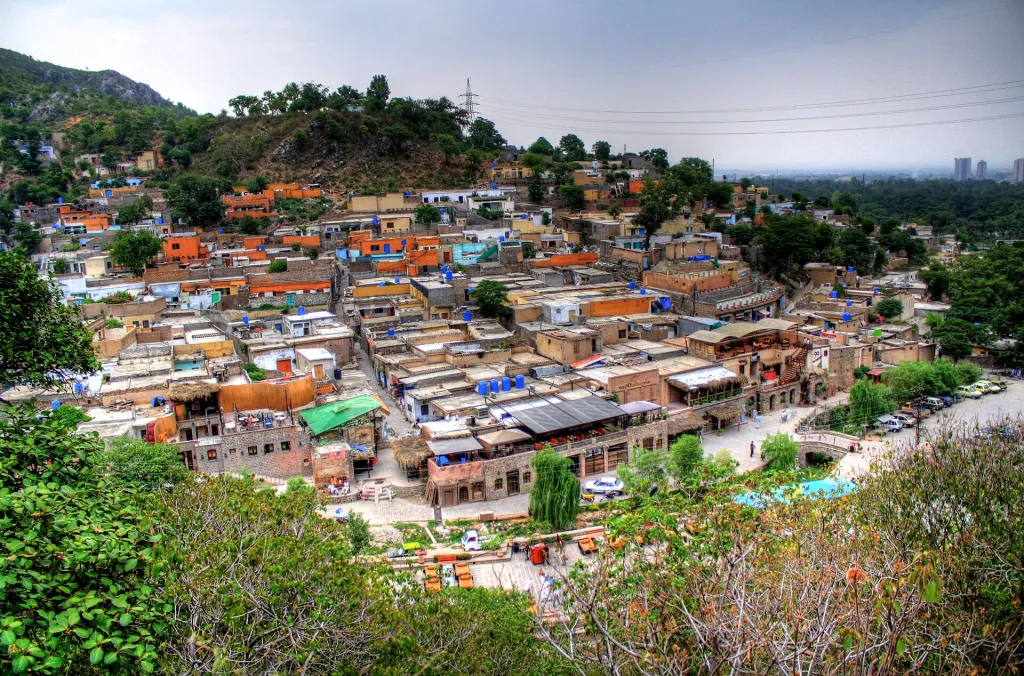
Saidpur is easy to approach as a place for a meal beneath the Margalla Hills. A more rewarding visit begins with the settlement around the restaurants: changes in level, lanes, shared space and buildings whose uses have changed. Choose a public standing place and look at the relationship between the open visitor area and the narrower approaches beyond it. The first is designed for arrival; the second may lead towards ordinary domestic life. Neither should be treated as an empty stage.
This guide concentrates on how to read those boundaries and the preserved religious group, rather than retelling every founding story attached to the village. Set one modest aim: identify a threshold, a surface treatment and a documented change of use. A small number of carefully understood details will reveal more than an ambitious hunt for traces of every civilisation named in tourism descriptions.
Use the 2006 decision as a historical anchor
A parliamentary answer published in February 2016 records that the Capital Development Authority declared Saidpur a tourist village in 2006. It describes preservation of a Hindu temple, a gurdwara and a dharamshala as heritage. This gives a firm administrative anchor for understanding the visitor setting: the village’s presentation is partly the result of a modern heritage initiative. It should not be mistaken for an untouched survival of one historical period.
Keep that distinction visible as you walk. An old structure, a later repair and a recently arranged visitor space can all stand together. Ask what a sign actually dates: a settlement, a particular building, a renovation or a tourist project. Those are different subjects. Without a dated inscription or reliable building history, an attractive doorway cannot establish the age of the entire street.
Treat the religious buildings as distinct histories
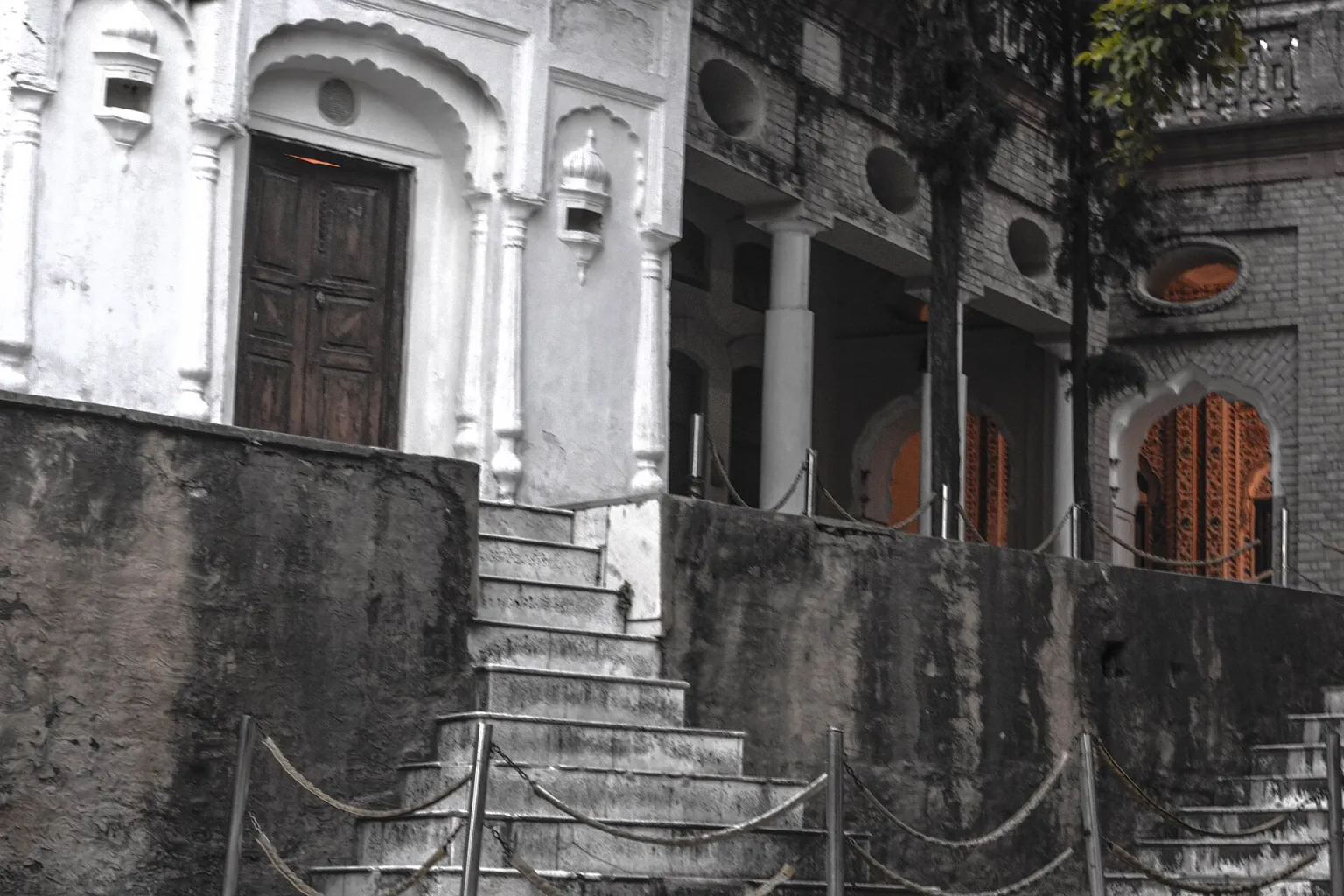
The temple, gurdwara and dharamshala deserve individual attention. Their grouping allows a visitor to consider how different religious and communal institutions occupied a shared settlement. It does not establish that every structure has the same date, patron or original function. Read the building name first, then any accompanying explanation. Photograph a label with its setting so that a later caption does not detach a religious identification from the object it describes.
The 2016 parliamentary response described these buildings as preserved heritage rather than functioning worship facilities at that time. That is a historical record, not a guarantee about arrangements today. Confirm current permission before entering or photographing interiors. Avoid assigning a deity to an unlabelled niche, or describing a room as a shrine simply because of its shape. Where the evidence ends, leave the identification open.
Read thresholds and changes in scale
A threshold is more than a doorway. It can be a step, a narrowing lane, an edge between a square and a courtyard, or the place where a visitor route meets a private entrance. Look at one transition from a respectful distance. How does the width change? Is the next space visible from outside? Does a door mark a household boundary even when the wider lane feels public? These are useful questions about the present settlement.
Do not convert present circulation into a confident account of the Mughal period. A surviving alignment might have been reused, changed or newly surfaced. Compare what you can see with what a dated plan would be needed to prove. This approach keeps the walk specific without inventing an ancient route. It also helps families agree on where to stop instead of spreading into narrow entrances.
Look at plaster, colour and repairs without dating by eye
Choose a wall visible from the public route and compare its sheltered and exposed portions. Plaster may catch light differently from masonry; painted edges may emphasise an opening. Notice texture and junctions rather than touching or scraping them. A smooth surface can represent later maintenance, while a rough one may reflect weathering or an intentional finish. Appearance alone does not reliably separate historic material from recent work.
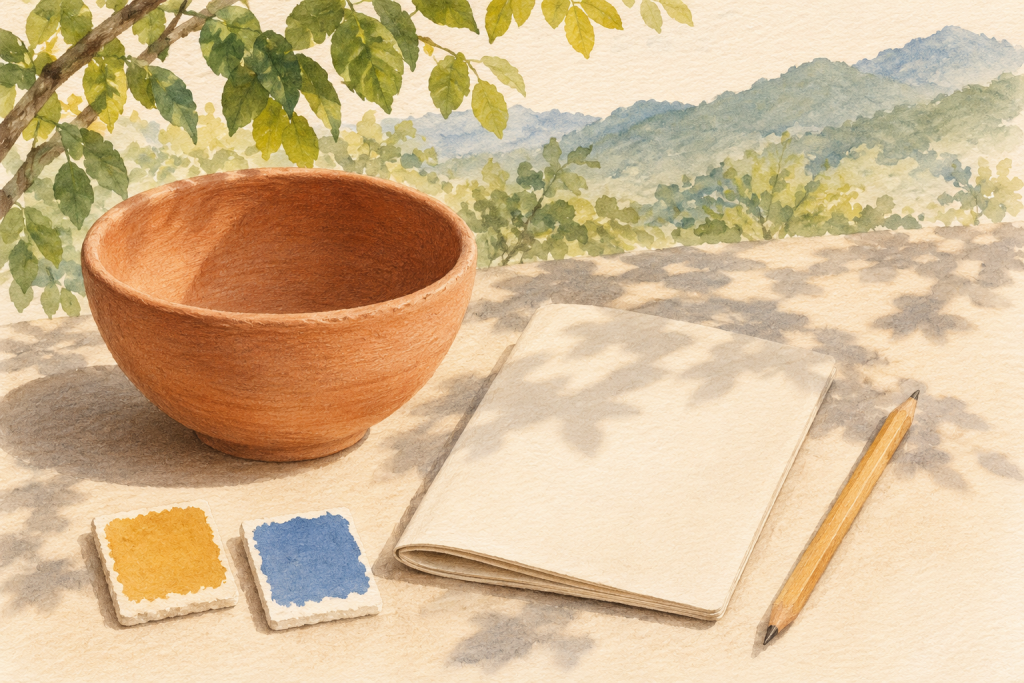
A useful observation note describes rather than diagnoses: pale plaster beside a darker masonry joint, for example. A claim that the plaster is original requires a conservation record. The modern material arrangement illustrated here is only a prompt for looking at surfaces; its objects were not collected at Saidpur. Never remove a fragment to make a comparison, and keep bags and camera straps away from projecting decoration.
Make room for pottery and ordinary work
Associated Press of Pakistan’s heritage reporting, drawing on archaeology officials, identifies handmade pottery among Saidpur’s associations. That is a useful invitation to notice craft, but it should not become a claim that every bowl on sale was made in the village or follows an uninterrupted ancient tradition. Ask a vendor where an object was made and distinguish the answer from a documented provenance. Buying a contemporary object is different from collecting archaeological material.
If a workshop is operating and welcomes visitors, observe the present work on its own terms. Do not interrupt a task, reposition tools or demand a demonstration for a photograph. A quiet conversation, when invited, can be more informative than a staged picture. Attribute any subsequent account accurately; a vendor’s description is their account, not a substitute for a researched history of the whole settlement.
Understand why the visitor landscape can change
CDA’s April 2026 account of cooperation with Azerbaijani specialists specifically mentions renovation and beautification at Saidpur. The announcement confirms activity and official intent at that date; it does not certify that every proposed element is finished. Paths, planting, approaches and the appearance of a visitor area can therefore differ from older photographs. Build the visit around what is open and clearly permitted on arrival.
When you see a fresh surface or a barrier, avoid guessing the project phase. Follow posted instructions and ask the responsible staff about the available route. An announcement about beautification is also not a detailed conservation specification for each historic building. Keep landscape presentation and treatment of older fabric as separate questions. That distinction makes it easier to appreciate improvements while still asking precise questions about heritage.
Choose a manageable season and approach
For a slow outdoor walk, a cool, dry day generally reduces the strain of exposed lanes and changes in level. Check the actual forecast, rain and air quality before leaving Islamabad. After rain, be prepared to shorten the walk if surfaces are slippery. Arrive with drinking water, footwear with grip and a plan for where everyone will regroup. A restaurant reservation does not settle access to heritage interiors.
Confirm the current vehicle approach, lawful parking and drop-off arrangements independently. For a visitor using a wheelchair or with limited stamina, ask about the specific route from drop-off to the intended building, including steps and gradients. Broad photographs cannot answer those questions. Keep a shorter public-space visit available as an option, and do not promise a complete circuit until the group has seen the actual conditions.
Leave with three careful observations
Before leaving, compare your initial impression with three things you can substantiate: the distinction between public and domestic thresholds, the names recorded for the religious buildings, and evidence of later presentation work. If an old photograph is displayed, note its caption and date before using it to identify a change. The value lies in connecting an image with a specific viewpoint, rather than assuming it records every building nearby.
Saidpur becomes more interesting when its past and present are allowed to coexist. Give residents room to pass, request consent for identifiable portraits, and keep noise down around religious structures. A visit can end with a meal, but it need not be defined by one. The memorable part may be recognising how a preserved building, a working lane and a newly arranged visitor space tell different parts of the settlement’s story.
Frequently Asked Questions
Is Saidpur only a restaurant destination?
No. The preserved religious group, settlement thresholds and changing visitor landscape support a focused heritage walk.
Are the temple and gurdwara currently functioning?
The parliamentary record describes heritage preservation arrangements in 2016. Confirm present use and entry locally rather than treating that record as a current access notice.
Can I date buildings from their paint or plaster?
No. Surface appearance can prompt questions, but dating requires documentation and assessment of the building’s fabric.
Can I explore every lane?
Use public routes and respect private thresholds. Ask before entering a courtyard, workshop or religious interior.
How we know this
- Type Practical guide
- Sources 3 (2 official/academic)
- Reviewed November 2026
- Disputed points None
Rules and fees change, confirm with the official links below before you act.
3 sources
- National Assembly questions, 22 February 2016: Saidpur heritage buildings, National Assembly of Pakistan
- Pakistan, Azerbaijan Strengthen Ties as Baku Experts Lead Islamabad Beautification Projects, Capital Development Authority
- Historical Saidpur village attracts visitors, Associated Press of Pakistan
Photo credits (2)
- Saidpur 1.jpg, Zaidimazhar1214, CC BY-SA 4.0, via Wikimedia Commons
- Saidpur Village View.jpg, a8junea, CC BY-SA 3.0, via Wikimedia Commons
