
Travel · Attractions
Begin with birthplace and living devotion
Understand Guru Nanak’s birthplace association, Sikh visiting customs and the separate access questions facing domestic visitors and international pilgrims.
- Read the details
- Confirm the approach
- Respect the setting
Gurdwara Janam Asthan, Nankana Sahib
Begin with birthplace and living devotion
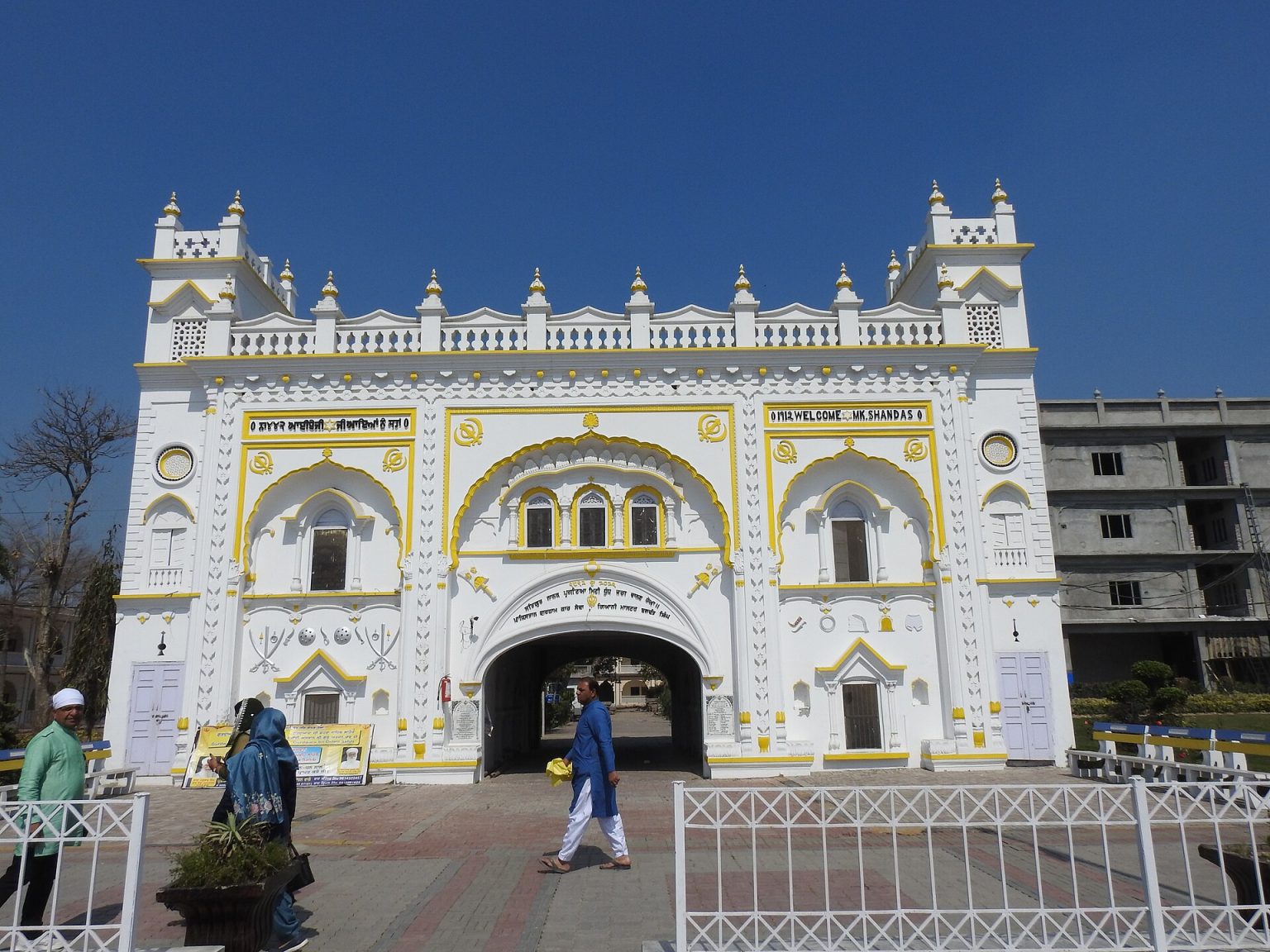
Gurdwara Janam Asthan in Nankana Sahib is associated with the birthplace of Guru Nanak, founder of Sikhism. The district administration places it within an ensemble of important gurdwaras in the town and identifies the complex as protected heritage. Those two facts explain why the visit involves more than admiring a dome: the building is part of a continuing sacred geography.
Start by understanding which space you are approaching and who manages entry. A visitor’s first task is to follow the administration’s directions, rather than to make a complete circuit for photographs. For a Sikh pilgrim, the journey may have a devotional purpose shaped by a particular programme. For a domestic visitor of another faith, a heritage visit still requires respect for worship, congregation and the authority of the local management.
Do not confuse the remembered birthplace with every visible wall
The site’s association with Guru Nanak’s birth does not mean every visible structure survives from his lifetime. A sacred place can retain its identity while buildings, surfaces and circulation arrangements develop through later patronage and repair. The district source establishes the birthplace association; it does not provide a detailed construction chronology for every component you might see.
Read inscriptions or interpretation panels where available, and ask a knowledgeable guide which evidence supports a proposed date. Separate the age of the religious association from the age of a particular wall, gateway or finish. This also makes photographs more useful. A caption can identify the complex and the view without inventing a construction year. An honest general identification is preferable to a precise but unsupported attribution to a ruler or donor.
Understand the Guru Granth Sahib before entering the hall
The Shiromani Gurdwara Parbandhak Committee explains that the Guru Granth Sahib occupies the position of the living Guru in Sikh religious life. This is why the prayer hall is not simply a room containing a display object. The raised setting, respectful behaviour and movement around it belong to worship. Understanding that relationship makes ordinary visitor instructions easier to follow thoughtfully.
Watch for directions from the attendants before choosing where to stand or sit. Avoid stepping into the focus of the congregation to obtain a symmetrical picture. If you need an explanation, wait for an appropriate moment and ask quietly. You can observe without imitating a religious act for the camera. The point of learning about another tradition is to understand its significance, not to turn its sacred gestures into a travel performance.
Prepare clothing, shoes and belongings
SGPC guidance calls for shoes to be removed, the head to be covered and appropriate cleanliness before sitting before the Guru Granth Sahib. Bring a clean scarf or suitable cloth rather than assuming one will be available. Follow local instructions about where footwear belongs and where washing is required. Clothing should allow you to sit or move comfortably while remaining modest.
Sikh guidance also excludes tobacco and intoxicants from gurdwara premises. Check pockets and bags before arrival, and arrive sober. Keep belongings compact so they do not block a passage or inconvenience people seated nearby. If you have a mobility limitation and cannot sit on the floor, ask an attendant what arrangement is suitable. Do not treat another gurdwara’s seating practice or an online visitor photograph as a guarantee of the arrangement here.
Read the courtyard as a working religious space
Where access is permitted, look at how thresholds, open spaces and the prayer area organise arrival and congregation. A courtyard is not empty simply because it contains no formal museum display. It can accommodate movement, waiting and religious gatherings, and its significance changes with the day’s activities. Stand back before deciding where a photograph or explanation would cause the least interruption.
Notice the relationship between scale and use: the width of a passage, a shaded edge, the approach to a doorway. These are observation prompts, not claims that every present feature has an ancient origin. Do not enter a closed room or staff area in search of a more complete architectural story. If decorative surfaces are out of reach, use your eyes or a permitted camera zoom rather than touching or climbing.
Keep international Sikh pilgrimage rules separate
ETPB publishes information about pilgrimage visas connected with the 1974 India–Pakistan protocol. Its page is a starting point for understanding that a cross-border yatra has its own documentary and administrative framework. It is not a promise that a particular group can cross a border, attend a festival or enter every shrine on a chosen date. Current requirements must be checked with the responsible Pakistani mission and ETPB for the traveller’s nationality and circumstances.
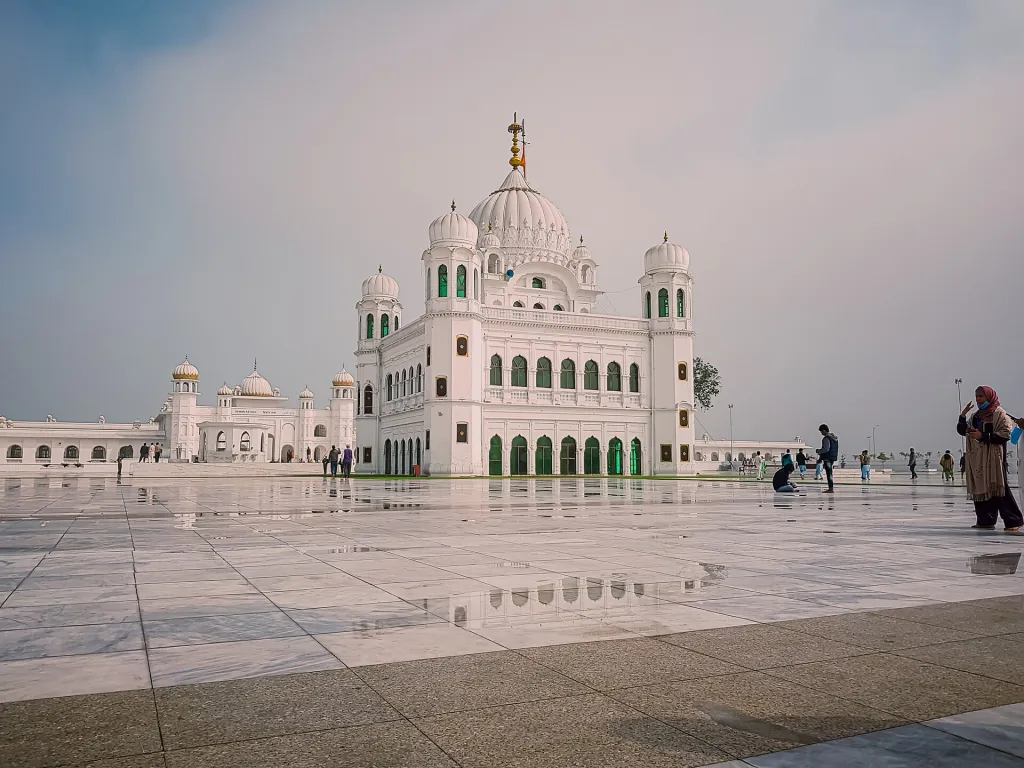
Do not assume the Kartarpur Corridor provides access to Nankana Sahib. These are different destinations and arrangements. Likewise, do not buy transport on the assumption that a past festival programme remains in force. Confirm the approved route, documentation, organiser and dates directly. A visa category, a border operation and permission to enter a managed sacred complex are separate questions.
Ask the right questions as a domestic visitor
A Pakistani resident making a domestic heritage visit is not applying for an international Sikh pilgrimage visa merely to approach Nankana Sahib. That distinction does not establish unrestricted entry to Janam Asthan. Ask the complex administration or ETPB whether your proposed visit is permitted, what identification is required, whether advance coordination is needed and which areas are open to your visitor category.
Do this before arranging a fixed itinerary for a school group, family party or photography project. Explain the number of people and the purpose of the visit accurately. Security arrangements and religious programmes can affect movement independently of ordinary tourism expectations. If entry is unavailable, respect that decision. Do not seek a side entrance or present yourself as part of a pilgrim group to bypass the rules.

Treat langar and photography with care
SGPC describes langar as a communal meal expressing equality. If invited to participate and the local arrangements permit it, follow volunteers’ directions about seating, receiving food and clearing the space. Take only what you can eat and keep the meal separate from a photography exercise. Volunteering should also be coordinated rather than assumed; a busy service needs people to follow its working method.
Ask about cameras before recording the prayer hall, a procession or the community kitchen. A person serving a meal or praying has not agreed to become the subject of an online post. Keep phones silent and avoid blocking a doorway while checking images. If photography is restricted, a written note made later can preserve what you learned without disrupting the congregation or testing the patience of the people responsible for the site.
Build a visit around confirmed access
Plan transport and return arrangements after confirming entry, rather than fitting the gurdwara into an inflexible sequence of stops. Carry water for the journey and leave time for arrival procedures. Ask about the full accessible route if anyone needs help with steps, thresholds, walking distances or seating. The cited sources do not establish current opening hours, fees, accommodation availability or a festival access promise, so none is supplied here.
A worthwhile visit may be brief. Learn the birthplace association, understand the place of the Guru Granth Sahib and notice how the complex supports worship and gathering. Keep those observations distinct from any later historical claim. The strongest memory to carry away is an informed encounter with a living Sikh institution, accompanied by accurate names and respect for the limits set by its custodians.
Frequently Asked Questions
Is Janam Asthan the birthplace shrine of Guru Nanak?
Yes. Nankana Sahib’s district administration identifies it with Guru Nanak’s birthplace and records its protected heritage status.
Does Kartarpur Corridor entry include Nankana Sahib?
Do not assume that. They are distinct destinations and arrangements; confirm your approved route and permissions with the responsible authorities.
Do domestic visitors need an international pilgrimage visa?
That visa concerns cross-border travel. Domestic visitors must separately confirm local identification, coordination and entry requirements.
How should I dress?
Wear modest comfortable clothing, bring a clean head covering and follow local directions about shoes and washing. Tobacco and intoxicants do not belong on gurdwara premises.
How we know this
- Type Practical guide
- Sources 5 (2 official/academic)
- Reviewed November 2026
- Disputed points None
Rules and fees change, confirm with the official links below before you act.
5 sources
- Gurdwara Nankana Sahib, District Administration Nankana Sahib
- Pilgrimage Visa, Evacuee Trust Property Board
- Sri Guru Granth Sahib, Shiromani Gurdwara Parbandhak Committee
- Gurdwara, Shiromani Gurdwara Parbandhak Committee
- Guide to Visiting a Gurdwara, The Sikh Coalition
Photo credits (2)
- The Gurdwara Janam Asthan in Nankana Sahib, Pakistan. 01.jpg, Harvinder Chandigarh, CC BY 4.0, via Wikimedia Commons
- Gurdwara Darbar Sahib Kartarpur 04.jpg, Shahzaib Damn Cruze, CC BY-SA 4.0, via Wikimedia Commons
