
Travel · Attractions
Two sites, very different periods
Distinguish Kot Diji’s Talpur fort from the much earlier archaeological settlement, and understand what each contributes to the history of Khairpur’s landscape.
- Read the built landscape
- Observe from permitted paths
- Check current access
Kot Diji, Khairpur district, Sindh
Begin by naming two different places
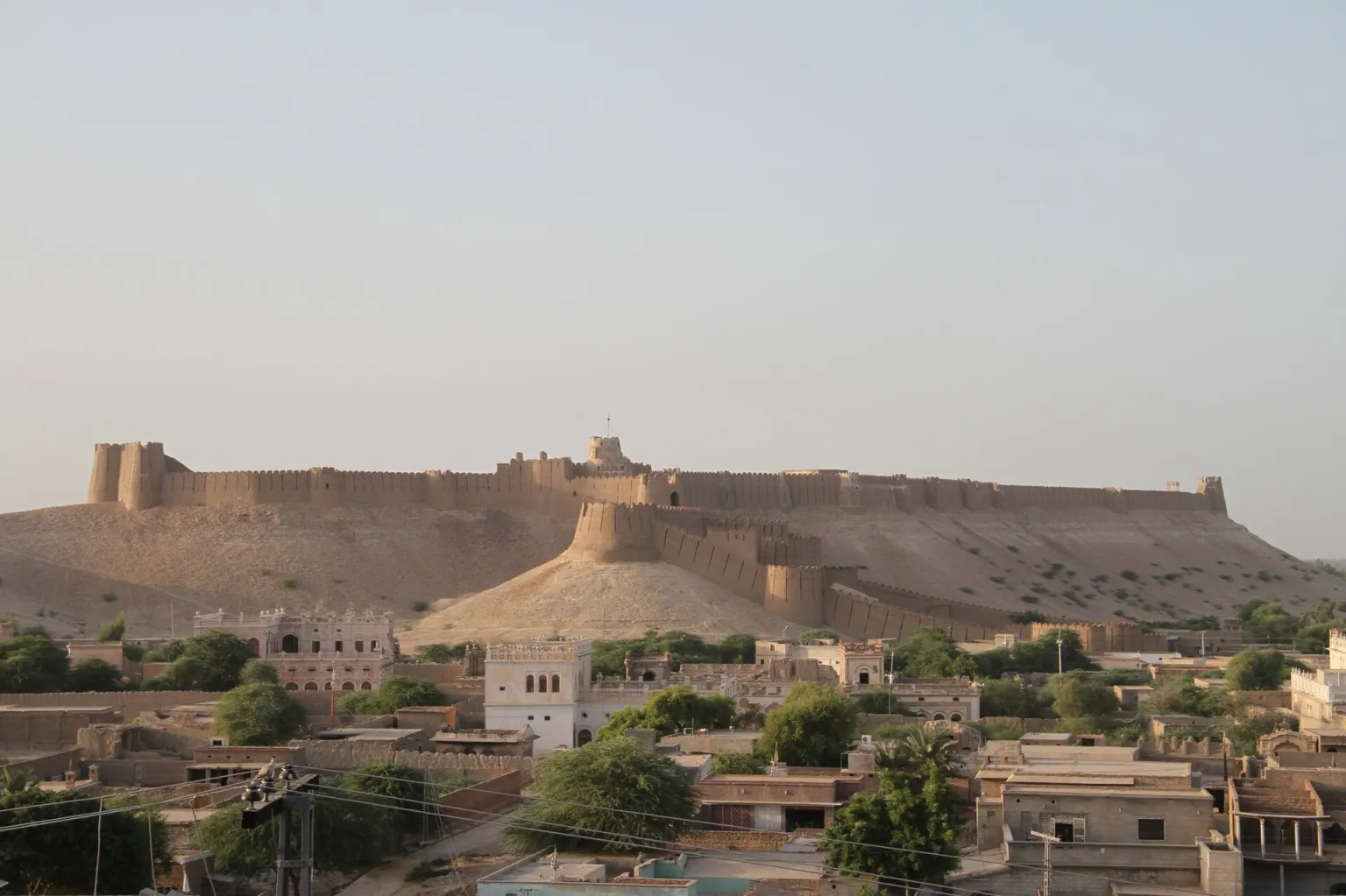
Kot Diji can mean a town, a striking hilltop fort or the much earlier archaeological settlement nearby. Those meanings are easily blurred in travel writing. Start with two separate entries in your notebook: the Talpur-period fort, also known as Qila-e-Ahmadabad, and the prehistoric mound or settlement, identified by Sindh’s antiquities department as Diji ji Takri. They belong to the same broad landscape but answer different historical questions.
The fort’s high walls do not demonstrate what an Early Harappan town looked like, and the archaeological settlement is not simply an older courtyard inside the fort. A photograph captioned only “Kot Diji civilisation” can accidentally attach prehistoric dates to late eighteenth-century architecture. Before choosing a route or explaining a view to children, identify which place you mean. The distinction is the foundation for a worthwhile visit, not a specialist detail to add after the photographs have already been labelled.
Give the fort its own Talpur context
Pakistan’s current UNESCO Tentative List submission describes a fort commissioned by Mir Sohrab Khan on a limestone hill overlooking Kot Diji. Its summary gives 1797, while its authenticity section gives 1785–1795. These dates conflict within the same record. A late eighteenth-century Talpur foundation is the safest broad description; use 1797 only as the date stated in that submission’s summary, not as an uncontested construction date.
The fort belongs to the political and defensive history of Talpur Sindh. Its setting gives an immediate visual lesson in elevation and oversight: notice the difference between the enclosed hilltop and the routes and settlement below. This observation does not prove every detail of a siege or establish that a particular cannon was fired from a particular opening. Ask an interpreter which structures have documented functions and which are simply being described by appearance. Avoid letting the dramatic skyline carry the prehistoric story, because it is the wrong surviving architecture for that task.
Read the defensive approach through turns and levels
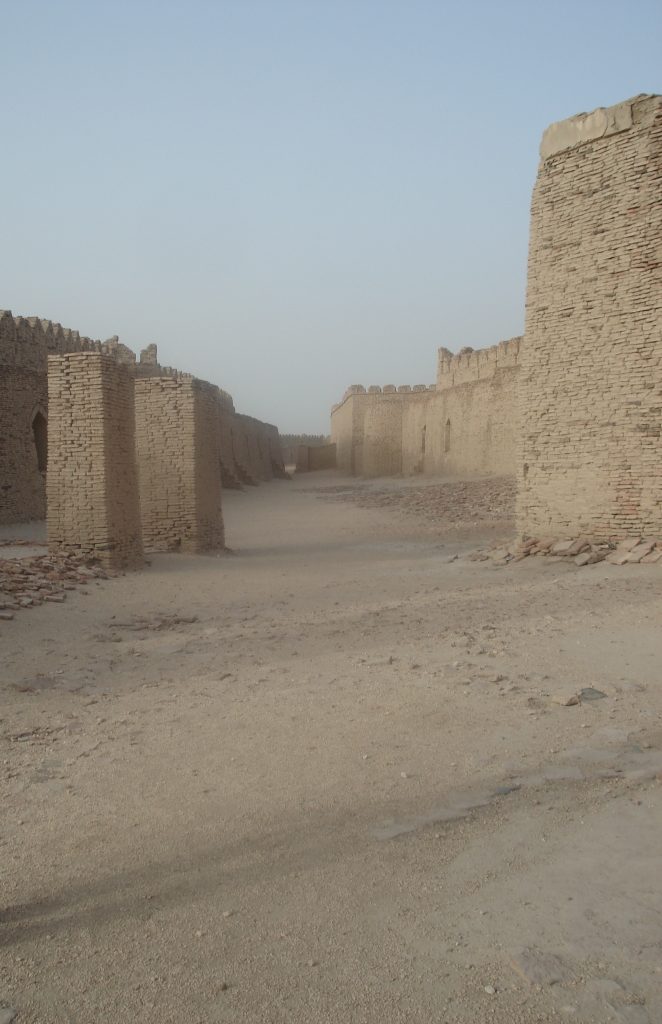
If a visit is appropriate and authorised, use the permitted approach to see how movement changes as you enter and climb. Observe turns, slopes, constricted passages and changes in the wall line. Describe what each does to sightlines and circulation before supplying a military explanation. A narrow stretch can feel defensive without proving a specific historical tactic was used there.
Photograph the approach from safe stopping points where other visitors can pass. Do not stand in a bottleneck to make an empty-looking image, and do not climb parapets for a wider view. From accessible ground, compare the wall with the hill that supports it: the structure and terrain work together. Where staff identify a gateway, bastion or internal building, note the name and location rather than assuming every opening is a firing position. The fort becomes easier to read when the route is treated as a sequence of spaces instead of a race to the highest viewpoint.
Look at brickwork and repairs without dating by colour
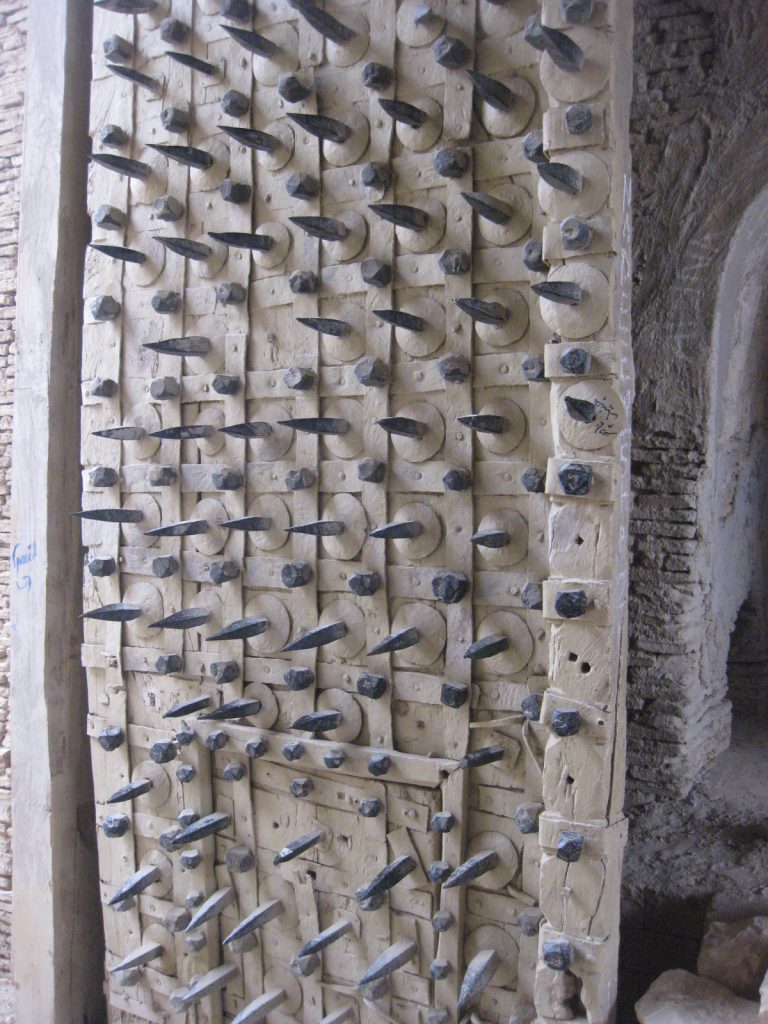
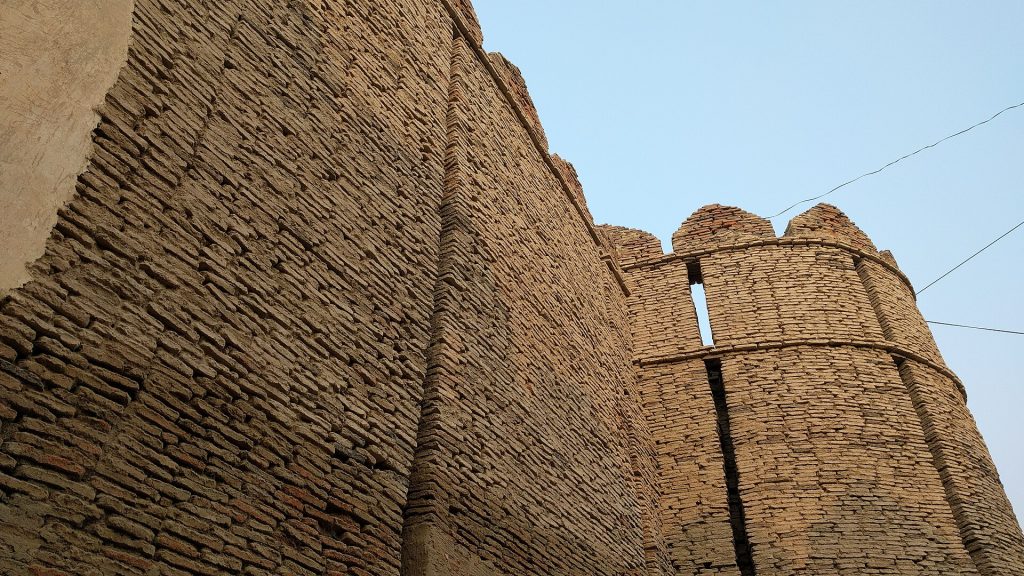
At the fort, take time to observe brick courses, joints and the transition between walls and underlying rock. A detail becomes informative when its larger location is known, so pair a close view with a wider one. Stay back from loose edges, patched surfaces and any work area. A monumental wall is not a safe handhold merely because it has stood for a long time.
Differences in colour, mortar texture or regularity can prompt questions about repair and exposure. They do not prove which portion dates to the first building campaign. Ask whether a conservation record or interpretive panel addresses the feature. Do not scrape a joint, dislodge material or press an object against a surface for scale. If you are interested in building technique, a careful written description and a photograph from the public route can preserve your question without damaging the evidence needed to answer it.
Give the archaeological mound equal intellectual attention
The earlier settlement is important for understanding developments before the mature cities of the Indus civilisation. Sindh’s antiquities account describes excavations revealing a cultural sequence, mud-brick houses and pottery associated with the pre-Harappan phase. These are archaeological findings, not features every visitor will necessarily recognise on the mound’s present surface. Do not promise a walk through an intact prehistoric town.
Use an official site plan or museum interpretation to understand the excavated areas and their chronology. The phrase “Kot Diji culture” is an archaeological classification, not a claim that the Talpur fort’s residents built the prehistoric settlement. Nor should a difference in pottery automatically become a story of one ethnic people replacing another. If access to the mound is limited, respect the boundary and continue through published records. The settlement’s significance does not depend on entering an excavation trench or holding a fragment of ancient pottery in your hand.
Use two timelines and one landscape view
A simple hypothetical learning exercise is to draw two unconnected timeline bands. Label one “prehistoric settlement” and the other “Talpur fort”. Add dates only from the source that actually discusses that place. Then draw a separate landscape sketch showing the relationship between hill, fort, town and the interpreted position of the mound. Keeping time and space on different sketches prevents proximity from becoming a false claim of continuity.
For a family group, ask one person to explain the fort using defensive architecture and another to explain why the mound matters using excavation evidence. Compare the words each account needs. The first may discuss walls and approach; the second must discuss deposits, pottery and sequence. This is a suggested exercise, not a report from a visit. It works equally well with reliable photographs and plans when travel is unsuitable, and it makes it easier to spot a misleading image caption in future reading.
Treat travel advice as part of the decision
Khairpur lies in northern Sindh. Checked on 7 November 2026, FCDO advice is against all but essential travel to Sindh north of and including Nawabshah. Kot Diji should therefore not be presented as a routine leisure recommendation without that context. Review current advice applicable to your nationality and circumstances, consult local authorities and check insurance implications before making plans.
If the journey is appropriate and authorised, ask the antiquities authority separately about access to the fort and mound, opening, admission, active conservation work and photography. No fixed price or timetable is verified here. Confirm transport and route conditions rather than treating an old driving-time estimate as a guarantee. The exposed climb and irregular surfaces also require realistic mobility planning, water and sun protection. A visitor who can manage a roadside photograph may not be able to reach all currently permitted internal areas; establish that difference before arrival.
Understand exactly what the UNESCO record says
Kot Diji Fort entered Pakistan’s UNESCO Tentative List on 18 March 2026. This is a proposal-stage record, not inscription on the World Heritage List. It names the fort. Do not transfer that status indiscriminately to the prehistoric settlement, and do not describe either place as a newly inscribed World Heritage property. Tentative List descriptions are submitted by the State Party and should be read with that provenance in mind.
Finish your account with captions that preserve the distinction: “Talpur fort at Kot Diji” for the late historical walls; “archaeological settlement at Kot Diji” for the earlier site when accurately identified. If a photograph’s location is uncertain, do not use it to teach a precise chronology. The strongest experience here is the recognition that one landscape contains several histories requiring different evidence. Carry that recognition into the next monument visit, where an imposing later building may again obscure a quieter but much older archaeological story.
Frequently Asked Questions
Is the fort an Early Harappan building?
No. The Talpur-period fort and the much earlier archaeological settlement are different sites and periods.
Is Kot Diji Fort a World Heritage Site?
The record checked here places it on Pakistan’s UNESCO Tentative List from 18 March 2026. That is not World Heritage inscription.
Does admission to one site guarantee access to the other?
No. Confirm the fort and archaeological mound’s arrangements separately with the responsible authority.
What current travel warning matters for Khairpur?
FCDO advice checked on 7 November 2026 is against all but essential travel to Sindh north of and including Nawabshah, which includes Khairpur.
How we know this
- Type Practical guide
- Sources 4 (3 official/academic)
- Reviewed November 2026
- Disputed points None
Rules and fees change, confirm with the official links below before you act.
4 sources
- Kot Diji Fort: Tentative List submission, 18 March 2026, UNESCO World Heritage Centre
- Diji ji Takri (Mound) Kotdiji, Khairpur, Directorate General of Antiquities, Government of Sindh
- Fort of Kotdiji, District Khairpur, Directorate General of Antiquities, Government of Sindh
- Pakistan: regional risks, checked 7 November 2026, UK Foreign, Commonwealth & Development Office
Photo credits (4)
- Kot Diji Fort by smn-.JPG, Smn121, CC BY-SA 3.0, via Wikimedia Commons
- Entry gate of Kot Diji Fort ready for any invader.jpg, Dr Munazza Suharwardy Obaid, CC BY-SA 3.0, via Wikimedia Commons
- Great Wall of Kot Diji.jpg, Ghulam Murtaza, CC BY-SA 4.0, via Wikimedia Commons
- Street inside Kot Diji Fort.jpg, Quratulain, CC BY-SA 3.0, via Wikimedia Commons
