
Travel · Attractions
Read Shigar’s change of use
Understand the fabric, public boundaries and conservation choices behind Shigar Fort’s transformation into a working heritage hotel.
- Architecture and context
- Confirm visiting arrangements
- Plan the approach
Shigar Fort · Gilgit-Baltistan, Pakistan
Begin with the change of use
At Shigar Fort, the most useful question is not simply how old the building is. It is how an inherited residence can remain in use while retaining the fabric that makes it significant. The fort now operates as Serena Shigar Fort, so a visit takes place within a building that must accommodate guests, staff, maintenance and interpretation together. That active use shapes what a day visitor can enter.
Begin at the designated reception point and explain whether you want a heritage tour, a meal or an overnight stay. These are different requests. Ask which public areas are currently available before exploring on your own. The shift from royal residence to hospitality property is the subject of the visit, not an inconvenience to be ignored. Understanding its boundaries helps you see how contemporary use and historic significance are being negotiated in practical terms.
A building assembled around a rock
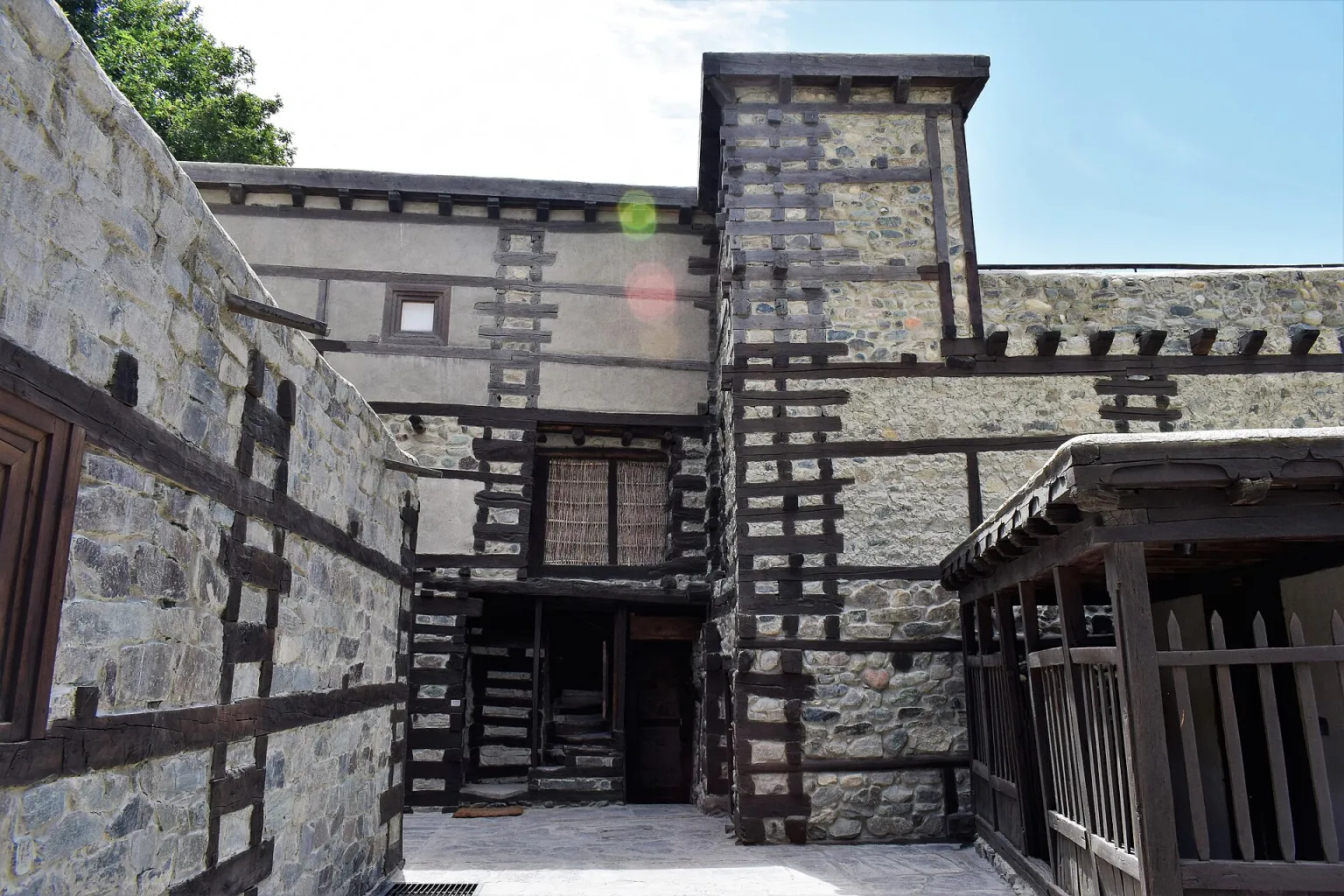
The national archaeology inventory calls the fort Fong Khar, explaining the name through its rock setting, and places it beside the Shigar stream. It describes a composite of three adjacent structures rather than one uniform block. This is an important correction to an exterior view that may make the mass appear to belong to a single moment.
From the public approach, look for changes in roof height, wall alignment and the way building parts meet. Treat those differences as questions, not dates you can assign by eye. Ask the guide which phases are documented and whether a particular junction is original, altered or conserved. Keep to managed visitor surfaces rather than climbing on a rock or wall to make the relationship clearer. A safe oblique view often explains more than standing directly below a façade and trying to fit everything into one frame.
Look at timber as fabric and craft
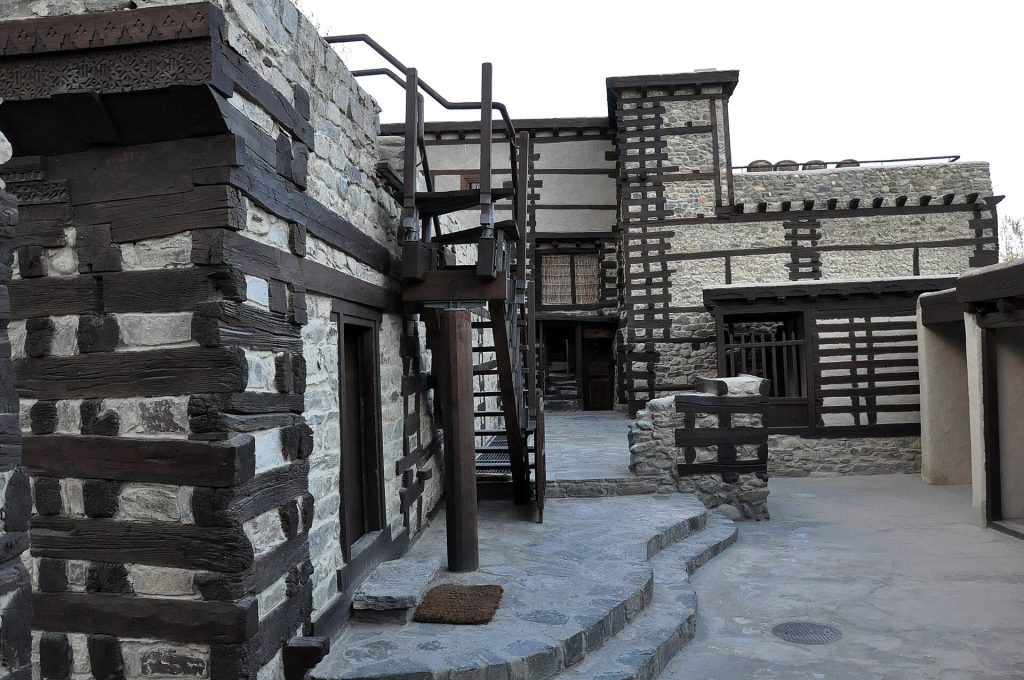
Archnet’s historical description records timber cribbage, varied construction standards and richly worked timber elements. These observations encourage looking at the building as an assembly of materials and skills. A beam, a carved bracket and a wall infill do different jobs even when they appear together in a visitor’s photograph. Ask how one visible element relates to the structure before discussing its decoration.
Do not infer that every dark timber is seventeenth-century or that a replacement makes an entire room modern. A guide may be able to point out a repair with a known history. If so, photograph the junction only where permitted and keep the explanation with the image. Do not lean on a screen, sit on a threshold or rub a carving to test its surface. Wear from many well-intentioned visitors can become a maintenance problem of its own.
Separate restoration from hotel operation
Archnet records the fort as seventeenth-century and gives 2004 as its restoration milestone. AKDN’s regional account says TPS has managed the heritage guest house since 2008. Its older inauguration release discusses plans in 2005 and describes the conversion’s aims. These dates refer to different stages; they should not be flattened into one supposedly contradictory opening year.
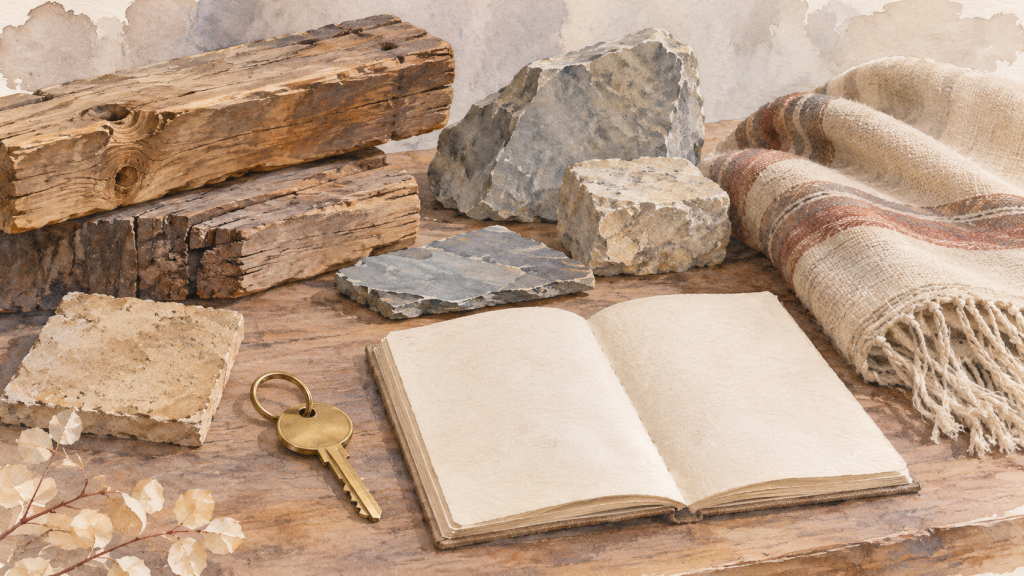
The useful sequence is documentation and repair, adaptation for accommodation, public inauguration arrangements and continuing operation. Ask whether the interpretation displays explain those stages. The contemporary illustration here brings together generic materials and a room key to represent that relationship. It is not a miniature of the fort, a record of its original furnishings or a technical specification. The actual building and identified conservation records remain the evidence for decisions about rooms, roofs and historic components.
A heritage booking needs a location question
Serena’s current description distinguishes thirteen traditional guest rooms in the original palace from seven rooms in the Garden House. It describes the latter as a more recent addition using materials and techniques related to the historic architecture. The practical lesson is to ask where a room is, rather than assuming that every booking places you inside the oldest building.
If accommodation is the reason for your trip, discuss stairs, bathroom arrangements, heating and the route to dining before choosing a category. Ask which historic features belong to the assigned room and which appear only in shared areas or promotional photographs. For day visitors, a bedroom is not part of the public tour unless staff explicitly arrange access. Do not enter an open guest room or photograph through a window. A heritage hotel remains someone’s temporary private home.
Use the garden to understand relationships
The archaeology inventory describes a garden with a raised pavilion platform and identifies nearby settlement and communal open space. It cautiously suggests that the area around the pavilion may once have held water. Preserve that caution: a plausible interpretation of a garden element is not the same as proof that every visible channel or planted bed reproduces an original arrangement.
Walk the permitted garden route and compare the main residence with its outdoor setting. Does the building seem more enclosed from one side than another? Where do staff and guests move? Observe without following a service route or entering a private terrace. Ask about the pavilion’s documented conservation rather than inventing a royal performance to animate it. A place can be evocative while its precise historical use remains uncertain, and explaining that uncertainty helps visitors look more carefully at what actually survives.
What the reuse was intended to support
AKDN describes the conversion as a way to link conservation costs with an operating use, employment and a broader programme of settlement improvements. Its 2005 project account also mentions training and the restoration of nearby mosques and village infrastructure. These are stated programme purposes and reported activities. A short hotel visit cannot independently measure the distribution of income or establish that every benefit has continued unchanged.
You can nevertheless ask useful, concrete questions: which crafts were used in repairs, who explains the heritage displays and how maintenance is organised. If buying a locally described product, ask who made it and from what material. Avoid turning staff into compulsory interview subjects during busy service. A respectful conversation, when invited, is more informative than assuming that a luxurious setting proves either universal prosperity or a failure of conservation. The economic questions deserve evidence alongside the architectural ones.
Arrange a visit that fits the working property
Contact the operator before making a special journey for museum access, a guided tour or a meal. Ask about the current visitor entrance, fees, last entry, group arrangements, photography and areas closed for events or maintenance. A restaurant reservation does not necessarily include a heritage tour, and a tour does not necessarily include lunch. Confirm the services you actually want.
For mobility needs, request a route description from drop-off to the specific public spaces and toilets, including steps, surface changes, handrails and places to sit. If staying overnight, obtain the same detail for the assigned room. A garden-level option may suit some people, but no step-free route is established here. Consider leaving large bags in an authorised storage place so that doorways and close timber details are easier to pass without accidental contact. Keep voices considerate near guest accommodation.
Leave room for Baltistan’s conditions
A hypothetical short visit could concentrate on the exterior composition, an authorised interpretation area and a garden pause. That is enough to explore the reuse story without entering every part of the property. Ask your host about the best daylight window for the current arrangements. During colder months, confirm operating areas and surfaces; after rain or snow, ask about the approach rather than relying on a summer itinerary.
Shigar is connected to a wider mountain journey through Skardu. FCDO advice checked on 7 November 2026 warns that flights to northern airports may change at short notice and road access can be restricted by seasonal weather. It also recommends local security advice and notes registration requirements for foreign visitors to Gilgit-Baltistan. Recheck the exact route and the advice relevant to your nationality. Keep an essential onward departure separate from an uncertain transfer, even when the fort visit itself is straightforward to arrange.
Frequently Asked Questions
Is Shigar Fort solely a museum?
No. It operates as a working heritage hotel, with public access subject to the operator’s current arrangements.
Does every hotel room occupy the old palace?
No. Serena distinguishes traditional palace rooms from Garden House accommodation.
Why do restoration and operation dates differ?
They describe different milestones: Archnet records restoration in 2004, while AKDN dates TPS management to 2008.
Can non-guests walk everywhere?
No. Confirm permitted public areas and respect guest rooms, terraces and service spaces.
How we know this
- Type Practical guide
- Sources 6 (1 official/academic)
- Reviewed November 2026
- Disputed points None
Rules and fees change, confirm with the official links below before you act.
6 sources
- Shigar Fort Palace, Department of Archaeology and Museums, Pakistan
- Shigar Fort Restoration, Archnet / Aga Khan Historic Cities Programme
- Shigar Fort: a new model of conservation combines economic and cultural objectives, Aga Khan Development Network
- Conservation and development in Gilgit-Baltistan, Aga Khan Development Network
- Serena Shigar Fort, Serena Hotels
- Pakistan travel advice: Regional risks, UK Foreign, Commonwealth & Development Office
Photo credits (2)
- Shigar Fort.jpg, Shahid Rao, CC BY-SA 4.0, via Wikimedia Commons
- Shigar Fort Gilgit Baltistan.jpg, Furqanlw, CC BY-SA 4.0, via Wikimedia Commons
