
Travel · Attractions
Read the carving with light and distance
Examine Chaukhandi’s relief, layered tomb forms and uncertain chronology while keeping hands and equipment away from fragile stone.
- Look closely
- Read the evidence
- Respect conservation
Chaukhandi Tombs · Karachi, Sindh
Begin with a cemetery, not a pattern collection
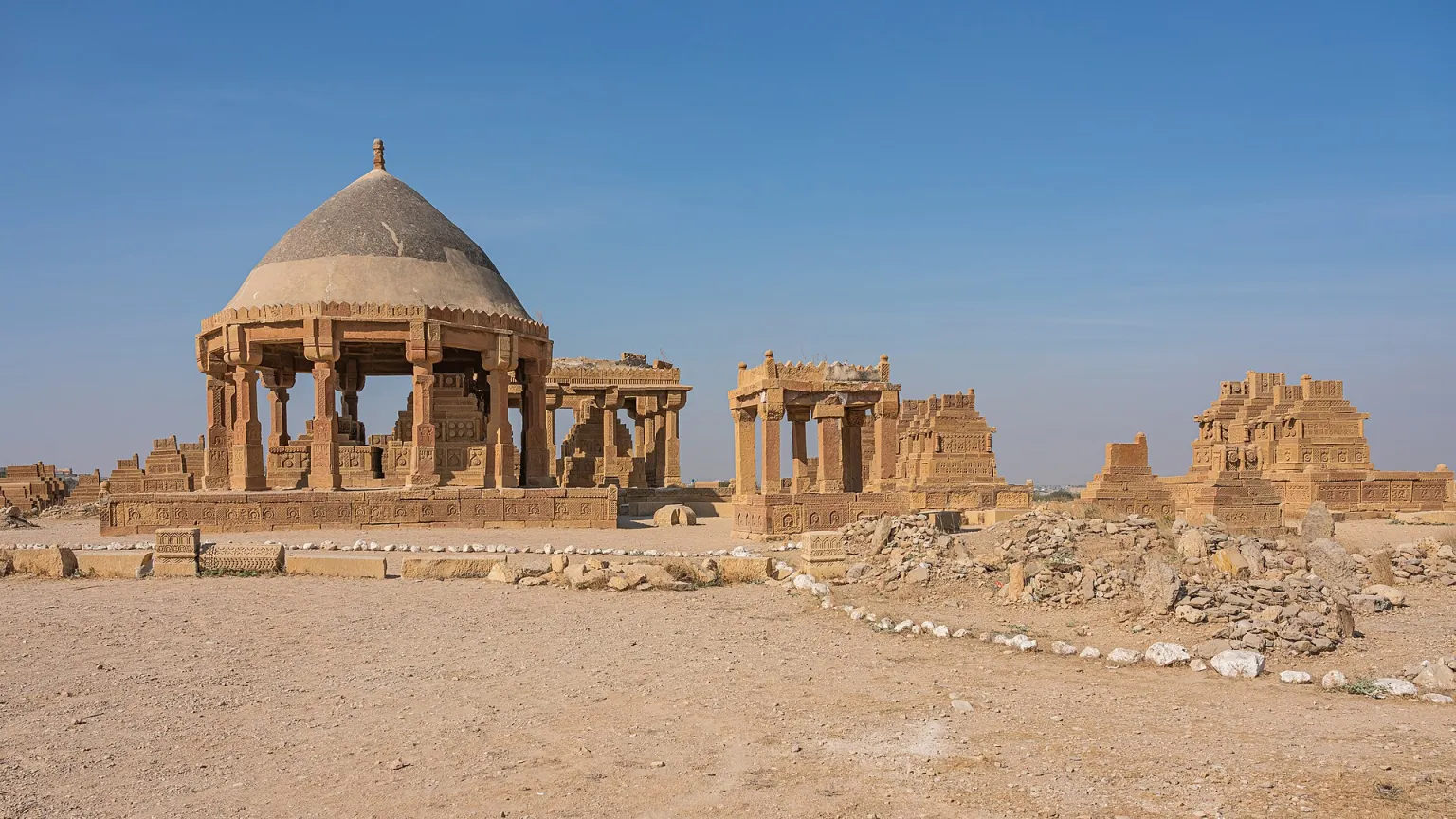
At Chaukhandi, intricate carving can immediately attract the camera. Begin by remembering what the carved structures mark: burials and family memory. The forms are not decorative props placed outdoors for visitors. An attentive visit can appreciate craftsmanship while keeping a respectful distance from graves, other visitors and anyone with a personal connection to the place.
Choose a small number of visible tombs from permitted ground rather than trying to inspect every surface. First look at their overall form, then at the arrangement of carved panels, and only then at individual motifs. This slow sequence helps you understand how decoration belongs to a structure. It also avoids the pressure to climb, squeeze between stones or touch a surface merely to secure a close-up. A detail that cannot be seen safely can remain unseen on this visit.
Keep the chronology qualified
Pakistan’s Department of Archaeology and Museums and Sindh’s Directorate General of Antiquities describe Chaukhandi in connection with Baloch families and the seventeenth and eighteenth centuries. The UNESCO Tentative List submission similarly notes the difficulty of precise dating because dated inscriptions are scarce. A visitor should not assign an exact year to a grave simply because its ornament resembles a published photograph.
Official summaries are not perfectly consistent: Sindh Tourism’s short overview gives an earlier fifteenth- and sixteenth-century emphasis, while its broader booklet uses a wider range. This guide follows the archaeological authorities for its general context and keeps individual dating open. Chaukhandi appears on UNESCO’s Tentative List, which is different from inscription as a World Heritage Site. The distinction matters when comparing it with Makli, a separate necropolis with a different World Heritage status and historical scope.
Read the stacked form before the carved surface
The Sindh antiquities description identifies raised platforms, groups of graves and some pillared canopies. From a permitted viewpoint, observe how successive slabs make a stepped or pyramidal profile. Notice whether the carved face belongs to a broad horizontal band, a narrower upper element or a terminating feature. The placement can change how prominently a motif is seen.
Do not assume that the visible stack tells you the full construction or burial arrangement below ground. An exterior view cannot establish foundations, concealed joints or the condition of a slab. Nor should apparent solidity invite sitting or standing on it. You can compare the rhythm of layers by changing your viewing angle on the public route. If vegetation, a barrier or a restricted space conceals an edge, respect that limit rather than moving material to complete the view.
Identify a motif without inventing a biography
The archaeological authorities describe horsemen, weapons and ornament imagery among the carvings. They explain conventional associations between certain motifs and male or female graves, including weaponry, jewellery and turban-like features. Use this as a documented interpretive framework, while allowing the actual surface and any site label to determine what you can securely identify.
A carved sword does not independently supply a person’s name, military rank, battle record or exact possessions. Jewellery imagery is not an inventory of what a deceased individual wore. A figure can be conventional, stylised or partly weathered. If a motif looks like several possible objects, describe its visible shape and ask for an identification instead of choosing the most dramatic story. The strongest account is often more modest: a documented funerary convention rather than an invented life history.
A repeated motif can be worth noticing even when its meaning remains unresolved. Record where it sits in the carved band and whether the same arrangement is actually visible elsewhere; repetition in your photographs alone may reflect which graves you happened to select.
Let changing light reveal relief
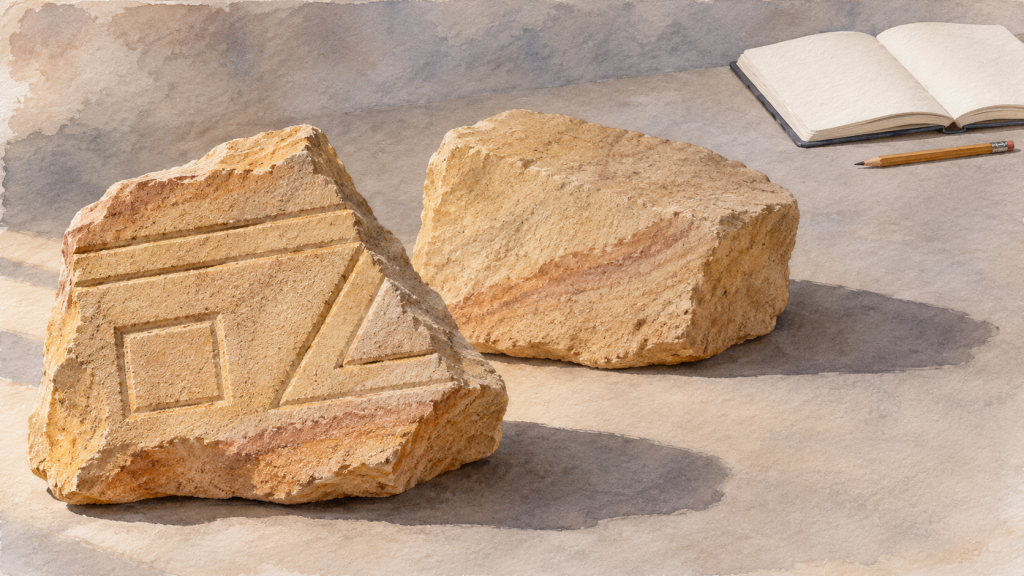
Relief becomes legible through the relationship between raised surfaces and shallow recesses. From allowed ground, look at how shadows outline a border or separate one carved band from another. A face that appears flat in direct light may reveal depth from a different angle. This makes patience and position more useful than physical contact.
Do not wet stone to increase contrast, brush away dust, apply chalk or make a rubbing. These interventions can affect surfaces and are not ordinary visitor observation. Keep tripods, bags and clothing away from carving too; damage does not require deliberate vandalism. A camera close-up should be made only from a permitted position and under local photography rules. When interpreting your image later, remember that contrast, sharpening and colour changes can exaggerate a faint line. An edited photograph should not become evidence for detail you could not reliably see.
Compare within limits, including with Makli
A useful comparison begins with a stated question. You might compare how two visible tombs divide their surfaces into bands, or how a canopy changes the relationship between a grave and open sky. These are observational exercises, not proof that the monuments were made by the same workshop or for people with identical social roles.
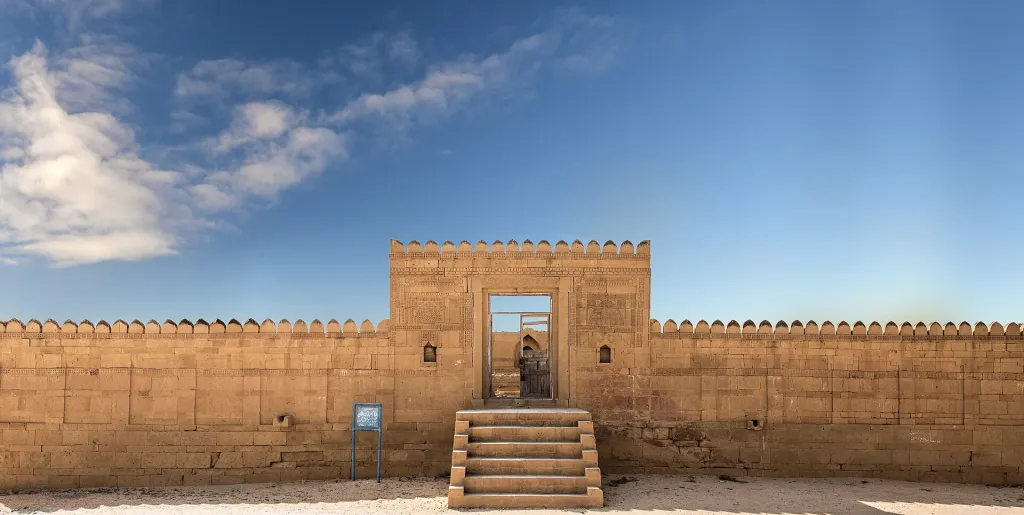
Makli offers broader context for Sindh’s funerary architecture, but it is a different cemetery near Thatta. A photograph of Makli must not stand in as a Chaukhandi tomb or be used to identify a carving that is absent from your visit. If you later examine Makli material, record the place name beside every image and note the specific resemblance being discussed. Shared use of stone or ornament does not erase differences in setting, patronage, date or monument type. Comparison becomes clearer when the differences stay visible.
Treat erosion and repairs as conservation questions
Uneven edges, softened detail or a change in surface colour may attract attention, but visitors should not diagnose causes from appearance alone. Wind, moisture, salts, previous interventions and other processes require professional assessment. Record a concern with a location and a photograph from permitted ground, then report it to the responsible staff if appropriate. Do not move a fallen piece into a position you believe looks correct.
The practical conservation rule is straightforward: leave the material undisturbed. Do not collect loose fragments, even when they appear detached or unimportant. A fragment’s position can carry information that a souvenir collection destroys. Avoid attaching fabric, lighting, flowers or other items to carved surfaces without site permission. If a barrier has been placed around a fragile area, read it as a conservation boundary rather than an obstacle to finding the best angle.
Plan exposure, access and a respectful return
Check current site access, opening arrangements, any photography restrictions and the condition of the approach before travelling. Do not rely on an old map’s journey time or a photograph to establish today’s entrance, parking or facilities. Ask specifically about uneven ground, steps, resting places and toilet availability if those details determine whether your group can visit comfortably.
Check the local forecast and choose a manageable period outdoors. Lower sun can make relief easier to read, but light is only one consideration; heat, weather, transport and staff instructions take precedence. Carry the water and sun protection suitable for your circumstances without assuming a kiosk or shaded rest area is available. Before leaving, note one observed structural feature, one securely identified motif and one unresolved question. That record preserves a more honest encounter with Chaukhandi than a collection of close-ups stripped of their funerary setting.
Frequently Asked Questions
Is Chaukhandi an inscribed UNESCO World Heritage Site?
It is on Pakistan’s UNESCO Tentative List; that is different from World Heritage inscription.
Can every grave be dated precisely?
No. The UNESCO submission explicitly notes the scarcity of dated inscriptions; official broad chronologies also differ.
May I wet, chalk or rub a carving to see it better?
No. Observe through permitted viewpoints and light without altering or touching the surface.
Does a weapon carving prove a detailed biography?
No. Documented motif conventions do not establish a named person’s exact life, possessions or military career.
How we know this
- Type Practical guide
- Sources 5 (3 official/academic)
- Reviewed November 2026
- Disputed points None
Rules and fees change, confirm with the official links below before you act.
5 sources
- Chaukandi Graveyard, Karachi, Directorate General of Antiquities, Government of Sindh
- Chaukhandi Tombs, Department of Archaeology and Museums, Government of Pakistan
- Chaukhandi Tombs, Karachi, UNESCO World Heritage Centre
- Chaukhandi Tombs, Sindh Tourism Development Corporation
- Explore The Beauty Of Sindh, Sindh Tourism Development Corporation
Photo credits (2)
- PK Chaukhandi Necropolis near Karachi asv2020-02 img08.jpg, A.Savin, FAL, via Wikimedia Commons
- Makli hills thatta sindh - UNESCO World Heritage Site.jpg, Yasir Dora, CC BY-SA 4.0, via Wikimedia Commons
