

Travel · Attractions
Plan the whole route, including the return
Prepare a Khewra visit around the group’s walking limits by asking specific questions about transport, boarding, the underground route, rest opportunities and returning to daylight.
- Read the details
- Plan the approach
- Respect the fabric
Khewra Salt Mine, Jhelum District
Start with a realistic walking limit
Khewra can appeal to someone who enjoys unusual places but cannot manage an open-ended walk. The important planning question is the whole journey between the vehicle and the return pickup, including queues, boarding and the final stretch back. An underground train mentioned in a travel account cannot by itself establish that the visit fits a particular person’s abilities.
Begin with practical limits: how long can each person walk continuously, stand waiting and remain comfortable in an enclosed environment? Identify whether steps, low seating or an unsupported transfer would be difficult. These are trip-planning questions, not an invitation to diagnose a relative. Ask the person directly what assistance they want. If dependable answers about the route are unavailable, keep the plan flexible and give everyone a comfortable option to stay above ground.
Understand what the tourist route represents
Pakistan Mineral Development Corporation describes a tourist facility developed within the main ground-level tunnel associated with Dr Warth in 1872, and a resort development project launched in 2002. That is useful context: the visitor experience is an arranged route within a much larger mine, with interpretation and attractions selected for public viewing.
The company’s mining description identifies room-and-pillar extraction and multiple levels. A ticket for the tourist route is not permission to explore industrial workings. Do not equate the portion visited with the full underground operation, and do not assume that a side passage is an optional shortcut. When speaking with staff, ask them to identify the exact public route offered that day. A clear answer about its endpoints matters more for this visit than a dramatic figure for the mine’s total extent.
Ask train questions that produce usable answers
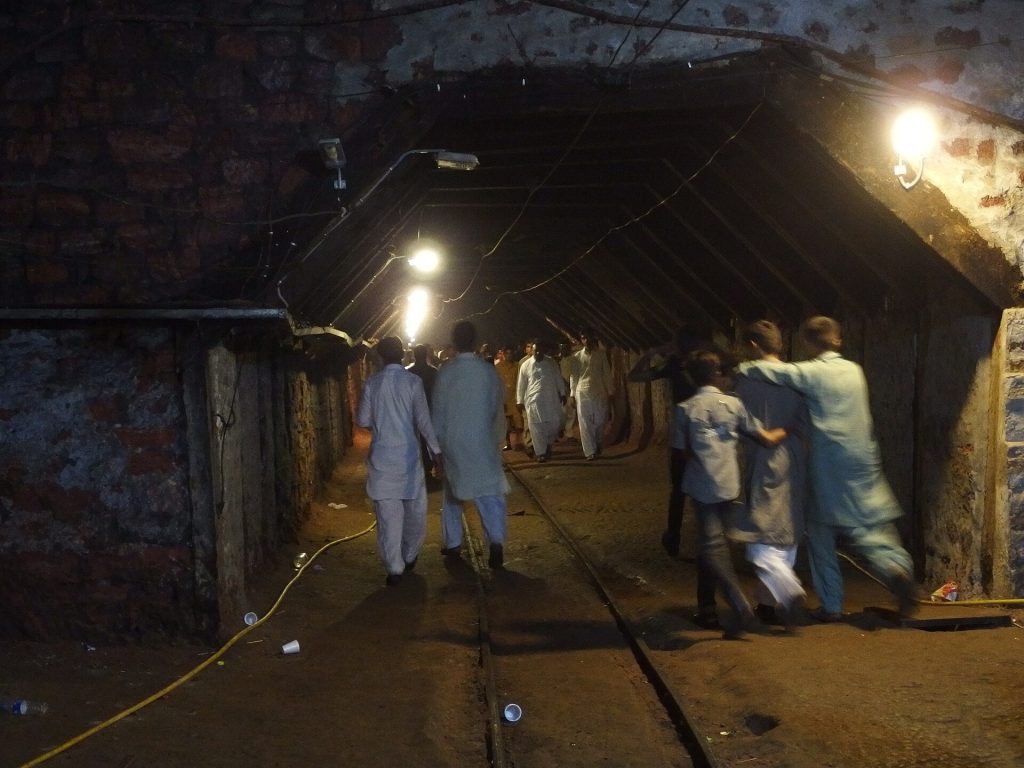
If staff confirm that visitor transport is operating, ask where boarding takes place, how far it is from the drop-off point and whether tickets or departure arrangements are separate. Then ask about getting into and out of the carriage: step height, doorway width, seat type and whether assistance is provided. A statement that a train is available leaves all of those practical issues unresolved.
Also establish what the ride actually replaces. Does it cover the outbound approach only, a return journey or another specified segment? Is there walking between the stop and the attractions? What happens if the service pauses after arrival underground? These are questions to verify directly, not promises about current operations. Request a clear return arrangement before deciding that the train makes the outing manageable. Never use another passenger’s boarding technique as evidence that a difficult transfer is suitable.
Map the route as separate stages
Write the proposed visit in five stages: vehicle to entrance, entrance to boarding or walking departure, travel into the visitor area, movement between displays and the complete return. Against each stage, record estimated distance or duration supplied by staff, steps, seating and any wait. Mark unanswered points clearly rather than turning a vague reassurance into a fact.
This approach also helps a mixed group stay together. A person who can manage a short walk may still find an unplanned queue difficult. Someone who needs frequent seated rests needs to know where seats actually are, not merely that the underground route is described as easy. Ask whether turning back is straightforward and whether a companion or guide must accompany the return. Keep the plan within what management confirms rather than drawing an independent route through the mine.
Choose a few displays rather than chasing everything
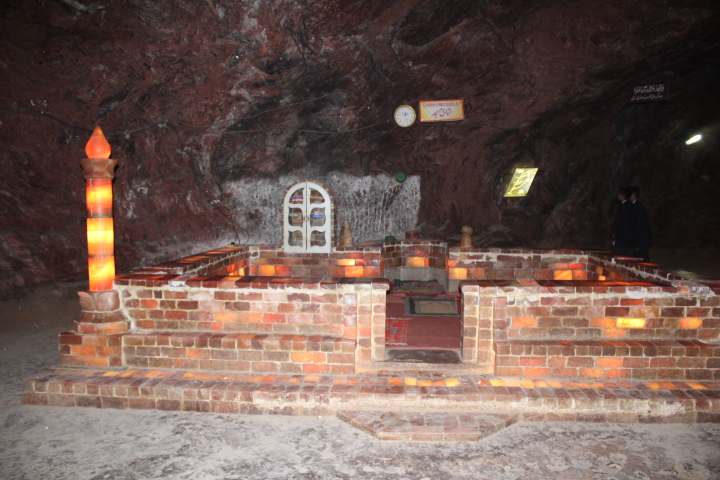
PMDC’s tourism page describes illuminated salt features, water ponds and constructed attractions within the visitor experience. Treat them as a selection to discuss with the guide. Ask which can be seen without extending the route and which require an additional passage or change in level. The best short visit may include a smaller number of stops observed without pressure.
At a safe permitted viewpoint, distinguish natural rock from an object built using salt blocks. Compare the colour under different installed lights without claiming that every colour comes from the mineral itself. PMDC records white, pink and red salt in the deposit; lighting can affect its appearance. Do not lick walls, touch displays or collect fragments. A brief explanation of what is natural and what is constructed gives the group a useful interpretation without turning the outing into a geology lesson.
Make rest and return arrangements explicit
Before entering, ask about toilets, drinking water rules, places to sit and where a person can wait if the rest of the group continues. Ask which facilities are above ground and which are on the permitted route. There is a meaningful difference between a facility somewhere on the premises and one reachable at the moment it is needed.
Arrange a meeting point and return contact plan above ground, especially if the party uses different transport arrangements. Do not rely on continuous mobile reception underground. Keep essential personal items with the person who needs them, subject to site rules, and avoid splitting medication or mobility equipment between bags carried by different companions. These are ordinary preparation decisions. They do not establish that the mine is suitable for a particular medical condition; discuss individual concerns with the relevant professional before committing to the outing.
Account for the road journey and the season
The Jhelum district administration locates Khewra north of Pind Dadan Khan and describes access from the M2 motorway through the Lilla interchange area. Use this as geographical orientation, then verify your actual route, road conditions and travel time before departure. Do not plan from an old journey-time estimate that excludes traffic, stops or the final approach.
A cooler day may make waiting and walking above ground more comfortable, but the underground setting does not remove the need to consider outdoor heat, rain and the return journey. Check current conditions and operating arrangements rather than assigning one universally best month. Leave slack around meals and transport. For a person with limited stamina, an unnecessarily long drive followed immediately by a queue may be more demanding than the planned viewing stops themselves.
Use a hypothetical call to test the plan
Consider this planning example, not a verified service description: a visitor can walk for short periods but cannot stand in a long queue. Their companion asks management about transport, boarding steps, confirmed seating and the return. If the response identifies transport but cannot explain the waiting arrangement, one major problem remains unresolved. The companion asks whether there is an appropriate alternative time or shorter permitted option.
The decision is then based on concrete answers rather than the word convenient. Record who supplied the information and when, and reconfirm details close to departure if they are essential. Do not pressure the visitor to attempt a route because tickets have been purchased or relatives have travelled. A plan that allows an early return, a companion staying back or cancellation is more useful than a schedule whose success depends on everyone exceeding their limits.
Know what this guide can and cannot establish
Official descriptions explain the mine’s location, industrial setting and developed visitor attractions. They do not provide a current, individually assessed access certification. This guide therefore supplies questions and a decision process rather than fixed train times, a guaranteed walking distance or a promise of step-free entry. Ask for details that match the person and the exact route offered.
Khewra’s human history also deserves care: popular accounts about Alexander’s horses discovering salt are stories repeated in tourism descriptions, not evidence of the current visitor arrangements. There is no need to make that legend the centre of a practical visit. A satisfying short outing can focus on a few illuminated features and the experience of an organised underground space, with enough energy reserved for a comfortable journey home.
Frequently Asked Questions
Does the train remove all walking?
Do not assume so. Confirm the operating service, the distance to boarding, transfers, the viewing route and the complete return with management.
Is Khewra wheelchair accessible?
This article does not certify access. Ask about doorway and carriage dimensions, steps, surfaces, toilets and the exact permitted route for your equipment and needs.
Can someone turn back early?
Confirm the procedure and who must accompany them before entry. Do not improvise a return through side passages.
Should I visit every attraction underground?
A limited selection may better fit your group’s stamina. Ask which displays are on the shortest suitable permitted route.
How we know this
- Type Practical guide
- Sources 3 (3 official/academic)
- Reviewed November 2026
- Disputed points None
Rules and fees change, confirm with the official links below before you act.
3 sources
- Tourist Attraction, Pakistan Mineral Development Corporation
- Mines: Khewra Salt Mine, Pakistan Mineral Development Corporation
- Khewra Salt Mines, District Administration Jhelum
Photo credits (3)
- Khewra Salt Mines 03.jpg, Shahzaib Damn Cruze, CC BY-SA 4.0, via Wikimedia Commons
- Tunnel @ Khewra Salt Mine (15297892500).jpg, Guilhem Vellut from Annecy, France, CC BY 2.0, via Wikimedia Commons
- Mosque at Khewra Mines.jpg, Khubabshinwari, CC BY-SA 4.0, via Wikimedia Commons
