
Kitchen item guide
Kitchen sink: choosingusing and caring for it
Plan a kitchen sink that fits your largest pot, then protect its finish, drainage and surrounding worktop through daily care.
DailyLife.pk kitchen equipment collection
The kitchen washing station
A kitchen sink is the fixed basin where you wash utensils, rinse produce and draw water for many cooking tasks. In a Pakistani household it needs to accommodate everything from chai cups to a biryani degchi. Basin shape, drain position and surrounding counter space affect daily comfort as much as its appearance. A cramped sink can turn washing a broad tawa into an awkward splashy job.
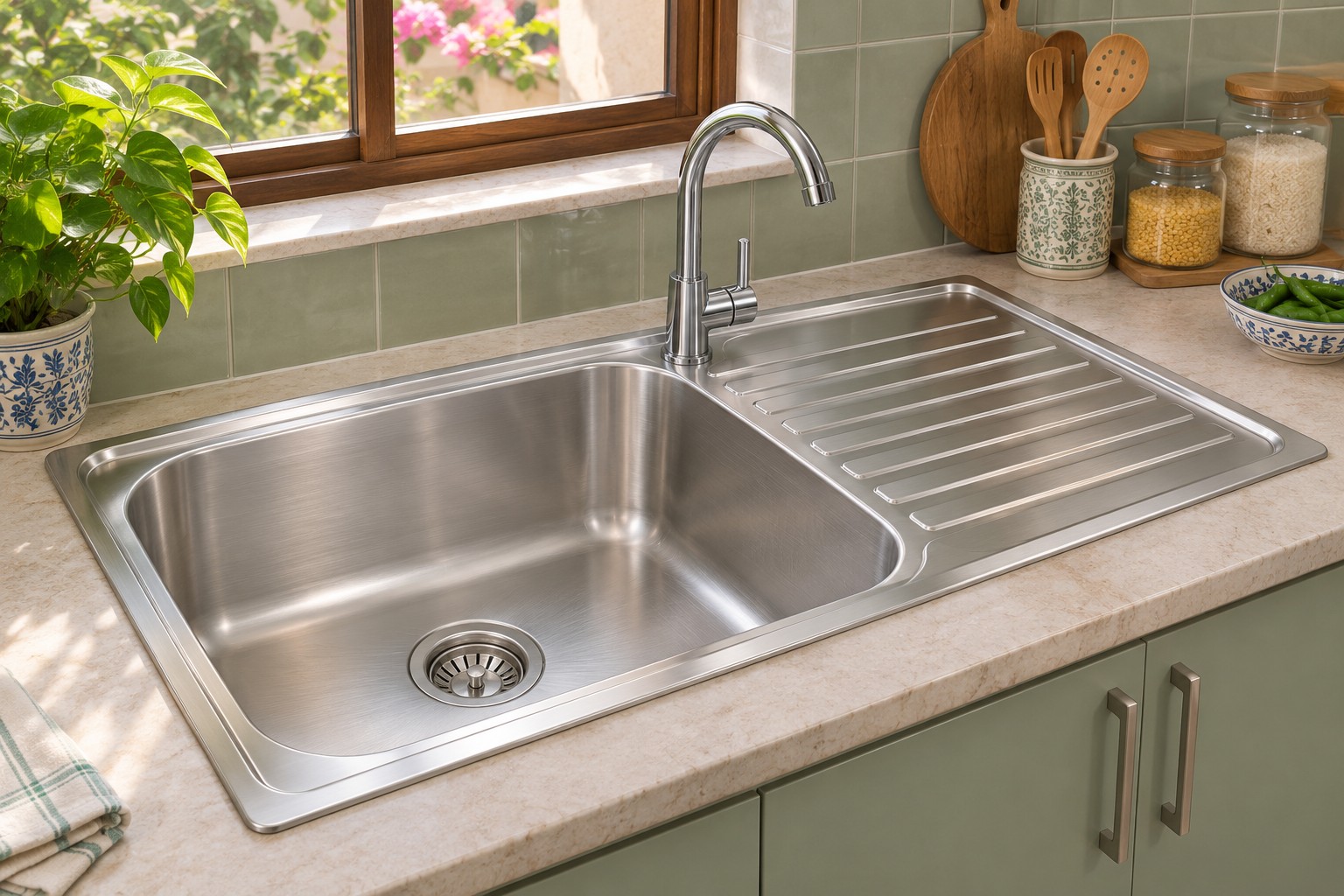
Single-bowl sinks give uninterrupted space for big pots. Double bowls help separate soaking and rinsing, but two small compartments may be less useful than one generous bowl. A bowl with an attached drainer gives wet utensils a landing place, provided that the drainer slopes correctly. An overmount rim sits on the worktop; an undermount basin attaches underneath and requires a suitable worktop and sound installation. These formats are chosen with the counter fabricator, not after cutting the opening.
Materials and useful measurements
Stainless steel is a practical general-purpose material: it tolerates daily washing and has a relatively forgiving surface when a cup is knocked against it. Thin steel can feel noisy or flexible, so inspect support and the actual bowl rather than judging by shine. Composite sinks offer different colours and a solid feel; ceramic sinks offer a hard glazed surface but can chip under impact. Every material needs its own care instructions.
As an editorial planning exercise, measure your largest pot and compare it with the bowl's internal width, front-to-back depth and usable depth. A bowl around 20 cm deep may contain splashes but require more bending for a shorter user. Check tap reach, cabinet width, drain fittings and space for a water filter underneath. Ask a sanitaryware supplier or kitchen fabricator about compatible wastes, spare strainers and local installation support before committing.
Use it without blocking the drain
Keep a removable strainer over the outlet. Tip tea leaves, rice and vegetable peelings into the bin instead of washing them into the trap. Wipe greasy karahi residue into waste before washing; pouring oil down the drain invites buildup. Leave a clear section of counter for dirty utensils and another for clean items so raw-food splashes do not reach ready-to-eat food.
Wash and rinse the basin before using it for produce preparation. Do not assume a basin that looks shiny is clean after handling raw meat utensils. Use a separate clean bowl or colander for ingredients when practical. Never leave a knife hidden under soapy water. Support large pots securely rather than balancing them across the rim, and lift heavy cookware with control so the tap, sink surface and worktop joint are not struck.
Cleaning the surface and joints
Wash the basin with mild detergent and a soft cloth, rinse and dry it when practical. Wiping dry helps reduce hard-water spotting. For brushed stainless steel, follow the grain when using a manufacturer-approved cleaner. Steel wool, harsh scouring and inappropriate chemical cleaners can damage finishes. Follow the sink maker's guidance for removing scale, especially on coloured composite or coated surfaces; a remedy suitable for plain steel may harm another finish.
Clean the strainer and accessible waste parts regularly, with gloves where needed. Inspect the worktop seal, tap base and pipe connections for slow leaks. A damp cabinet, musty smell or swollen board can reveal a fault before water becomes visible on the floor. Persistent blockages or leaks need a plumber. Avoid mixing drain chemicals or opening a trap containing chemical cleaner yourself; tell the plumber what has been used.
Repair, lifespan and alternatives
Light scratching on stainless steel is often cosmetic and becomes part of normal wear. A loose waste fitting or failed seal can usually be repaired without replacing the basin. Deep cracks, major chips in critical areas, persistent corrosion or a badly distorted mounting rim call for professional assessment. A sound installation and compatible cleaning habits generally matter more than a promised number of service years.
A portable washing basin helps in a rented home or during repairs, but it still needs a safe clean water source and a proper wastewater route. A double-bowl upgrade is worthwhile only if its smaller compartments suit your actual pots. When renovating, improve lighting and working height as well as buying a new sink. The sink's advantages are durability and a defined wet-work area; its limitations are fixed space, plumbing dependence and the care needed around every joint.
Frequently Asked Questions
Is a double bowl always better?
No. Compare the internal bowl dimensions with your largest utensils and your washing routine.
Can tea leaves go down the outlet?
Collect them in the strainer and bin them to reduce blockage risk.
Does stainless steel never scratch?
It can scratch in normal use. Use the maker’s cleaning method and avoid harsh abrasives.
How we know this
- Type Explainer
- Sources 3 (1 official/academic)
- Reviewed November 2026
- Disputed points None
3 sources
- Care of stainless steel sinks, BLANCO
- Sink and tap cleaning resources, Franke
- Safe food handling, US Food and Drug Administration
Photo credits (1)
- A broad single-bowl brushed stainless steel inset kitchen sink with an integrated ribbed drainer and a modest separate chrome tap, empty clean basin, removable round drain strainer, wide view emphasizing the sink., DailyLife.pk, All rights reserved
