
Kitchen item guide
Cheesecloth: BuyingUse and Care for a Pakistani Kitchen
Select food-use cloth with a suitable weave for paneer, yoghurt or straining, and plan how to wash and dry it.
DailyLife.pk kitchen equipment collection
A flexible straining surface for food
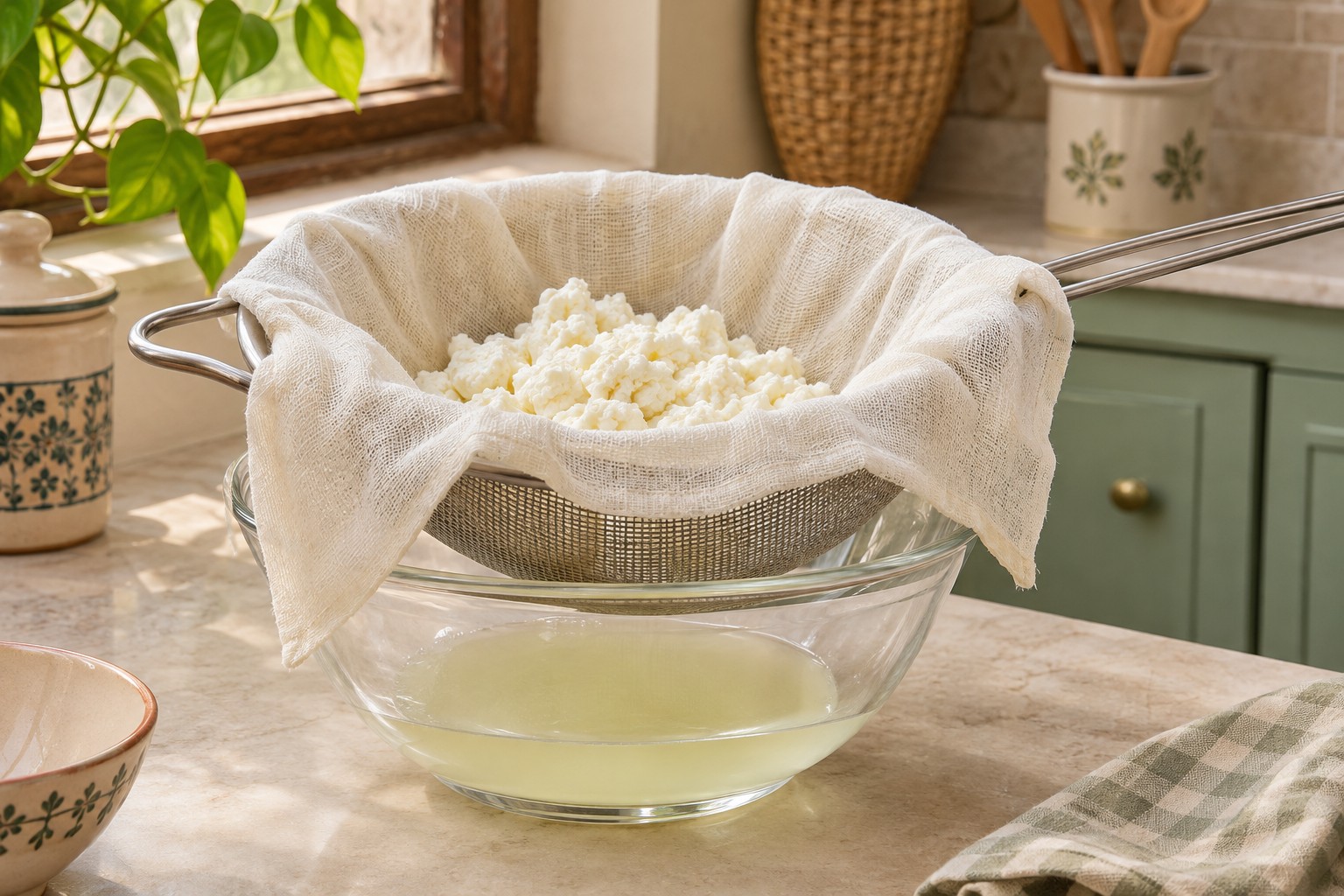
Cheesecloth is a woven cloth used to retain food solids while liquid passes through. In a Pakistani kitchen it can help drain paneer curds or yoghurt for a thicker preparation, strain a suitable stock or contain a spice bundle. Its weave and number of layers determine what it retains. It is not a disinfecting filter, and liquid passing through it is not automatically safe to drink. Choose cloth intended for culinary use rather than taking an unknown fabric from a craft, paint or cleaning task.
Loose cheesecloth and finer muslin
UC Master Food Preservers distinguishes cheesecloth grades and finer butter muslin for different straining tasks. A loose weave may need several layers to retain small curds, while a finer cloth can drain more slowly. The name muslin alone does not tell you whether a particular piece is food-use material or the right weave. Check fibre content, treatments and loose lint. A purpose-made reusable draining bag offers a defined shape, whereas a flat square can line a colander or form a bundle if it is large enough to secure safely.
Choose retention and cleaning access together
As an editorial comparison, hold a cloth against the light to compare a loose weave with a tighter one, then consider the size of the curds or particles you want to retain. This is a visual selection aid, not a technical grade test. Buy from a culinary supplier that identifies food use, fibre and care directions. Avoid printed, fragranced, previously dyed or unknown treated fabric. Check whether the cloth is reusable and how edges are finished. A small cheap piece can be awkward if the corners barely reach above a bowl of wet curds.
Line a stable strainer above a receiving bowl
Prepare the cloth according to its care instructions before contact with food. Set a suitable colander or sieve securely over a bowl, line it with enough cloth to retain the contents and add food gradually. Keep the draining surface above the collecting liquid. Follow a reliable recipe's temperature and refrigeration requirements, especially for dairy; do not hang yoghurt for an arbitrary long period at room temperature. For hot curds or stock, use heat-suitable supports and protect hands from the liquid. Never suspend a heavy wet bundle from a weak cupboard handle or unstable tap.
Let the recipe determine pressure and layering
The National Center for Home Food Preservation includes double-layer cheesecloth as a straining option in its jelly guidance. That is a recipe-specific example, not a rule for every food. Pressing can force small particles through a cloth and change the texture or clarity, so follow the intended preparation. Inspect for escaping curd and adjust layers before continuing rather than assuming all fabric strains equally. Keep raw-food cloth separate from ready-to-eat draining work and do not reuse a floor or dish-cleaning cloth for culinary filtration.
Clean immediately and store only when fully dry
Remove curds or other residue promptly. Follow a validated culinary-cloth care method and the product instructions; UC guidance describes thorough washing, rinsing, boiling treatment and complete drying for suitable reusable culinary cloth. Handle hot water safely and check that the fabric is intended for that treatment. Do not leave damp cloth folded in a sealed drawer. Replace torn, frayed, persistently stained or musty cloth that cannot be cleaned dependably. A purpose-made draining bag or another identified food-use cloth can substitute when the weave suits the task, but an unknown hardware-store rag cannot be assumed equivalent.
Frequently Asked Questions
Can any muslin fabric be used?
Choose identified culinary material with suitable fibre, treatment, weave and care instructions; the fabric name alone is insufficient.
Does cheesecloth sterilise the liquid?
No. It separates some particles and does not replace appropriate food-safety treatment.
Can it be reused?
Only when the cloth is intended for reuse and can be washed, treated as appropriate, rinsed and dried completely.
How we know this
- Type Explainer
- Sources 3 (3 official/academic)
- Reviewed November 2026
- Disputed points None
3 sources
- Cheesecloth and Butter Muslin, UC Master Food Preservers
- Making Jelly without added Pectin, National Center for Home Food Preservation
- Safe Food Handling, FDA
Photo credits (1)
- Food-use cheesecloth lining a sieve and retaining paneer curds above a bowl., DailyLife.pk, All rights reserved
