
Kitchen item guide
Cutlery: ChoosingUsing and Caring for It
Choose cutlery for comfortable everyday eating, smooth edges and a washing routine that preserves the finish.
DailyLife.pk kitchen equipment collection
The utensils used at the table
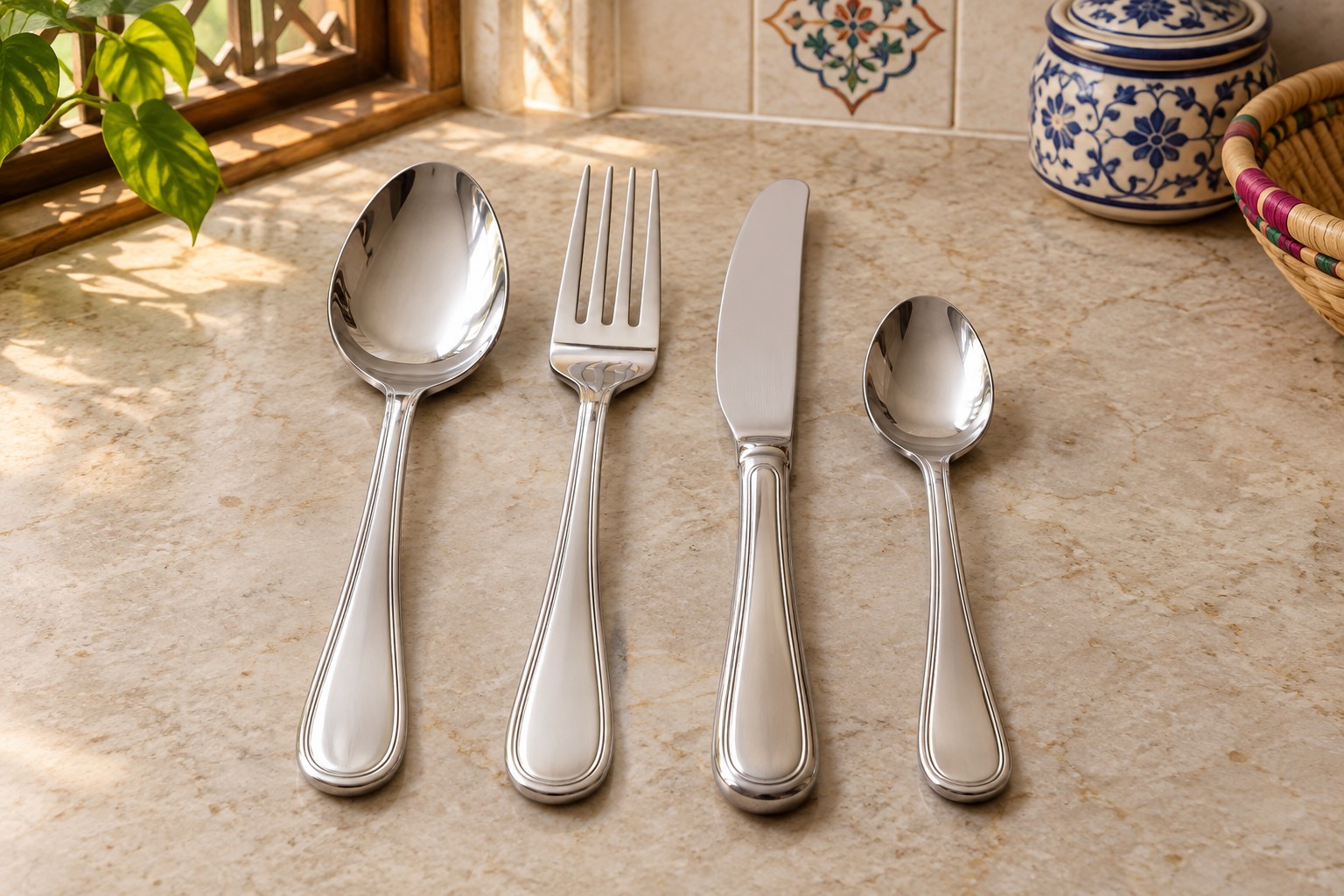
Cutlery is the eating set of spoons, forks and table knives, with smaller pieces such as teaspoons. In a Pakistani home, a useful selection may emphasise spoons for rice, daal and desserts alongside forks and knives for other meals. It need not copy a large formal place setting. Choose the pieces people actually reach for and keep enough clean replacements for everyday use.
Table knives differ from sharp preparation knives, while serving spoons are usually larger than eating spoons. Sorting by job makes the drawer more useful than collecting many similar pieces.
Steel and handle construction
Stainless steel is common, with different alloy grades and finishes. Hollow handles, plastic grips and decorative inserts create more joints than an all-metal piece. Weight should feel balanced rather than simply heavy. As an editorial comparison, hold a soup spoon and a narrower tablespoon: bowl width and depth affect comfortable eating more than overall length alone.
Tramontina’s flatware instructions illustrate that steel still needs rinsing after salty or acidic food and that its tableware is not intended for oven or microwave use. Those directions are product-specific, so check your own set’s markings and care instructions.
Use separate serving pieces
Set clean cutlery where handles are easy to reach. Use a serving spoon for a communal curry or rice dish rather than returning an eating spoon to shared food. Choose an appropriately sized utensil for children or anyone with grip difficulties. A thick knife handle may help some users, but a very heavy set may be tiring.
Use table knives on suitable plates rather than trying to split bones or cut hard frozen food. Do not put metal cutlery into a microwave. Keep food preparation and ready-to-eat service separate in accordance with FoodSafety.gov’s clean-and-separate guidance, washing utensils before moving from raw-food work to the table.
Buying sets without surplus pieces
Check spoon rims, fork tines and knife edges for smoothness, symmetry and burrs. Test the grip and look for loose handles or visible gaps. A complete place-setting count should specify exactly which pieces are included; a large number on the box may include several utensils you rarely use.
Household stores let you compare heft and spoon shape. When ordering online, seek close photographs, material identification and cleaning directions. Buying replacements as singles can be useful when teaspoons disappear or a handle becomes damaged. Avoid choosing solely by mirror shine or elaborate packaging.
Rinse, wash and dry
Remove food residue promptly and wash with the maker’s approved method. Rinse salty or acidic residues rather than leaving them on the metal. Dry thoroughly to reduce spotting. Keep sharp table-knife edges positioned safely when unloading a dishwasher, if the product is approved for it.
Tramontina advises avoiding prolonged soaking and harsh chloride-rich detergents for its steel flatware. Do not extrapolate one model’s dishwasher permission to decorative wood or glued handles. Replace cracked grips, loose joints, badly damaged tines or pitting that leaves an uncleanable rough surface. Store clean pieces dry in a divided drawer.
Practical limits and alternatives
A coordinated set looks tidy and stacks predictably, but mixing sound food-safe pieces can be more economical. A spoon and fork may cover most meals while specialist dessert or fish pieces stay unused. For shared meals, prioritise dedicated serving utensils before buying ornate extras. Disposable cutlery may suit a particular event, but it adds waste and can be unsuitable for hot or firm foods unless specified.
Frequently Asked Questions
Does stainless steel never stain?
No. Residue, moisture and unsuitable cleaning can cause spotting or damage.
Can I use an eating spoon to serve everyone?
Use a dedicated clean serving spoon to avoid returning used cutlery to shared food.
Can cutlery go in a microwave?
Do not put metal table cutlery in the microwave.
How we know this
- Type Explainer
- Sources 3 (2 official/academic)
- Reviewed November 2026
- Disputed points None
3 sources
- Stainless steel flatware use and care, Tramontina
- Four steps to food safety, FoodSafety.gov
- Prevent burns and scalds in the kitchen, US Fire Administration
Photo credits (1)
- One coordinated stainless steel table cutlery place setting: exactly one dinner spoon, one dinner fork with four tines, one rounded table knife and one teaspoon, neatly arranged parallel, no sharp cooking knives., DailyLife.pk, All rights reserved
