
Kitchen item guide
Water filter: choosingusing and caring for it
Choose a water filter for identified water-quality needs and verified reduction claims, then maintain the whole system.
DailyLife.pk kitchen equipment collection
A filter has a defined job
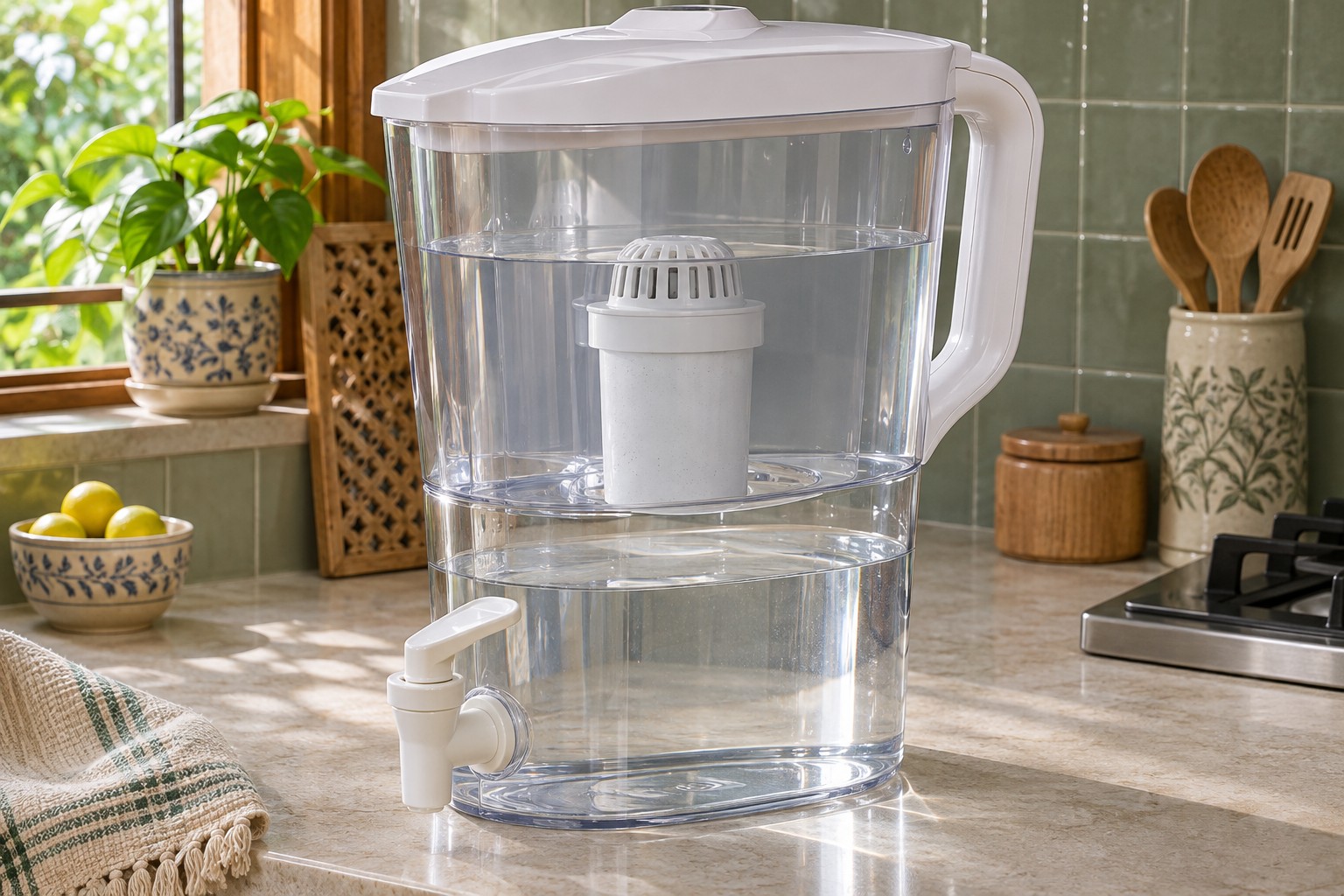
A kitchen water filter treats water using a specified medium or system. Options include gravity jugs, tap-mounted cartridges, under-sink systems and reverse-osmosis arrangements. Their capabilities differ. A cartridge that improves chlorine taste is not automatically a purifier for unsafe water, and a clear glass of water is not evidence that all relevant contaminants have been removed.
For a Pakistani household, begin with the source: utility water, bore water, a storage tank or a purchased supply can present different questions. Obtain appropriate water-quality information and, where needed, testing through a competent local laboratory or water authority. Do not choose a treatment system solely because a neighbour likes its taste. The filter should match the identified concern and the household's maintenance ability.
Certification needs a specific claim
Read the exact model's performance data and certification listing. NSF explains that standards are not a ranking of overall quality: for example, NSF/ANSI 42 addresses specified aesthetic effects, while NSF/ANSI 53 covers specified health-related reduction claims. Certification to a standard is not proof that every possible contaminant is removed. Check the actual substance and claim attached to the actual cartridge and system.
CDC notes that many ordinary pitcher and refrigerator filters are not designed to remove germs. If microbiological safety is the concern, choose a system whose verified capability addresses it and follow local public-health advice. A low total-dissolved-solids reading alone cannot prove microbiological safety or identify all chemical hazards. Avoid unsupported alkaline, detoxification or disease-prevention promises.
Compare capacity, pressure and service
For a jug, check working filtered-water volume, pouring comfort and replacement cartridge availability. For a plumbed system, check supply-pressure and water-quality requirements, installation space, drain needs if relevant and ongoing consumables. Reverse osmosis may involve a storage tank and reject-water stream; those practical requirements belong in the decision before installation. A whole-home filter and a kitchen point-of-use filter solve different coverage problems.
As an editorial planning example, estimate ordinary drinking and cooking water demand from the household's actual day, then compare the stated flow and service capacity. Do not select a larger system simply from a stage count: several housings do not establish treatment effectiveness. Ask a traceable supplier for the full model identification, performance sheet, maintenance schedule and local replacement costs. Verify stock independently because cartridges and prices change.
Install and handle treated water hygienically
Follow the manufacturer's installation, flushing and cartridge-conditioning procedure. Have plumbing and any electrical components installed by competent people. Check for leaks and confirm that the supplied cartridge and seals are correctly fitted. Use only the water temperature and source conditions the system permits. A filter designed for already microbiologically safe water should not be fed contaminated water as an experiment.
Keep the treated-water reservoir, tap and storage vessels clean and avoid touching outlets with hands, cups or cloths used elsewhere. Use the product's storage and stagnation instructions after holidays or long periods without use. During a local boil-water or contamination advisory, follow the issuing authority's advice; ordinary filtration should not be assumed sufficient. Do not continue using a damaged or leaking housing while waiting for the next routine cartridge change.
Replacement is part of the purchase
Replace cartridges, membranes, lamps or other consumables at the specified capacity or time limit and perform the stated sanitising and flushing steps. A reminder reset does not perform the service. Maintain a dated record and keep only suitable genuine or explicitly compatible parts. Wash a reusable reservoir using its approved method; do not improvise a chemical mix or wash a disposable cartridge to extend its claimed life.
Check declining flow, leakage, cracked housings, damaged seals or unexplained water changes promptly, and obtain appropriate water testing or service rather than using taste as a safety test. No universal filter lifespan exists because media and source water differ. The benefit is a documented treatment function where needed; the tradeoffs are maintenance, installation and consumable costs. A verified suitable water supply or a different treatment method may be more appropriate for a particular concern. Choose the complete supported system, not an unverified claim on a decorative dispenser.
Frequently Asked Questions
Does clearer or better-tasting water prove safety?
No. Water safety depends on relevant testing and verified treatment performance.
Does every carbon jug remove germs?
No. Many ordinary pitcher filters are intended mainly for taste or specific chemical claims.
Can I use one cartridge indefinitely if flow stays good?
No. Follow its stated service capacity, time limit and replacement procedure.
How we know this
- Type Explainer
- Sources 3 (1 official/academic)
- Reviewed November 2026
- Disputed points None
3 sources
- Choosing home water filters, US Centers for Disease Control and Prevention
- Water-treatment standards explained, NSF
- Filtration standards and specific claims, NSF
Photo credits (1)
- Countertop gravity drinking water filter jug with clear lower reservoir, white lid and visible cartridge in upper chamber, clean water inside, no claims text., DailyLife.pk, All rights reserved
