
Kitchen item guide
Meat Tenderiser: Flattening Mallets and Bladed Tools
Distinguish a flattening mallet from a blade tenderiser and plan stable preparation, cleaning and safe cooking.
DailyLife.pk kitchen equipment collection
Different tools under one name
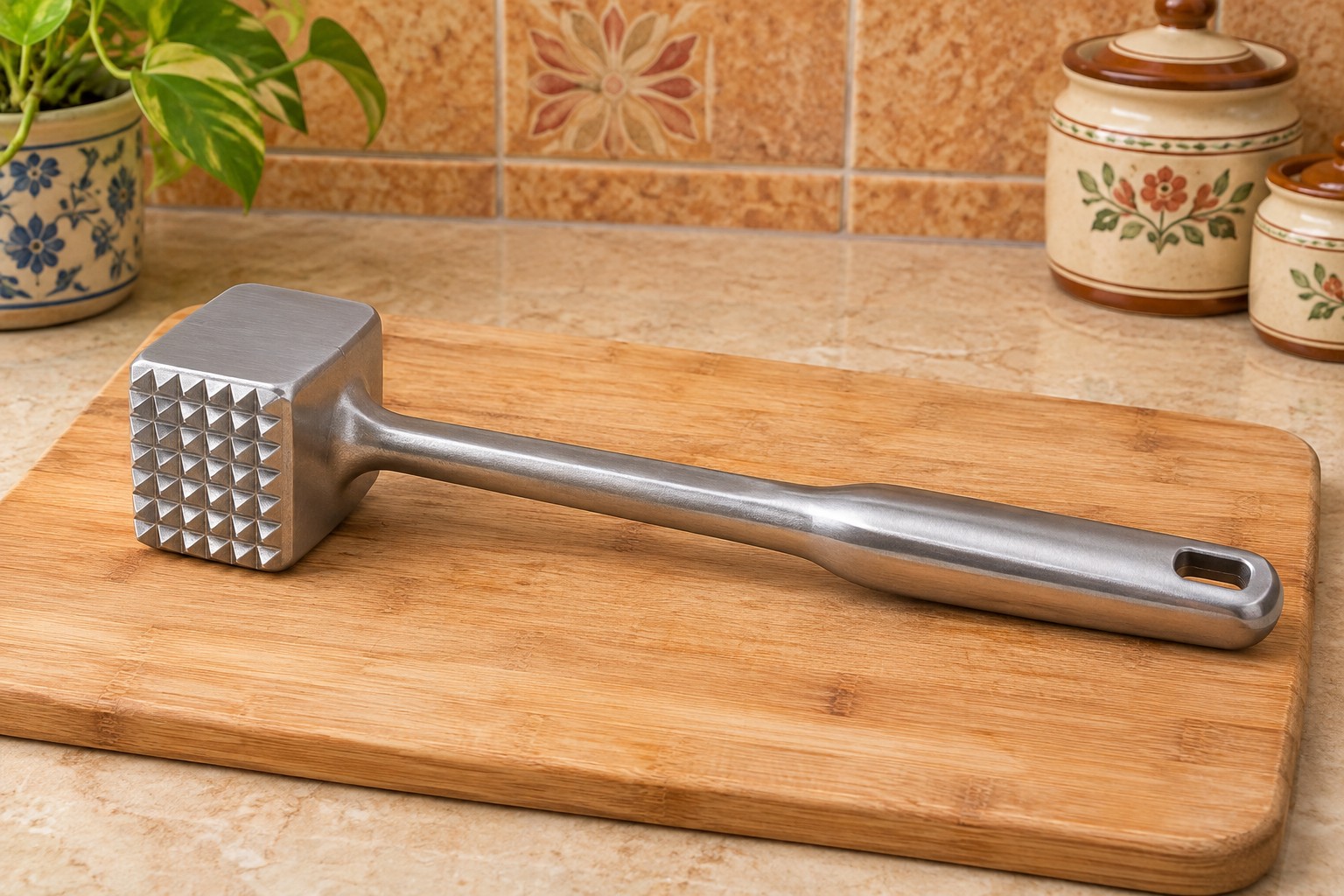
A meat tenderiser is a manual tool used to alter the surface or thickness of suitable meat before cooking. A mallet pounds food with a flat or textured face. A bladed tenderiser repeatedly pierces it with small blades or needles. For Pakistani cooking a flat mallet may help make an even boneless chicken portion for a cutlet-style dish or a particular flattened kebab preparation. These tasks are different from grinding qeema or breaking meat into curry-sized bone-in pieces.
Flat, textured and piercing designs
A flat mallet face is useful for reducing thickness; a toothed face works more locally on the surface. A needle or blade tool creates penetrations and has a more intricate cleaning problem. OXO’s two-sided mallet example illustrates the first category. As an editorial comparison, consider a manageable household mallet against a much heavier one and assess control rather than buying maximum weight. Material and head attachment matter; an aluminium model may have different dishwasher rules from a stainless steel tool.
Work on a stable supported board
Use a sound board on a stable worktop and clear nearby ready-to-eat foods. Prepare boneless meat and use the specific tool according to its instructions. With a mallet, use controlled strokes to work toward the recipe’s intended even thickness rather than repeatedly striking one weak patch. Keep your supporting hand outside the impact area. A suitable food-contact covering may help contain mess if used appropriately, but inspect it for tears and keep fragments out of food. Do not pound in a fragile dish.
Tenderising does not make meat safe
Piercing meat can carry surface contamination inside. Health Canada explains the cooking implications for mechanically tenderised beef. Follow the meat’s safe cooking instructions and use a food thermometer; tenderness or thinness is not proof of safety. Clean the board and tool after raw-meat preparation and keep them away from salad equipment, following FDA separation principles. A mallet is not an appropriate way to break large bones or frozen blocks in a domestic kitchen.
Buying and practical alternatives
Ask Pakistani kitchenware sellers whether the model is a flattening mallet or a piercing tenderiser. Inspect grip security, head attachment, sharp points and whether the complete working surface is accessible for cleaning. For online orders, request weight, materials, disassembly instructions and replacement information. Buy when a recurring recipe needs the tool. A butcher can prepare appropriately sized or flattened portions, avoiding the storage and cleanup burden at home. No mallet can turn every unsuitable cut into the texture of a naturally different cut of meat.
Clean every tooth and joint
Wash promptly after use, following the manufacturer’s directions for the material and blade mechanism. Use suitable cleaning aids while protecting hands from teeth or needles. Disassemble only as instructed and dry thoroughly before protected storage. Stop using a mallet with a loose head or cracked handle, or a bladed tool with bent, broken or inaccessible dirty parts. Its advantage is deliberate control over thickness or surface preparation; the tradeoffs include raw-meat contamination management, impact control and more demanding cleaning in piercing designs.
Frequently Asked Questions
Does pounding replace safe cooking?
No. Follow the meat’s cooking instructions and verify doneness with a suitable food thermometer.
Can I break bones with it?
Do not use a kitchen tenderiser as a bone-breaking hammer.
Is a bladed tool the same as a flat mallet?
No. Piercing creates different handling, cooking and cleaning considerations.
How we know this
- Type Explainer
- Sources 3 (1 official/academic)
- Reviewed November 2026
- Disputed points None
3 sources
- Meat Tenderizer, OXO
- Mechanically tenderized beef guidance, Health Canada
- Safe Food Handling, FDA
Photo credits (1)
- Meat tenderiser displayed on a Pakistani kitchen counter in natural light., DailyLife.pk, All rights reserved
