
Kitchen item guide
Angeethi: ChoosingUsing and Caring for It
Treat an angeethi as an outdoor charcoal brazier requiring stable support, heat control and careful cold-ash handling.
DailyLife.pk kitchen equipment collection
A small brazier
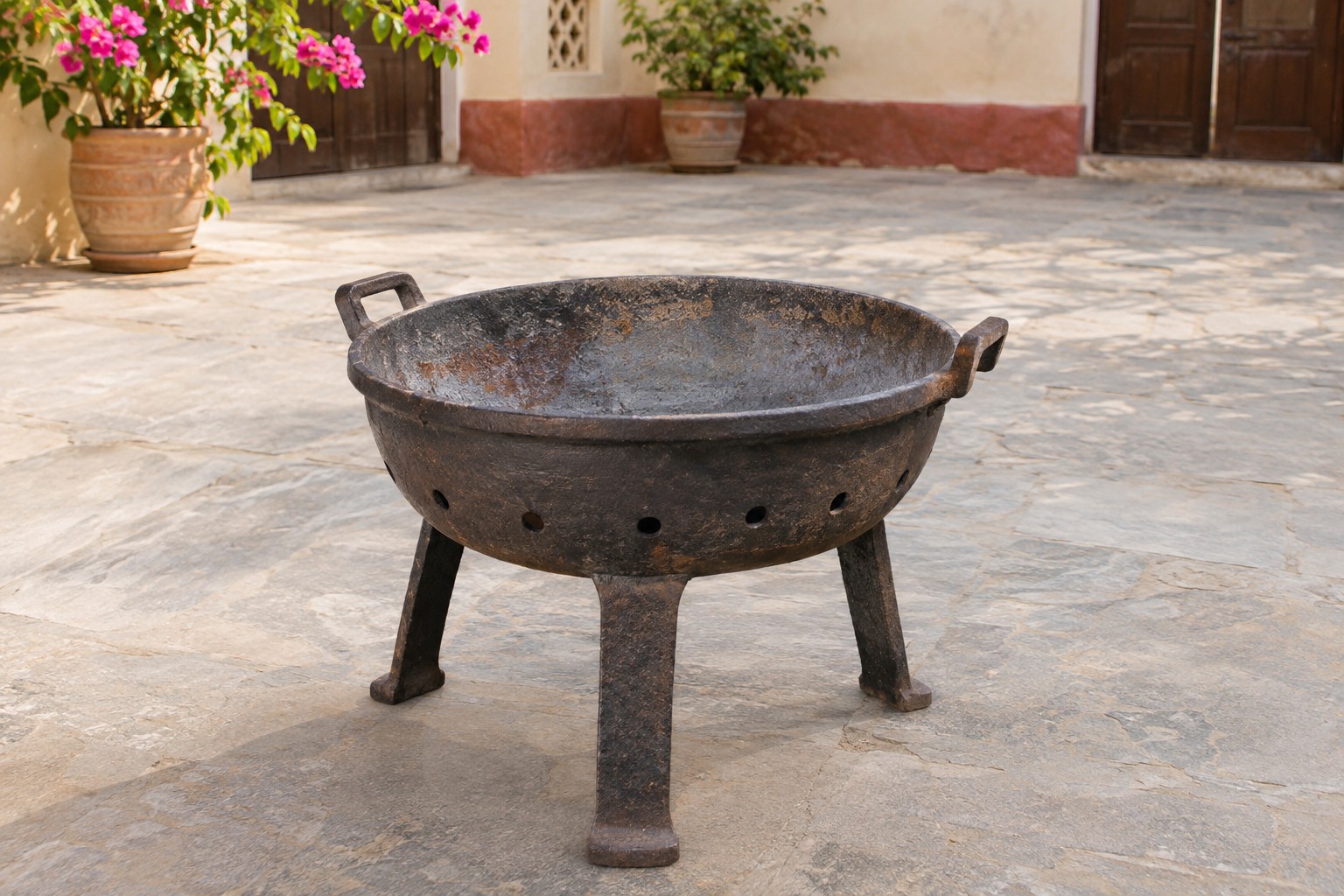
An angeethi is a small brazier used to hold burning fuel, often charcoal. Forms vary from clay-bodied braziers to metal bowls and boxes with air openings. In a Pakistani cooking context it may support a suitable grate, skewers or a permitted cooking vessel for a small outdoor session. It is not an indoor heating appliance and should not be used as one. Its modest size can disguise the seriousness of the hot fuel and combustion gases. Choose it only when you have a suitable outdoor working space and know the intended fuel and cooking arrangement.
Identify the actual construction
Inspect the fire bowl, air openings, stand and any cooking support as one assembly. Clay and metal need different care; an ordinary terracotta pot is not an equivalent firebox. Ask which fuel is permitted, what load the top support accepts and whether the surface is intended to contact food. A removable grate should seat securely rather than balance across a narrow edge. Handles may be intended to position the cold unit, not lift it while burning. Do not infer load capacity from the strength of a decorative loop or from a photograph showing a large pot above a similar brazier.
Select site and scale
A 25 cm versus 35 cm fire-bowl diameter is an editorial comparison example, not a standard size or meal capacity. Evaluate the whole footprint, stand height and stability. CDC guidance warns never to burn charcoal indoors because it releases carbon monoxide, including when the coals look ashy. A garage, bedroom, tent or enclosed veranda is unsuitable. Place the brazier on a level noncombustible surface outdoors, with the clearances the product requires and away from openings. Plan wind exposure, children, pets and a safe route that does not pass over the fire bowl.
Prepare before lighting
Set up the cold angeethi and its approved food support before loading fuel. Keep clean cooked-food dishes and suitable long tools ready, with raw ingredients separate. Light only by the approved method and never add petrol or another improvised accelerant. Weber guidance provides relevant outdoor charcoal-handling precautions, including stable placement and heat protection. Do not carry a burning angeethi around the courtyard to chase shade or shelter. If you need to change position, the session has been planned poorly; follow the safe shutdown method and wait until everything is fully cold before moving.
Cook within its limits
Arrange the food only on a support intended for the brazier. Turn skewers carefully and do not rest heavy saucepan handles where they can lever the support over. A compact firebox offers less separation between hot and cooler areas than a larger grill, so batch size matters. Do not judge thick meat solely by browned edges; use the food’s appropriate safe cooking method and thermometer guidance in FoodSafety.gov guidance. Keep utensils that touched raw meat away from cooked bread or finished kebab. Never bring glowing coals indoors for warmth after the food is done.
Shut down and maintain
Use the maker’s shutdown instructions and leave the unit in its safe outdoor location while cooling. Dispose of ash only after complete cooling and in the manner specified for the fuel and local waste arrangements. Keep children and pets away during that period. Clean the cold grate and inspect the fire bowl, feet and air openings. Dry before storage and protect against weather as appropriate to the material. Stop using a cracked unstable body, a collapsing stand or a support that no longer holds securely. Cosmetic soot does not prove failure, but structural damage cannot be cured by painting over it.
When a barbecue is easier
A complete charcoal barbecue may offer a more stable work height, replaceable grate and more flexible food placement. A suitable hob or permitted electric appliance can serve when there is no outdoor charcoal site. Buy an angeethi for a particular approved small-scale task, not as an emergency indoor stove during a power cut. Inspect the actual piece at a cookware or outdoor-equipment shop, or request clear base, stand and grate photographs online. Its appeal is compactness and simple fuel containment; its limits include exposed heat, limited capacity, cooling time and the same serious combustion precautions as a larger charcoal grill.
Frequently Asked Questions
Can it heat a room?
No. Never burn charcoal indoors.
Can I move it while lit?
Keep the burning unit in its planned safe location and follow its shutdown instructions.
Can any pot sit on top?
Only use the stable cooking arrangement and load permitted for the exact brazier.
How we know this
- Type Explainer
- Sources 3 (2 official/academic)
- Reviewed November 2026
- Disputed points None
3 sources
- Carbon monoxide poisoning basics, CDC
- Barbecue safety, Weber
- Four steps to food safety, FoodSafety.gov
Photo credits (1)
- a traditional small Pakistani angeethi charcoal brazier, shallow round cast iron fire bowl supported by a stable three-leg stand with air holes, empty and cold on noncombustible stone in a fully open courtyard, DailyLife.pk, All rights reserved
