
Kitchen item guide
Dinner plate: ChoosingUsing and Caring for It
Choose dinner plates for the meals, storage space and washing routine of your household.
DailyLife.pk kitchen equipment collection
The main individual serving surface
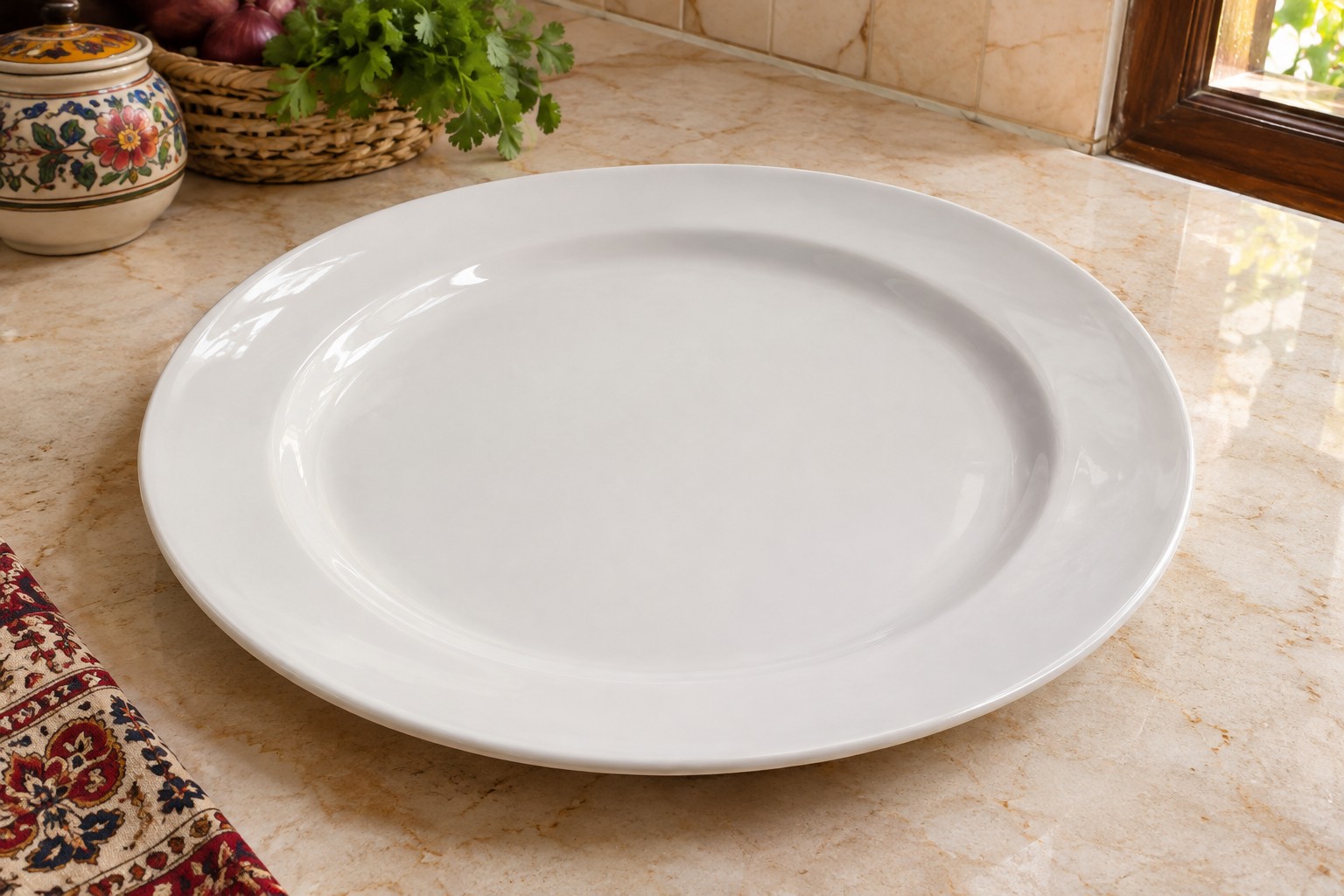
A dinner plate provides the broad surface for an individual meal. In a Pakistani home it may hold roti, a portion of rice and curry, or food served from shared dishes. The useful plate has enough flat space for the food without becoming uncomfortable to carry or wash. A very large restaurant-style plate can make a small dining table feel crowded.
A plate is servingware unless its manufacturer also permits reheating or baking. Its resemblance to an oven dish does not establish heat suitability.
Rims, depth and materials
A shallow coupe shape maximises the central area, while a pronounced rim creates a border that may catch minor sauce movement. A slightly deeper plate can suit curry and rice. Ceramic, glass and stainless steel have different weight and breakage characteristics; plastic-looking ware needs material identification.
As an editorial comparison, measure a plate around 25 cm and one around 28 cm against your table setting and cupboard. The flat eating area can differ even at the same outer diameter. FDA guidance on lead in foodwares is relevant when choosing ceramic glazes, especially decorative or untraceable pieces.
Serve within the dish’s permissions
Inspect the rim and foot before loading. Place hot food on a stable plate suited to that use, leaving enough edge for safe handling. Carry level and do not balance stacked full plates. Use a separate serving utensil for shared dishes rather than returning a used eating spoon to the communal bowl.
For reheating, confirm microwave permission and any decoration restrictions. BfR’s melamine-formaldehyde guidance warns against heating that material in microwaves and using it for hot liquid food. Unknown material should not be treated as equivalent to microwave-rated ceramic or glass.
Buying singles or a set
Choose the number of pieces around your regular household and realistic guest use. Open-stock plates can be easier to replace than an elaborate limited set. Check that a stack fits your cupboard and that a single plate sits flat. Inspect the underside for rough feet that can scratch tables or other plates.
In a crockery shop, compare the weight when held in one hand and the height of a stack. For online purchases, check actual diameter, material, care directions and the seller’s damaged-arrival process. A photograph of an ornate rim says little about usable food space.
Wash and store without rim damage
Remove food scraps, wash according to the maker’s directions and rinse thoroughly. Use nonabrasive tools on glaze and decoration. Dry before putting away, particularly where plates sit tightly in a cabinet. Do not force a plate into a rack slot that presses on a chipped or delicate rim.
Stop using sharp chips, spreading cracks or a damaged base that makes the plate wobble. Unknown flaking decoration on a food-contact area warrants assessment. Avoid repairing broken everyday plates with ordinary glue and returning them to meal service. Cosmetic utensil marks are different from a crack through the ceramic.
Practical alternatives
A good dinner plate is versatile but may duplicate a thali or deep plate already used comfortably at home. A suitable shallow bowl can work better for a very saucy meal. Keep specialist platters for communal service and choose individual plate sizes that people can actually finish and carry. Matching a pattern matters less than secure handling and documented food use.
Frequently Asked Questions
Can every dinner plate be microwaved?
No. Follow the material and manufacturer’s directions, including metallic decoration.
Is a larger plate always more useful?
No. Compare the eating area with your meals, table and cupboard.
Should chipped plates remain in daily use?
Sharp chips and structural cracks are reasons to remove them from food service.
How we know this
- Type Explainer
- Sources 3 (2 official/academic)
- Reviewed November 2026
- Disputed points None
3 sources
- Lead in food and foodwares, US Food and Drug Administration
- Melamine-formaldehyde tableware questions, German Federal Institute for Risk Assessment
- Four steps to food safety, FoodSafety.gov
Photo credits (1)
- One empty large round white glazed ceramic dinner plate with modest rim, prominent, no other plates., DailyLife.pk, All rights reserved
