
Kitchen item guide
Coffee machine: choosingusing and caring for it
Choose a coffee machine by drink style, cleaning routine and supplies, with espresso systems treated differently from drip brewers.
DailyLife.pk kitchen equipment collection
Several different brewing systems
Coffee machine is a broad term covering drip filter brewers, capsule machines, manual espresso machines and automatic bean-to-cup systems. A drip brewer passes hot water through ground coffee into a jug; an espresso machine uses a different brewing arrangement and often provides a steam wand. Capsules use a specific consumable system. These are different daily routines, not simply different sizes of the same appliance.
In a Pakistani kitchen, the useful choice depends on whether the household wants a jug for several people, an occasional small coffee or milk-based espresso drinks. A machine does not brew suitable coffee from any grind or capsule. Decide the drink style first, then the equipment and continuing supplies. This guide does not claim a health benefit from any brewing system.
Consider supplies and work beyond brewing
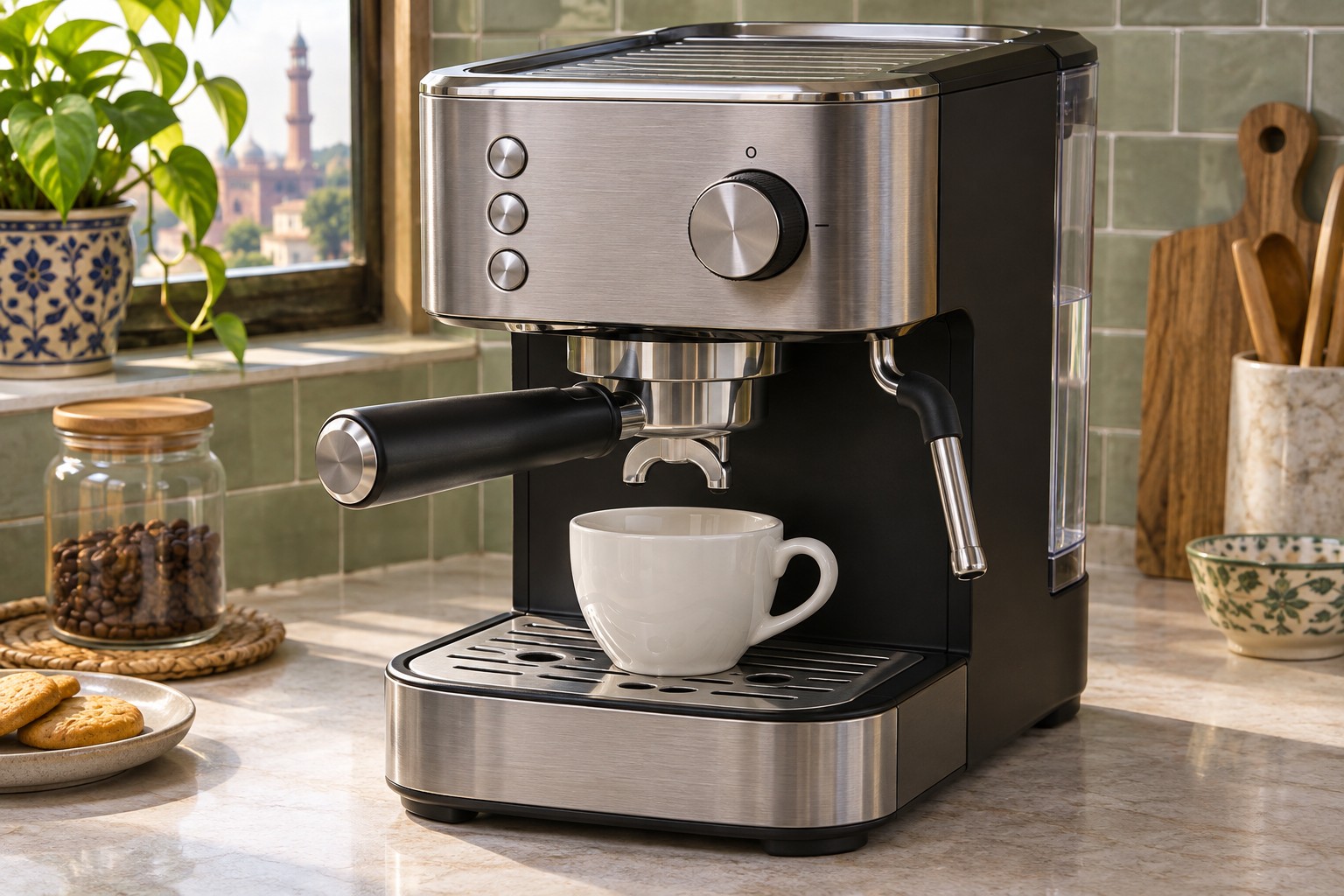
For drip coffee, check the jug size, filter type, removable basket and whether a warming plate suits your serving routine. For capsules, confirm the exact compatible format and local availability without assuming similar-looking pods fit. For espresso, check whether a grinder is integrated or separate, the portafilter arrangement, water tank access and room to handle a milk jug safely.
As an editorial planning exercise, describe an ordinary morning from filling the tank to clearing grounds and washing milk parts. A large machine may be inconvenient if it must be pulled forward from under cabinets to refill. Measure cup clearance and the space required by an open lid. Ask for a written warranty, local service and availability of seals, filters and water tanks. Avoid choosing solely by a pump-pressure number, which does not describe the entire drink-making process.
Use suitable water and approved preparation
Read the exact model instructions for first rinse, water type, filter conditioning and initial operation. Fill only the intended tank with suitable water, not milk or flavoured liquid. Use the coffee dose, grind and filter arrangement specified for the system. A supplied filter basket and its matching portafilter are designed together; forcing an unrelated part into place is not a safe adaptation.
Position the appliance on a stable dry counter, keep the cable clear of the hob and leave space for steam and hot components. Electrical Safety First's kitchen guidance addresses moisture and heated electrical equipment. Confirm voltage and local supply requirements for imports. A machine that heats and pressurises water deserves careful assembly rather than trial-and-error operation with a loose brew component.
Brew and steam within the machine’s limits
For a manual espresso machine, fit the prepared portafilter according to its locking instructions and place a stable cup below the outlet. Do not release it during brewing or while the system remains in a condition the manual identifies as pressurised. For drip systems, position the jug and basket correctly before starting and respect any pause-and-pour limitations. Automatic systems still require the correct water, beans, grounds or capsules.
Use a steam wand only by its instructed method, keeping skin away from the hot nozzle and escaping steam. Handle the jug by its intended grip and prevent milk from reaching electrical parts. Purge and clean milk-contact components as directed after use. Do not leave milk residue to dry in a wand or tube. An automatic rinse does not necessarily perform every cleaning task required for a milk system.
Descaling differs from removing coffee residue
Clean the brew parts, grounds container, drip tray and milk-contact components at their stated intervals. Descaling removes mineral deposits and is a different task from cleaning coffee oils. De'Longhi's guided descaling instructions show a model-specific sequence involving the tank, spout and rinse stages. Use your own machine's approved product and method rather than transferring a vinegar recipe from another appliance.
Cool and disconnect for the tasks that require it, and never immerse the powered body. Leaks into the housing, damaged seals, poor locking, electrical faults or persistent abnormal pressure need qualified service. No universal lifespan applies. A coffee machine offers a repeatable system for a chosen drink but brings cleaning, supplies and counter-space commitments. A French press, pour-over cone or other manual brewer can suit occasional coffee with fewer powered components. Choose the system whose complete preparation and care routine you are willing to maintain.
Frequently Asked Questions
Are capsule formats interchangeable?
Use only the format explicitly supported by the machine.
Is descaling the same as cleaning coffee oils?
No. Follow the separate procedures for mineral scale, coffee residue and milk parts.
Can I remove an espresso portafilter during brewing?
No. Follow the exact stop and depressurisation procedure before release.
How we know this
- Type Explainer
- Sources 2
- Reviewed November 2026
- Disputed points None
2 sources
- Coffee-machine descaling guidance, De’Longhi
- Electrical safety in the kitchen, Electrical Safety First
Photo credits (1)
- Compact unbranded espresso coffee machine with stainless portafilter locked in group head, short steam wand at side, white cup under dual spout, machine off., DailyLife.pk, All rights reserved
