
Kitchen item guide
Mixing bowl: BuyingUse and Care for a Pakistani Kitchen
Choose a bowl around the mixing action, ingredients and appliance clearances rather than capacity alone.
DailyLife.pk kitchen equipment collection
A contained place to combine food
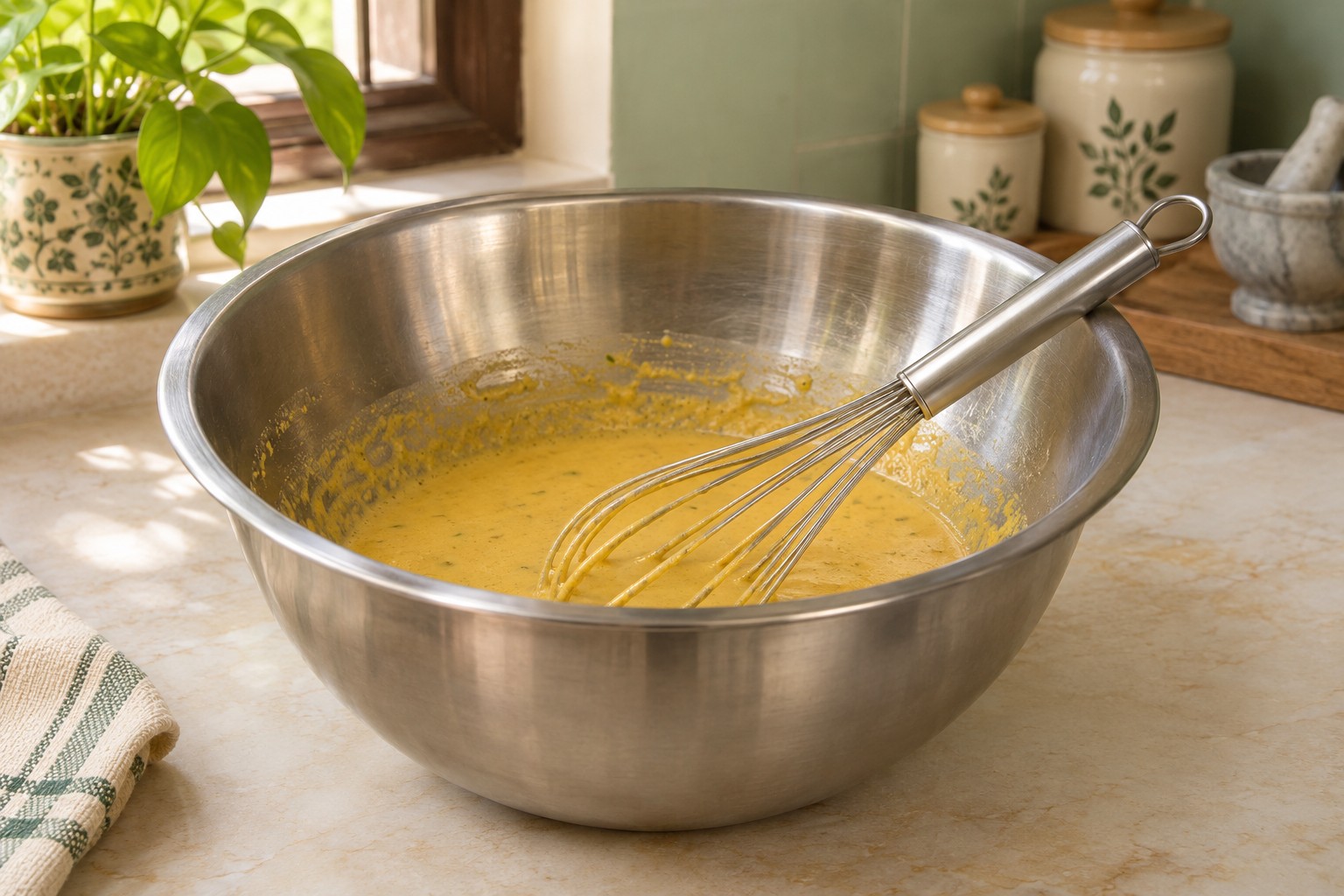
A mixing bowl gives ingredients space to be stirred, folded, whisked or kneaded. It can serve atta dough, besan batter, pakora ingredients, marinated meat, cake mixtures or a kachumber salad. The shape matters as much as the nominal capacity. A deep bowl contains splashes, while a broader one gives room for hand mixing. In a Pakistani kitchen, a few bowls suited to different jobs are often more useful than a large identical set that nests neatly but never leaves enough headroom during the actual recipe.
Steel, glass, plastic and ceramic
Stainless steel is light relative to many glass or ceramic bowls and easy to inspect, but its microwave suitability should not be assumed. Glass allows you to see the mixture but can be heavy and vulnerable to impact or abrupt temperature changes. Plastic needs clear food-contact and heat information, and ceramic glaze should be intact. A bowl with a nonslip base can steady whisking, while a plain rounded base may be easier to rotate. Compatibility with an electric whisk, microwave, oven or freezer remains product-specific; the material category alone does not settle it.
Allow room for the action above the food
As an editorial example, compare a small bowl for dressing with a bowl several times the volume of a cake mixture before whisking. These examples describe workflow rather than fixed family sizes. Check whether a hand mixer can reach the bottom without its body striking the rim, and whether a bowl scraper follows the curve. Kitchenware retailers should state usable dimensions and permitted heating or appliance uses. Lift the bowl as though full, examine the rim for chips or burrs and check how easily the underside can be washed and dried.
Stabilise the bowl and add deliberately
Place the bowl on a secure clean surface and support it as needed without creating an unstable tower of cloths. Combine ingredients in the recipe's order, leaving headroom for stirring. For dough, gather dry flour into the wet portion before vigorous kneading so it does not scatter. For batter, use a whisk or scraper suited to the bowl surface. A bowl with a pouring lip can help transfer liquid, but a very full heavy bowl may still need two hands. Do not put a hot pan into a cold bowl or assume a mixing vessel is a safe trivet.
Separate marinating from ready-to-eat mixing
Keep a bowl used for raw chicken marinade separate from finished salad and cooked food until it is thoroughly washed. FDA warns against placing cooked food in unwashed vessels that held raw animal food and recommends washing dishes and utensils. Use a suitable cover and refrigerate foods that need cold storage; a mixing bowl left on the counter is not a storage plan. Do not taste raw flour batter while checking texture. Scrape out residue and wash promptly before dough or egg mixture dries into seams or under a base ring.
Nest only after the bowls are dry
Follow the exact bowl's care and dishwasher instructions, protect glass rims from metal impacts and dry nonslip bases before stacking. Replace chipped glass or ceramic, deeply damaged plastic that cannot be cleaned, loose attachments or flaking coatings. A parat offers a wider kneading area for substantial atta dough, while a measuring jug suits a measured liquid pour; neither has to replace every bowl. Buy another size when it solves repeated overflow or awkward reach. A cleanable shape, manageable weight and stable base are more important than owning every vessel in a matching collection.
Frequently Asked Questions
Can every glass bowl go in the oven?
No. Check explicit oven-use instructions and temperature-change limits for the exact product.
How full should a bowl be for whisking?
Leave enough headroom for the mixture to move and expand; choose around the actual technique and recipe rather than brim capacity.
Can a marinade bowl serve cooked meat afterwards?
Only after thorough cleaning. Do not transfer cooked food into an unwashed raw-meat vessel.
How we know this
- Type Explainer
- Sources 2 (2 official/academic)
- Reviewed November 2026
- Disputed points None
2 sources
- Safe Food Handling, FDA
- Handling Flour Safely, FDA
Photo credits (1)
- Stainless steel mixing bowl containing besan batter and a whisk., DailyLife.pk, All rights reserved
