
Kitchen item guide
Dish brush: A Practical Pakistani Kitchen Guide
Choose a dish brush with useful reach, a controllable grip and bristles compatible with the surfaces you wash.
DailyLife.pk kitchen equipment collection
Bristles for everyday dishwashing
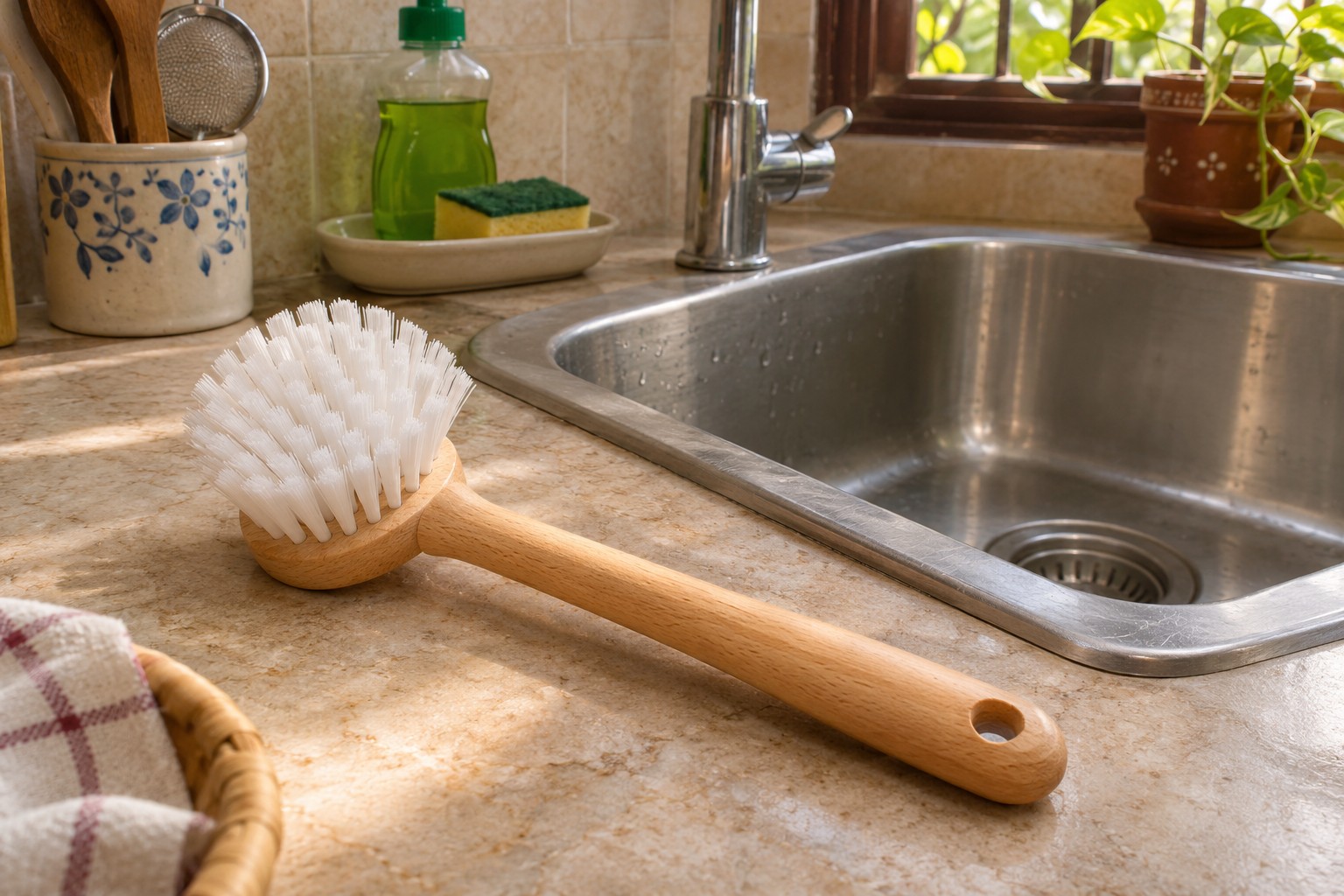
A dish brush is a handled cleaning tool that uses bristles to loosen food from dishes and suitable cookware. It keeps fingers farther from greasy surfaces and can reach corners that a broad cloth misses. In a Pakistani kitchen it can be useful around a steel plate rim, a tea cup handle or a saucepan after soaking. It does not suit every surface or every narrow opening. A brush used on dishes should remain separate from tools used on drains, floors or bathroom fixtures, even when the shapes look similar.
Match head size and stiffness to the job
A broad head covers plates quickly, while a smaller angled head reaches corners. Firm bristles can help on durable surfaces but may be inappropriate for a delicate coating. A scraper edge is useful only when the cookware instructions permit it. Plain handles are simple; soap-dispensing handles add a reservoir, valve and seals to clean. Replaceable heads reduce replacement of the handle but require a dependable attachment. As editorial fit examples, try the brush angle against a dinner plate and your smallest saucepan. A bottle brush is a better choice when the opening does not admit a dish-brush head.
Wash without applying unnecessary force
Scrape loose food first and soak suitable cookware if residue has dried. Apply dishwashing liquid as directed and brush accessible surfaces with controlled strokes. Rinse the item and inspect corners before placing it to drain. Manufacturer descriptions such as the OXO dish brush identify particular bristle and scraper features, but another brush may not share the same surface compatibility. Follow the pan maker’s care instructions. If hard scrubbing seems necessary, reassess the cleaning method instead of pressing a rough tool against a coated surface until it marks.
The brush also needs cleaning
Remove trapped food from the bristles after use, rinse and clean according to the brush instructions, then store so it can drain and dry. Do not leave the head sitting in dirty washing water. BfR warns that dirty cleaning tools can spread pathogens. A hanging hole or ventilated holder can make drying easier, but the holder must be cleaned too. Do not assume boiling, microwaving or a dishwasher cycle is safe for a wooden handle, glued head or soap reservoir without explicit product permission.
Buying, storage and replacement
Inspect bristle anchoring, handle edges and how securely a replaceable head locks. Ask whether the material is suitable for your cookware and whether replacement heads remain available. A clean appropriate dishcloth or non-scratch pad can substitute for broad surfaces, although each needs its own care. Keep a separate brush for heavy non-food cleaning if required. Replace heads with missing or permanently splayed bristles, persistent residue, cracks or a loose connection. There is no dependable universal lifespan for all brushes: how it is used, cleaned and dried matters. A comfortable reusable handle is useful only while its head still cleans reliably.
Frequently Asked Questions
Is a dish brush suitable for every nonstick pan?
Check both the brush and cookware instructions rather than assuming all bristles are safe.
Can I microwave it to clean it?
Only if the exact maker explicitly permits that method; many brushes contain unsuitable parts.
When should I replace the head?
Replace it when damage, loose bristles or persistent contamination prevents reliable cleaning.
How we know this
- Type Explainer
- Sources 3
- Reviewed November 2026
- Disputed points None
3 sources
- Dish Brush Product Details, OXO
- Foodborne Infections in Private Households, German Federal Institute for Risk Assessment
- Washing Dishes by Hand, American Cleaning Institute
Photo credits (1)
- Wooden-handled dish brush with white bristles lying beside a stainless steel sink., DailyLife.pk, All rights reserved
