
Kitchen item guide
Jalebi bottle: ChoosingUsing and Caring for It
Choose a food-use jalebi bottle with a cleanable nozzle and practise a steady batter flow before frying.
DailyLife.pk kitchen equipment collection
A squeeze bottle for spirals
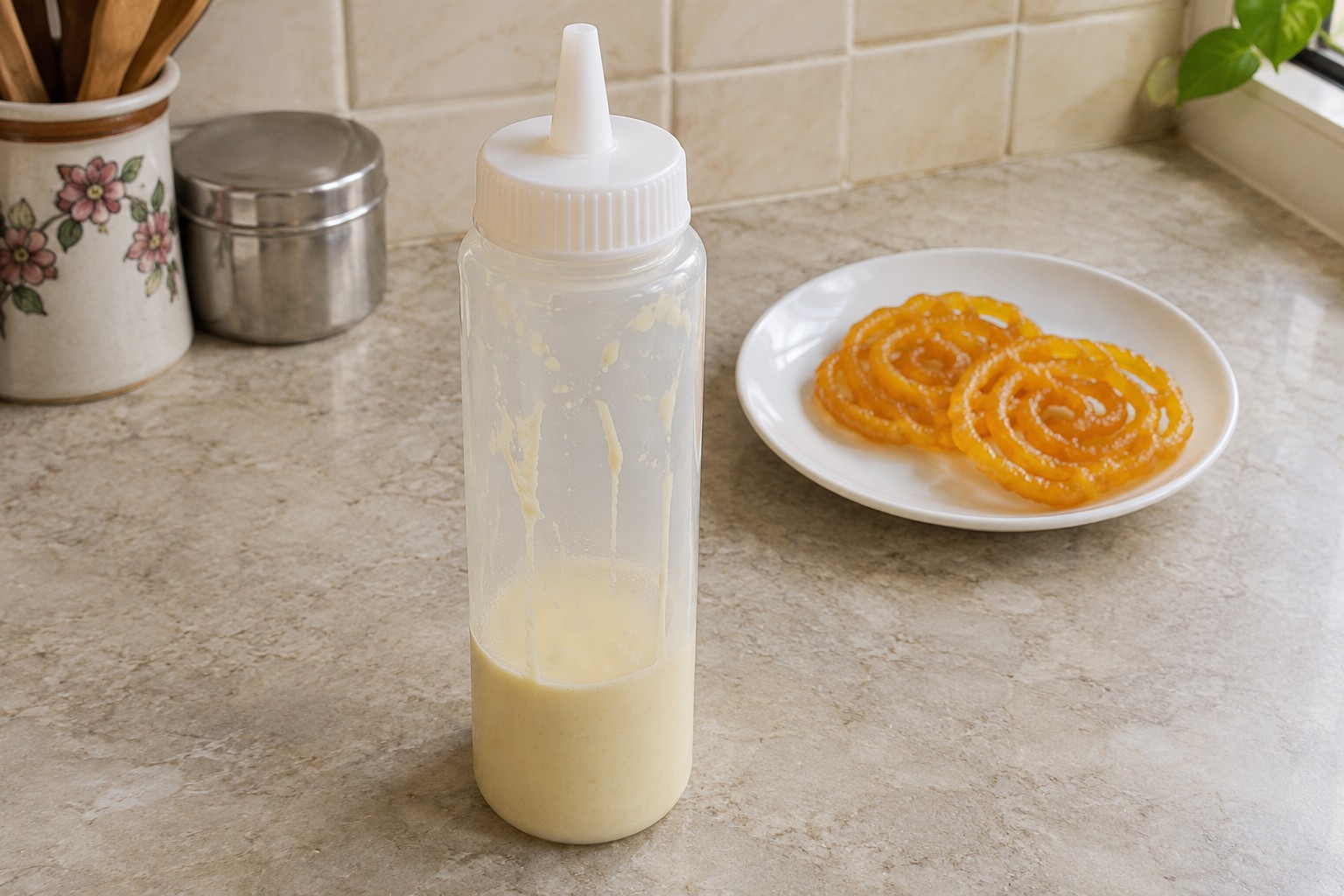
A jalebi bottle is a flexible food-use bottle with a narrow dispensing nozzle. Pressure on the bottle pushes smooth batter out in a continuous line, helping form jalebi spirals. It is convenient for a small Pakistani home batch because the nozzle gives a clear starting point and the bottle stands upright between portions. It does not fix batter consistency, fermentation or frying technique.
A clean new food bottle is preferable to an unknown reused container. A bottle previously holding cleaning chemicals, cosmetics or non-food liquids must not be repurposed for batter.
Opening and bottle shape
Simple bottles have one fixed nozzle; others offer interchangeable caps or a wider opening for filling. A wide neck makes washing easier. A stiff body may be tiring to squeeze, while an excessively soft bottle can squirt unevenly. As an editorial buying comparison, choose a manageable bottle around 250–500 ml rather than assuming a larger catering container is easier.
The nozzle diameter must suit the recipe’s batter, not a universal “correct” spiral thickness. Sanjeev Kapoor’s jalebi instructions describe using a squeeze bottle for a smooth batter and note that making the spirals takes practice.
Practise away from hot oil first
Prepare batter with the chosen recipe and remove lumps by its stated method. Fill without coating the cap threads, tighten securely and practise a continuous line on a clean plate. Adjust the batter only within the recipe, then clean up the practice area. A blocked nozzle is a signal to stop and inspect, not to squeeze harder over hot oil.
Follow a tested jalebi recipe for pan, oil level, temperature and movement. Keep the bottle itself clear of the pan, flame and hot oil, and avoid reaching across the burner. Do not store the bottle on a hot hob. US Fire Administration burn guidance emphasises preventing knocked-over hot items and using dry oven protection. Keep children away from the frying area.
Buying checks
Look for food-use identification, an intended temperature range and a removable cap you can inspect internally. Ask a bakery supplier for a jalebi or food-dispensing bottle rather than an unlabelled industrial squeeze bottle. Online photographs should show the opening and cap threads as well as capacity.
Check that the nozzle is smooth, the cap seats evenly and the bottle springs back without splitting. A removable tiny tip can be lost during washing; consider whether replacement parts are available. Do not enlarge a nozzle with a heated nail, which can leave rough edges and changes the product from its documented condition.
Clean the narrow passage
Empty batter after use and wash promptly so it cannot dry inside the nozzle. Separate approved removable parts and work warm soapy water through the passage with an appropriately sized soft brush. Rinse thoroughly and allow the bottle, cap and nozzle to dry separately. Use a dishwasher only when the manufacturer permits it.
Replace cracks, damaged threads, a cap that leaks or persistent residue that cannot be cleaned. Do not leave fermented batter sealed in a bottle indefinitely; follow the recipe’s storage directions and keep the dispenser a tool rather than a long-term food container.
Alternatives and limitations
A bottle is easy to refill and stand upright, but cleaning a narrow nozzle takes attention. A suitable food-use piping bag with the appropriate tip is another dispensing method; a traditional jalebi cloth requires its own technique and washing routine. Neither alternative makes hot-oil work automatically safe. Practise a small batch before preparing jalebi for guests so the equipment and batter work together.
Frequently Asked Questions
Can I use any empty sauce bottle?
Only if it is suitable for food reuse, cleanable and appropriate for the task. Never use a non-food chemical bottle.
Why does the flow stop?
Look for lumps, thick batter or a blocked nozzle. Stop and clear it safely away from hot oil.
Should the nozzle touch the oil?
Keep the dispenser clear of the hot oil, pan and flame; follow the recipe’s method.
How we know this
- Type Explainer
- Sources 3 (2 official/academic)
- Reviewed November 2026
- Disputed points None
3 sources
- Jalebi technique using a squeeze bottle, Sanjeev Kapoor
- Prevent burns and scalds in the kitchen, US Fire Administration
- Four steps to food safety, FoodSafety.gov
Photo credits (1)
- One upright translucent food-safe squeeze bottle with white screw cap and a short narrow cone nozzle, a little pale jalebi batter inside, two golden jalebi on a small white plate behind., DailyLife.pk, All rights reserved
