
Kitchen item guide
Contact grill: choosingusing and caring for it
Choose a contact grill for suitable flat foods and pressed bread, with plate space, drainage and temperature checks in mind.
DailyLife.pk kitchen equipment collection
Cooking between two hot surfaces
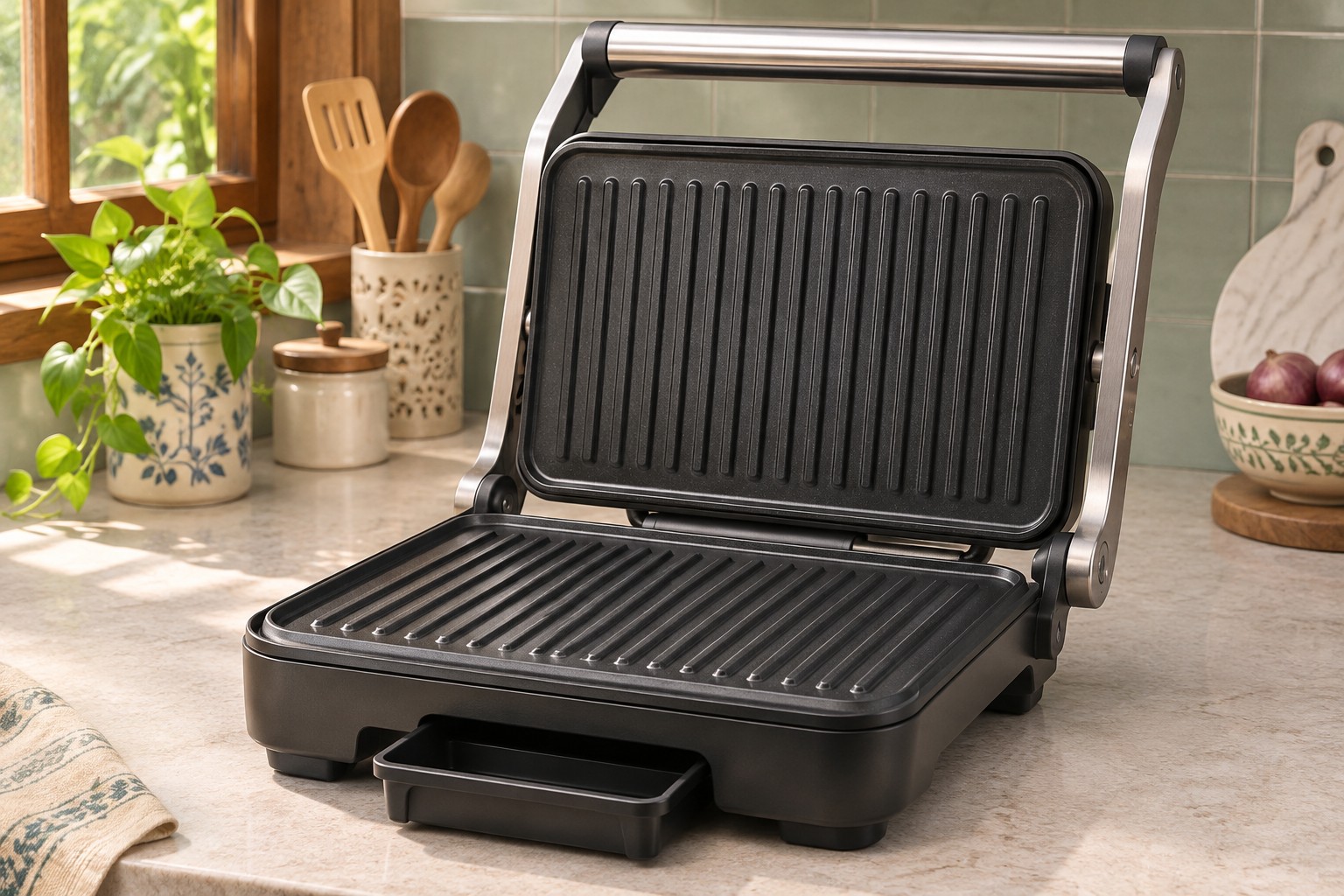
A contact grill cooks suitable food between heated upper and lower plates. Many have ridged plates and a drip tray; some open into another approved arrangement. The hinge may adjust for thickness, but that does not make the appliance suitable for arbitrarily tall food. It differs from an open barbecue and does not reproduce smoke cooking simply because it leaves grill marks.
For Pakistani meals it may handle a suitable boneless chicken preparation, vegetables, kebab-style patties or a panini made with appropriate bread. Wet marinades and uneven pieces need a recipe that suits contact cooking. A dense raw centre can remain undercooked while the outside browns, so food arrangement and temperature checking matter more than attractive lines on the surface.
Check usable plate area and hinge
Measure the working plate area and inspect whether the hinge can sit evenly on the food you usually cook. As an editorial planning example, arrange the normal number of chicken pieces on paper matching the plate dimensions, leaving the spacing required by the manual. A large-looking lid does not guarantee room for a family serving in one batch. A model that opens flat needs additional counter clearance in that mode.
Check whether plates are removable, whether each heating surface is controlled and how the drip tray locks into place. Automatic food programmes still have load and starting-condition requirements. Tefal's panini-grill support links operating and care information to the exact model. Confirm replacement plates, drip trays and hinge parts locally. Serviceability is especially relevant for a heavy lid that must remain secure.
Set up the drainage path
Put the grill on a dry, stable, heat-resistant surface and fit the drip tray correctly before heating. Do not tilt the appliance with an improvised support to force drainage. Keep vents and the cord clear, and leave the manufacturer's required space around the hot body. Check supply suitability rather than sharing an unsuitable extension board with other heating appliances.
Prepare permitted foods in reasonably consistent thicknesses. Remove excessive dripping marinade according to the recipe, keep raw and ready-to-eat food separate and use distinct clean utensils for finished food. Preheat only by the approved procedure. Add oil to plates or food only as directed for the model and recipe; a nonstick coating is not a reason to ignore its maintenance instructions.
Let the hinge work and verify doneness
Place food on the lower plate without overcrowding and lower the lid as designed. Do not press down with body weight, latch a model not designed to latch during cooking or put a heavy object on top. Follow turning or repositioning instructions if required. Stay nearby, particularly while learning how a sugary marinade browns on your chosen setting.
Use a clean food thermometer to check raw animal foods against appropriate safe internal-temperature guidance. FDA food-handling advice applies regardless of whether a grill displays an automatic finish signal. Thick portions, frozen food and mixed loads can have programme restrictions. Open the lid away from the face and remove food with an approved utensil, protecting hands from both hot plates and steam. Empty hot grease only after the safe cooling procedure, not while carrying the whole grill to the sink.
Clean plates and tray after use
Switch off, disconnect and cool as directed. Remove permitted plates using their release controls and wash according to the material and coating instructions. Clean the drip tray and accessible grease channels; leaving them full affects the next cooking session. Wipe fixed surfaces without immersing the appliance or pouring water through hinge seams. Avoid metal scraping and abrasive scourers that damage coatings.
A cracked tray, loose hinge, failed plate lock, peeling coating or damaged cable needs assessment. Do not improvise a replacement drip collector if the designed part is missing. There is no fixed service life for every grill. Its advantages are two-sided contact cooking and pressed-bread capability; its disadvantages include limited batch area, grease cleanup and less flexibility for very uneven foods. A ridged stovetop grill pan is a simpler alternative with different heat control, and an oven handles larger batches. Buy the electric grill when its actual plate geometry fits your usual food and cleaning space.
Frequently Asked Questions
Do grill marks prove chicken is cooked?
No. Check the centre with a food thermometer against appropriate safe-temperature guidance.
Can I press hard on the lid?
Use only the pressure and hinge movement permitted by the manual.
Can it replace an outdoor barbecue?
It provides contact heat; it does not reproduce every barbecue method or smoke flavour.
How we know this
- Type Explainer
- Sources 3 (1 official/academic)
- Reviewed November 2026
- Disputed points None
3 sources
- Contact-grill instructions and care, Tefal
- Safe food handling, US Food and Drug Administration
- Electrical safety in the kitchen, Electrical Safety First
Photo credits (1)
- Compact electric contact grill open showing two parallel ridged rectangular nonstick grill plates and small removable drip tray, unplugged., DailyLife.pk, All rights reserved
