
Kitchen item guide
Sandwich maker: choosingusing and caring for it
Match bread and filling to a sandwich maker’s plates, then protect the coating and avoid forcing the latch.
DailyLife.pk kitchen equipment collection
Heated plates that close around bread
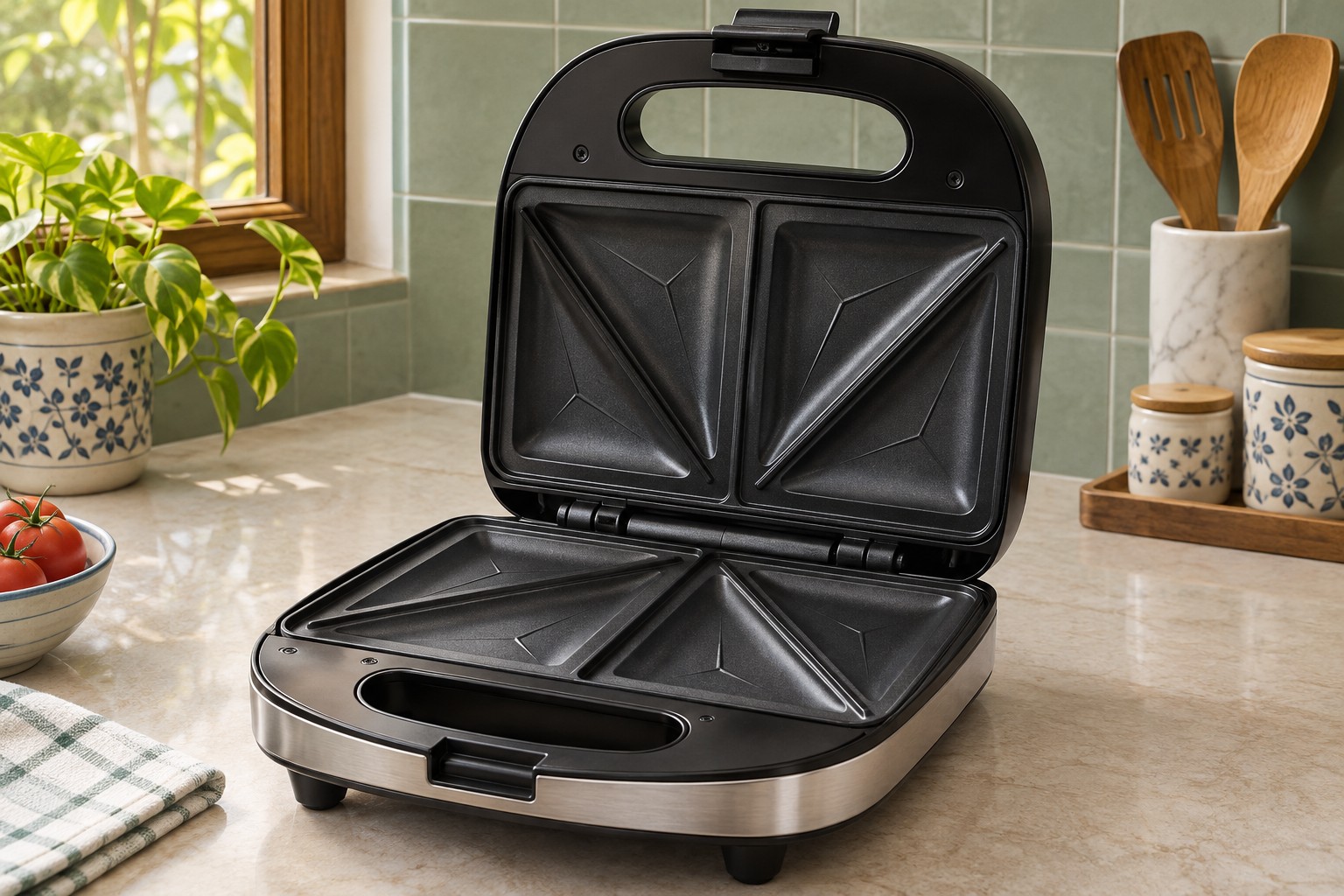
A sandwich maker heats bread between two plates, often with shaped pockets that press and divide a sandwich. It can make quick toasted sandwiches with suitable fillings. Some machines have interchangeable waffle or grill plates, but those are separate approved configurations, not capabilities implied by every hinged toaster. A pocket sandwich maker is also different from a pop-up toaster, which is generally for permitted plain bread items.
In a Pakistani kitchen it can suit a cooked chicken filling, cheese with a modest vegetable filling, or a prepared potato mixture in bread. Its convenience comes from a small repeatable batch. It is not a safe shortcut for sealing large raw meat pieces inside bread and assuming the toasted surface proves the filling is cooked.
Plate shape determines what fits
Compare the plate dimensions with the bread you buy regularly. Deep-pocket plates accommodate different thicknesses from shallow triangular moulds, but every design still has a permitted load. As an editorial shop check, measure a usual bread slice and consider whether the crust sits fully within the working surface. Do not judge fit from the number of triangles pictured on a box alone.
Fixed plates can have fewer release mechanisms but require careful wiping. Removable plates may be easier to wash when their instructions permit it. Check the coating, hinges, handle clearance and latch quality. Ask whether replacement plates or latch components are available. Tefal's model-specific sandwich-maker support is an example of why plate functions and instructions should be checked against the exact appliance.
Prepare the counter and filling
Set the machine on a dry, stable, heat-resistant surface with its required clearance. Keep the cable away from the plate edge, sink and hob. Check the rating and supply suitability before use. Electrical Safety First's kitchen advice explains why heat, liquids and trailing cords need attention together.
Use cooked fillings that are appropriate for the recipe and safe reheating method. Drain very wet ingredients and avoid overfilling, since escaping filling can reach hinges or electrical seams. Do not assume the outside bread-toasting time will safely reheat a thick chilled filling. Prepare manageable sandwiches with a modest, even layer. Any butter or oil on the bread or plates should follow the model and recipe directions rather than being applied automatically to every nonstick surface.
Close gently and check the result
Preheat if instructed and interpret indicator lights using the manual: a ready light usually refers to the appliance's condition, not proof that a loaded sandwich is finished. Place bread and filling in the correct positions, lower the lid and close only as designed. If the latch will not close easily, remove excess thickness rather than pushing hard on the handle or adding weight to the lid.
Monitor the first batch and open carefully to release hot steam. Use the permitted heat-resistant non-scratching utensil to remove food, keeping it away from electrical components. Let the sandwich cool enough before eating, because molten cheese or a moist filling can burn even when the crust feels manageable. Reheated leftovers require safe heating through the centre; FDA's food-handling guidance supports checking actual food temperature rather than relying on surface colour.
Keep the hinges and coating clean
Switch off, unplug and cool according to the instructions. Remove permitted plates only by their release mechanism, wash using the approved method and dry before refitting. For fixed plates, wipe without pouring water across the appliance. Use a soft implement for crumbs and residue; metal knives and abrasive scourers can damage a coating. Clean accessible spill areas near the hinge without forcing liquid into the body.
A broken latch, loose hinge, damaged cable, loose plate or deteriorating coating warrants service advice. Do not keep a lid shut with a heavy object or clamp. There is no standard replacement age. The sandwich maker offers a compact, quick batch of pressed toast, but limits bread size and filling depth and adds another appliance to clean. A tawa or frying pan with careful turning can make a toasted sandwich, and a contact grill handles some thicker breads more flexibly. Choose the pocket machine when its plate shape suits the sandwiches your household actually wants.
Frequently Asked Questions
Can I force the latch over a thick sandwich?
No. Reduce the filling or use bread that fits the plate and closure design.
Does the ready light mean my filling is hot enough?
Not necessarily. Read the indicator instructions and verify that food is safely heated through.
Can all plates be removed for washing?
No. Fixed and removable designs have different cleaning methods.
How we know this
- Type Explainer
- Sources 3 (1 official/academic)
- Reviewed November 2026
- Disputed points None
3 sources
- Sandwich-maker instructions, Tefal
- Electrical safety in the kitchen, Electrical Safety First
- Safe food handling, US Food and Drug Administration
Photo credits (1)
- Electric sandwich toaster open on counter showing two matching triangular pocket nonstick cooking plates, two slice model, unplugged., DailyLife.pk, All rights reserved
