
Kitchen item guide
Tandoor: ChoosingUsing and Caring for It
Choose a tandoor only after planning its approved fuel, installation, tools and fully open outdoor working space.
DailyLife.pk kitchen equipment collection
An oven with a hot inner wall
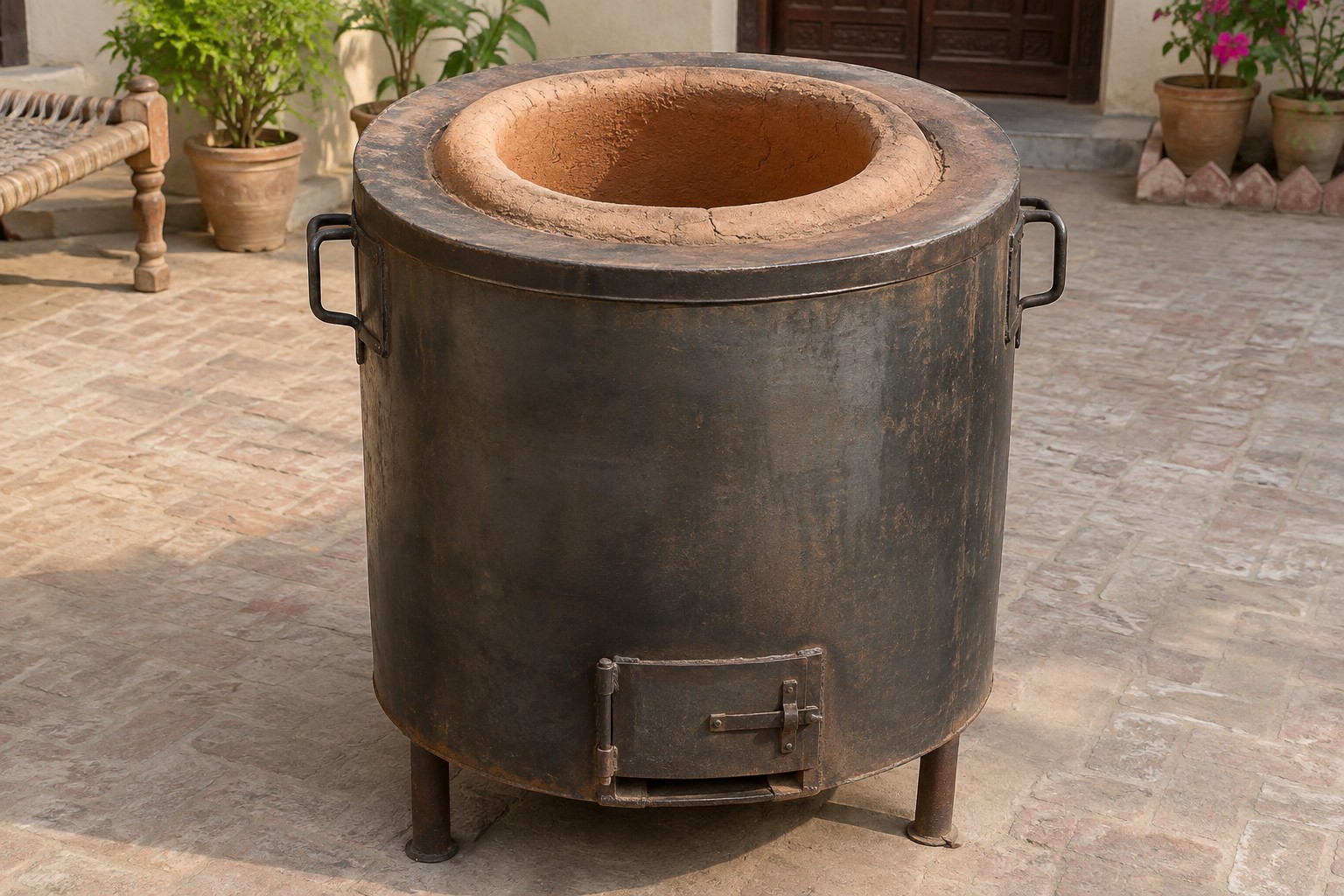
A tandoor is a high-heat oven, commonly with a clay-lined chamber and an opening at the top. Bread such as naan attaches to the prepared inner wall, while suitable skewered foods use a different placement arrangement. In Pakistan it can provide a dedicated bread and barbecue cooking station, but a home tandoor is not simply a tall barbecue pot. Its chamber, insulation, air control, fuel and accessories work together. Operating it requires the manufacturer’s method and hands-on familiarity with the tools, particularly before reaching near the opening with a bread cushion or hook.
Fuel and installation first
Charcoal-fired, gas-fired and electric products have distinct installation requirements; do not convert between fuels without the maker’s authorised system and qualified work. For a charcoal model, choose a fully outdoor location away from openings and combustible surroundings. CDC guidance warns that charcoal releases carbon monoxide even when it does not appear actively flaming. A garage or enclosed veranda is not an appropriate substitute for an open site. Gas systems need their exact supply and installation requirements checked locally by a qualified professional. The cooker’s outer shell and handles can still become hot despite insulation.
Size beyond the opening
As editorial comparison examples, consider a mouth around 30 cm versus one around 40 cm, then evaluate your intended bread size, tool reach and safe working posture. These figures are not standard model specifications or meal capacities. Check total weight, floor loading, stand stability and access for delivery. A wider mouth changes heat exposure and tool use, so bigger is not automatically easier. Ask which handles are for moving the cold unit and whether any are rated for lifting. Have a prepared heat-resistant place for the lid and accessories before the first cooking session.
Commission the clay correctly
Read the model’s curing or first-burn instructions and complete them before food use. Tandoori World guidance gives its own staged first-use procedure, fuel restrictions and natural-cooling instructions. Those details are specific to that construction; do not transplant its fuel quantities or timings to another oven. Check the clay chamber for transit damage and ask the maker to assess questionable cracks. Use only the prescribed fuel and lighting method. Never add petrol or another improvised accelerant. Do not pour water into a hot clay chamber to make cleanup quicker or to create a burst of steam.
Bread and skewers need planning
Prepare bread dough, a suitable gaddi and retrieval tools before heating, or prepare properly fitted skewers and a clean cooked-food tray for the skewered recipe. Use the oven’s readiness guidance rather than a guessed universal waiting time. Work from a stable position with appropriate heat protection and keep hands out of the hot chamber. A long tool helps with reach but does not make the opening cool. Cook meat according to safe doneness guidance in FoodSafety.gov guidance, not merely surface colour. Keep tools that touched raw meat separate from bread handling and finished-food service.
Cool, clean and protect
Follow the approved shutdown and allow the oven to cool naturally. Remove ash only when fully cold by the maker’s method. Do not attack clay with aggressive metal scraping or household chemicals unless the maker expressly permits them. Keep the chamber dry in storage and use a suitable cover only after cooling. Inspect the liner, lid, air controls, wheels and support structure between sessions. A changing crack, loose shell or damaged support needs manufacturer assessment. Never move a hot fuel-filled unit because rain starts; weather and shutdown planning belong before lighting.
When a tandoor is worth owning
A household oven with suitable bakeware can make a different version of naan, and a permitted outdoor barbecue can cook skewered foods. Neither gives exactly the same wall-contact method, but both may better fit an occasional routine. Buy a tandoor when you have a legal suitable site, repeated demand, storage and time for commissioning and cooling. Inspect product manuals, service arrangements, liner repair options and delivery requirements before payment. The attraction is a dedicated traditional cooking method; the commitments are fuel, heat management, tools, weather planning and careful maintenance. A decorative miniature should never be assumed usable as an oven.
Frequently Asked Questions
Can I use charcoal tandoor in a garage?
No. Charcoal must not be burned indoors or in enclosed areas.
Does every model need the same curing?
No. Follow the exact liner and oven instructions.
Can I cool it with water?
Do not quench hot clay; use the maker’s approved natural-cooling method.
How we know this
- Type Explainer
- Sources 3 (2 official/academic)
- Reviewed November 2026
- Disputed points None
3 sources
- Carbon monoxide poisoning basics, CDC
- Tandoor operating and care instructions, Tandoori World
- Four steps to food safety, FoodSafety.gov
Photo credits (1)
- a traditional cylindrical clay-lined tandoor oven with sturdy metal outer shell, circular open mouth at top showing clay interior, small lower air door, unlit and cold in a spacious open Pakistani courtyard, DailyLife.pk, All rights reserved
