
Kitchen item guide
Candy thermometer: ChoosingUsing and Caring for It
Choose a candy thermometer with a useful range and position its sensor according to its own instructions.
DailyLife.pk kitchen equipment collection
Temperature for sugar work
A candy thermometer measures hot sugar mixtures within an appropriate high-temperature range. It can help with chikki, caramel, fudge-style sweets and syrups used in a Pakistani kitchen. It is not a substitute for a recipe’s ingredient ratios or cooking sequence. A jalebi syrup described by a thread stage still needs a method designed for that recipe rather than a temperature copied from an unrelated sweet.
Ordinary fridge or medical thermometers are not suitable substitutes. The instrument must cover the expected temperature, tolerate the food and be used without bringing the hand close to hot syrup.
Glass, dial and digital options
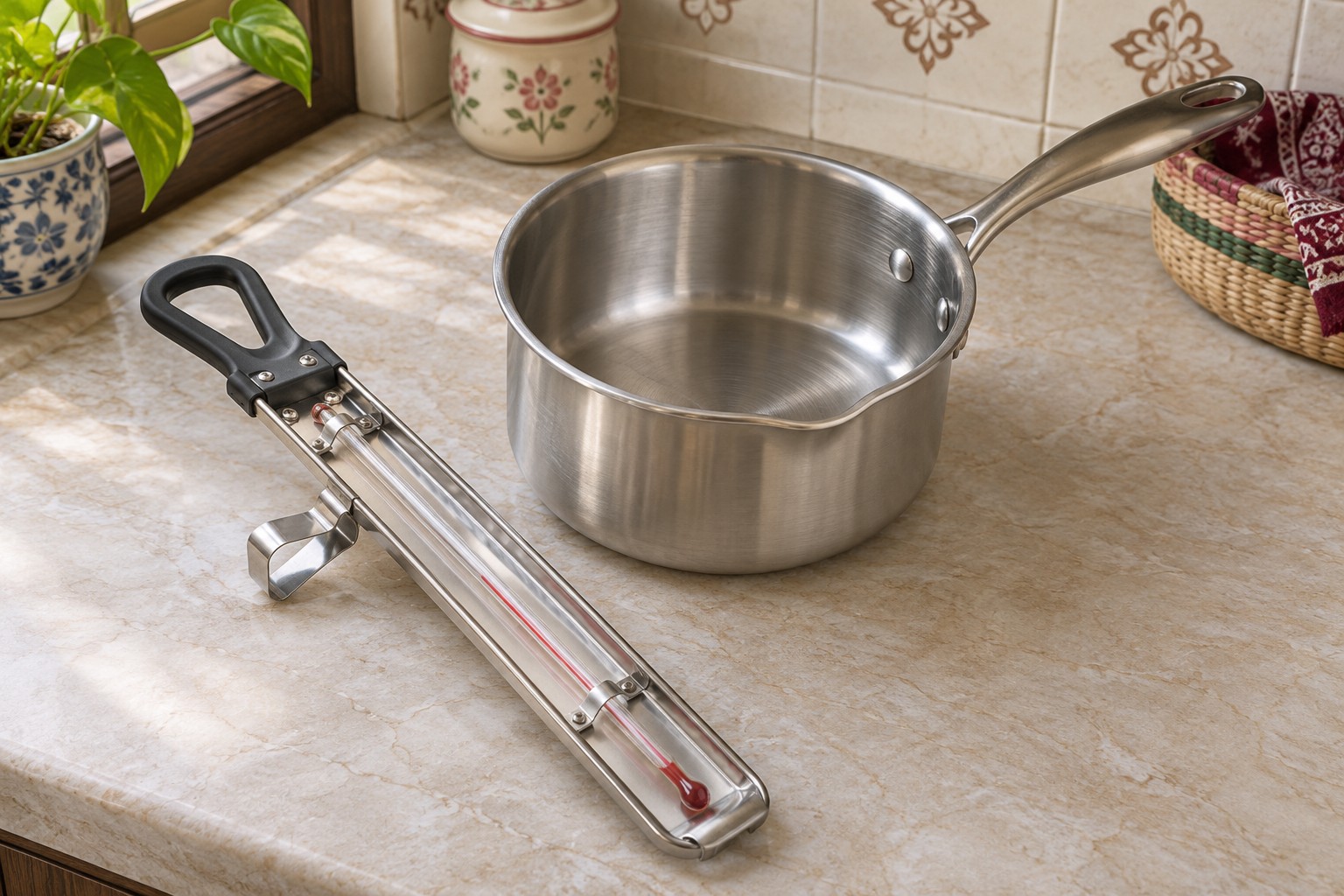
Traditional candy thermometers may have a glass tube protected by a metal frame and a sliding pan clip. Digital probes offer a display but need an appropriate range, sensor design and protection for any cable or electronics. Some are meant to stay clipped to a pan; others are designed for brief readings.
For an identified example, Wilton’s candy thermometer has a 60–400°F range and its own washing restrictions. Treat that range as specific to that model. As an editorial buying check, compare the lowest sensor immersion depth with the small syrup batch you usually cook: a long thermometer may not read properly in a shallow puddle.
Position the sensor correctly
Read the instrument’s instructions before heating. Fit any clip securely and locate the sensing area as directed, immersed enough to read the syrup while avoiding unintended contact with the pan. Guarded glass models and bare digital probes can have different positioning requirements, so do not transfer a diagram from one to another. Keep the display, cable and handle away from the burner.
Cook with the recipe’s stirring and observation method. Read the correct scale and avoid leaning across the pan to inspect small print. Stop at the prescribed point, turn off the heat safely and move the hot pan only when you have a clear landing place and dry protection. The US Fire Administration advises dry oven mitts because moisture can cause scalds.
Check accuracy without assumptions
A thermometer can be inaccurate after damage or mishandling. ThermoWorks explains that checking calibration means comparing against a verifiable standard and that adjustment is not always possible or needed. Follow the maker’s procedure; do not twist a glass unit or electronic probe in an attempt to recalibrate it.
Boiling-water checks require accounting for local boiling conditions, including altitude. Do not assume water must boil at the same temperature in Karachi and a high mountain town. For a range-limited candy thermometer, an ice check may be outside the scale. Use the test appropriate to the instrument and seek replacement or service when it is outside specification.
Buying and cleaning
Buy a legible instrument from an identified maker with a stated range, accuracy information and cleaning instructions. Check the clip’s grip, the integrity of the glass or probe and whether a small pan can accommodate it without tipping. For digital models, check battery access and replacement arrangements. A temperature label on a product photograph is not a substitute for the manual.
Let the instrument cool as directed, then clean off sticky syrup without sudden temperature shock to vulnerable glass. Wilton specifies warm soapy hand washing for its model and excludes the dishwasher and microwave. Do not immerse electronics unless expressly permitted. Dry before storing in a protective sleeve or safe drawer position.
Limitations and replacements
A thermometer makes a temperature target clearer but can give a misleading reading when too shallow, touching the wrong surface or used outside its range. Replace cracked glass, a separated or damaged column, a loose clip that cannot hold position or a damaged probe. Recipe-specific cold-water or thread tests are alternatives for experienced cooks using an appropriate method; they should not involve touching hot syrup with bare fingers.
Frequently Asked Questions
Can I use a meat thermometer?
Only if its range, sensor and manufacturer instructions permit the intended sugar work.
Should the tip touch the pan bottom?
Follow that exact instrument’s positioning instructions. Bare probes and guarded glass models differ.
Can it go into the dishwasher?
Only if permitted. Wilton’s cited candy thermometer specifically excludes dishwasher washing.
How we know this
- Type Explainer
- Sources 4 (1 official/academic)
- Reviewed November 2026
- Disputed points None
4 sources
- Candy thermometer use and care, Wilton
- Frequently asked thermometer questions, ThermoWorks
- Prevent burns and scalds in the kitchen, US Fire Administration
- Recipe Success Guide, King Arthur Baking
Photo credits (1)
- One long traditional candy thermometer with metal protective frame, glass temperature tube and adjustable pan clip, resting flat beside a clean empty small stainless steel saucepan, no readable numbers or text., DailyLife.pk, All rights reserved
