
Kitchen item guide
Biscuit stamp: ChoosingUsing and Caring for It
Choose a biscuit stamp with cleanable detail and use a dough that can retain its pattern.
DailyLife.pk kitchen equipment collection
A pattern pressed into dough
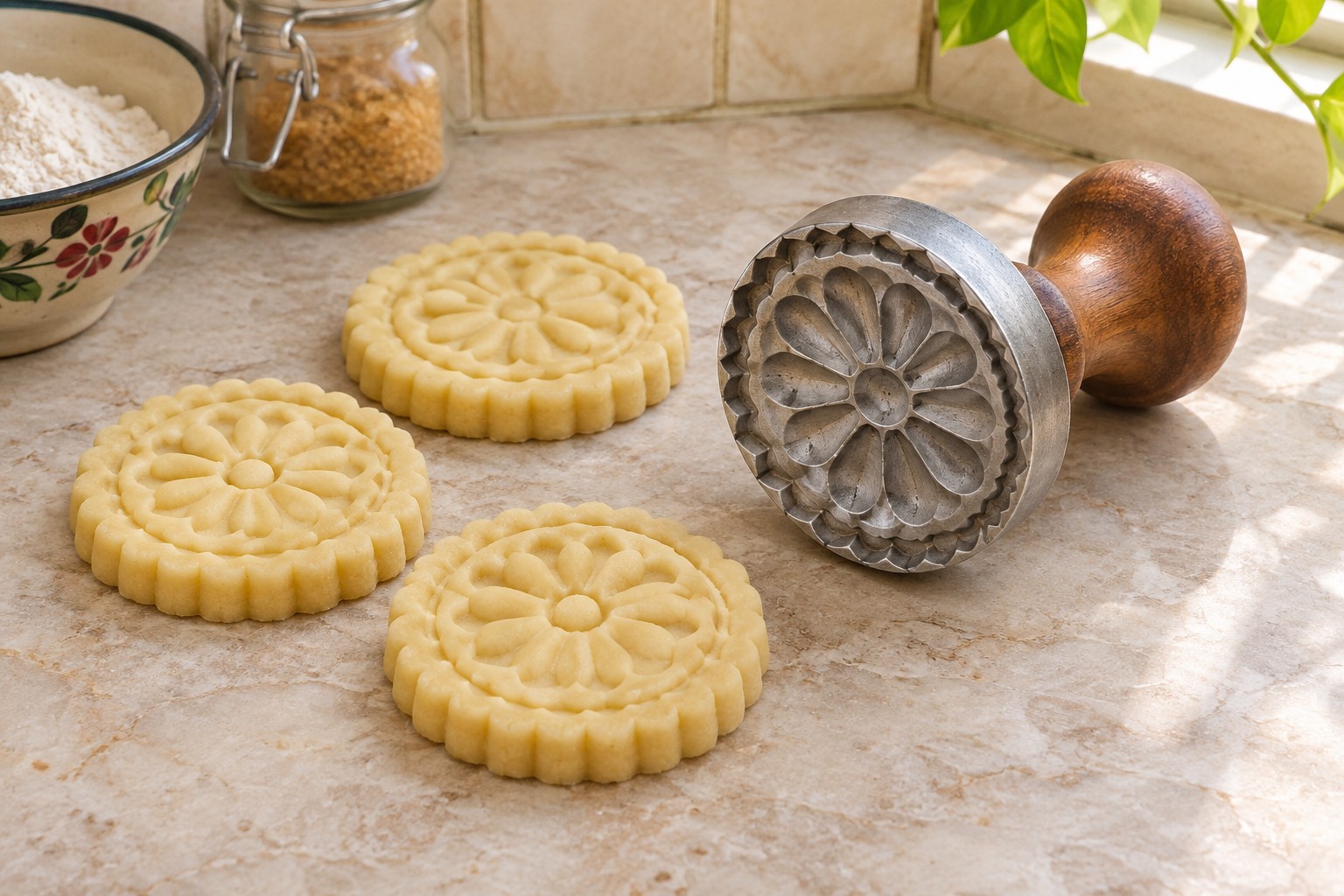
A biscuit stamp embosses an unbaked biscuit before it goes into the oven. It can give shortbread or a suitable nankhatai-style dough a decorative surface for Eid gifts and tea trays. It does not make an unsuitable dough hold its shape: a mixture that spreads strongly may lose even a deep design. A stamp can decorate a portion without requiring icing after baking.
This guide covers food-use stamps, not craft embossers. Stamps used with ink, clay or soap should not later join the kitchen drawer.
Face material and pattern depth
Common constructions include a metal face with a wooden knob, all-metal stamps and food-use silicone faces. Simple bold grooves are easier to release and wash than intricate lettering. A cutter-stamp combination trims the outline as well as marking the top; an ordinary stamp may leave a ragged edge that needs separate trimming.
As an editorial example, compare a face around 5 cm across with a larger 7 cm stamp against the portions in your recipe. Nordic Ware’s stamp guidance recommends firm dough with little spreading and explains that cold dough can retain detail better. Its wood-handled models also have specific hand-washing instructions.
Press evenly and release gently
Prepare a stamp-suitable dough and portion it consistently. Chill as directed by the recipe. Place a portion on the intended work surface or baking sheet, apply the recipe’s release treatment and press evenly rather than twisting hard through the dough. Lift carefully so the pattern remains sharp. Different stamp makers may recommend flour, sugar or a light oiling; use the method suited to the dough and product.
Work in small batches in a warm kitchen, returning unused dough to its recommended storage condition. A practice biscuit shows whether the pattern survives baking before you stamp a full gift batch. Avoid making the centre dramatically thinner than the edges, which can change the bake.
Inspect detail and grip
Look at the underside as closely as the decorative top. It should have smooth edges, no loose flakes and a design you can reach with a soft brush. The handle must stay firmly attached when pressed. Ask for food-use identification and whether the face can be detached. A very small grip may be uncomfortable during a large batch.
Baking shops and online sellers can be compared by actual face diameter and clear photographs. If a seller only shows finished biscuits, request the tool itself. Avoid sharp crevices that seem impossible to clean without scratching.
Clean the recesses
Brush out flour and crumbs, then follow the material-specific washing directions. Nordic Ware advises hand washing its cookie stamps, no soaking and no submerging wooden handles. A soft brush can remove dough from the recesses without damaging the face. Dry promptly, including where the handle meets the stamp.
Store the detailed face protected from utensils that could dent it. Replace a loose handle, splitting wood near food, a cracked silicone face or flaking metal finish. There is no need to replace a sound stamp on a yearly schedule, but inspect it before a large festive batch rather than discovering residue during use.
When a plain biscuit is easier
Stamps add decoration with little extra ingredient cost, but require a compatible dough and patient cleaning. A fork pattern or a food-safe cutter gives a simpler finish if exact embossing is unnecessary. A clean glass base may flatten dough, yet an unknown decorative glass surface is not automatically a food-contact stamp. For intricate colour work, icing after baking is a separate technique.
Frequently Asked Questions
Why did the design disappear?
The dough may spread too much, be too warm or have too little impression depth. Use a stamp-specific recipe.
Can I soak a wood-handled stamp?
Follow its maker. Nordic Ware specifically advises against soaking and submerging wood.
Do I stamp after baking?
Ordinary biscuit stamps are used before baking; follow the particular product and recipe.
How we know this
- Type Explainer
- Sources 3 (1 official/academic)
- Reviewed November 2026
- Disputed points None
3 sources
- Cookie stamps: use and care, Nordic Ware
- Recipe Success Guide, King Arthur Baking
- Four steps to food safety, FoodSafety.gov
Photo credits (1)
- One round metal biscuit stamp with short wooden knob, patterned underside visible angled beside three unbaked shortbread rounds., DailyLife.pk, All rights reserved
