
Kitchen item guide
Pastry cutter: ChoosingUsing and Caring for It
Distinguish a dough blender from pastry wheels and shape cutters before choosing the tool you need.
DailyLife.pk kitchen equipment collection
One name, several different tools
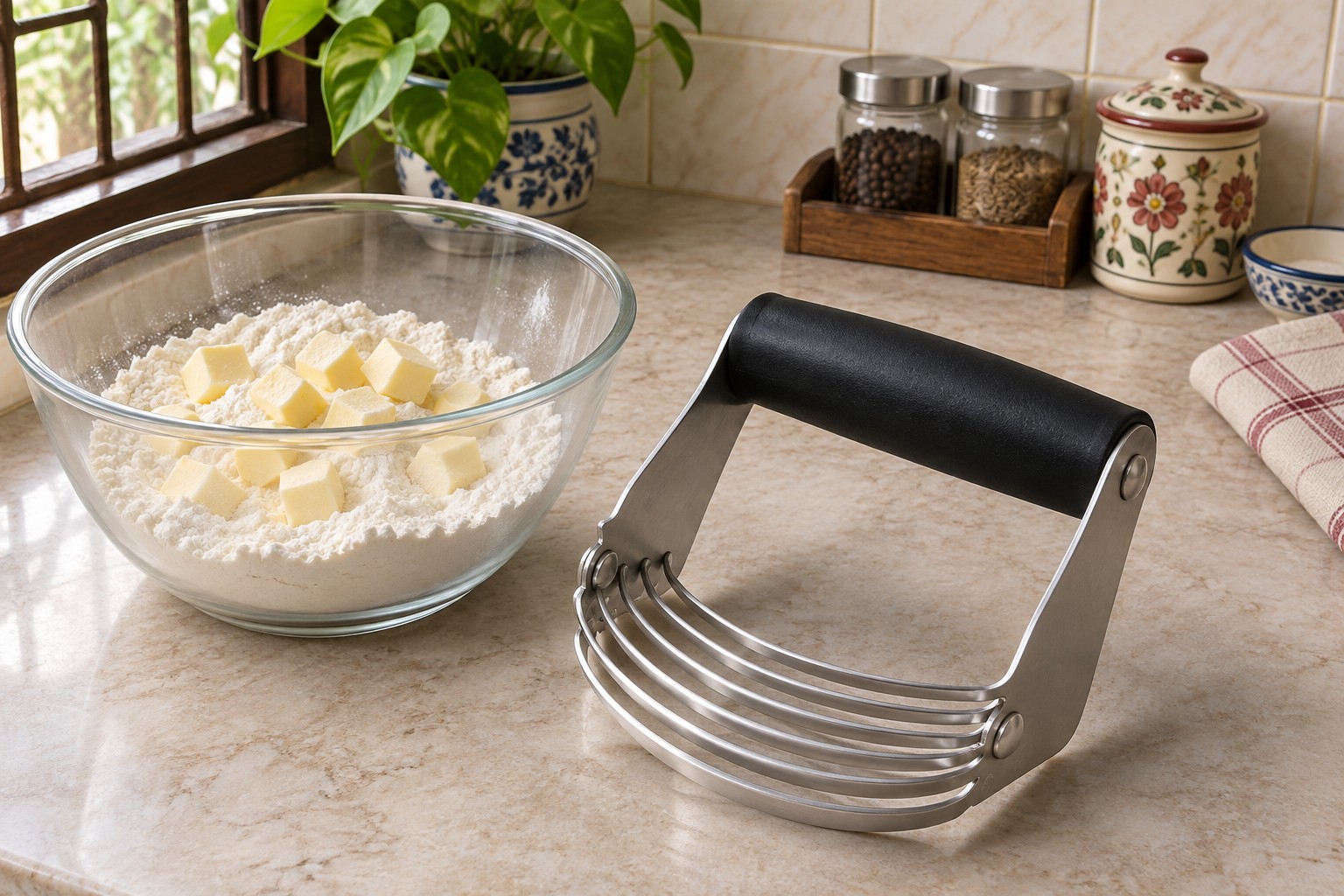
“Pastry cutter” can mean a hand dough blender, a rolling wheel or a shape cutter. This guide centres on the hand blender: curved wires or blades fixed beneath a handle to cut cold fat into flour. It is useful for shortcrust pastry, crumble and similar mixtures in a Pakistani home kitchen. A wheel that trims patties and a round cutter that stamps biscuits perform different jobs.
Clarify the shape when shopping online. A photograph and intended task are more informative than the product title alone.
Blades, wires and other cutters
Rigid curved blades push through firm cold butter; wire versions are lighter but may flex. Check that the working parts are firmly attached and spaced so they can be cleaned. OXO’s pastry-tool guide distinguishes a five-blade dough blender from a flat scraper, illustrating why one tool is not a universal cutter.
As an editorial example, try the grip over the bowl you normally use: the tool must reach the mixture without the handle hitting the rim. A straight or fluted wheel needs a different grip and a food-safe work surface. Neither should be rolled across a silicone mat that prohibits cutting.
Cut fat in without overworking
Use the ingredients and fat temperature specified by the recipe. Set the bowl on a stable surface and press the blender down into the fat and flour, lifting and moving it across the mixture. Clear stuck fat with a suitable utensil while the tool is stationary. Stop when the recipe’s texture is reached; some doughs need coarse pieces rather than an entirely uniform powder.
Add liquid only as directed and bring the dough together without treating the blender as a vigorous whisk. In a warm kitchen, work in a manageable batch and chill ingredients when the recipe instructs. Do not use your fingers to scrape between sharp blades while pressing on the handle.
Inspect strength and access
Look for a comfortable handle, sound welds or joints and a head that does not wobble. Avoid rough metal edges and spaces too narrow to wash. Baking suppliers and household stores may stock both wire and blade models, so describe whether you want to blend fat, trim pastry or stamp shapes.
A broad head speeds a large bowl but may not fit a small one. Check care instructions for a wooden handle or rubber grip. Buy for the quantity you actually prepare rather than assuming a larger tool will automatically make pastry easier.
Clean before dough hardens
Remove loose dough with a spatula, then wash in warm soapy water. Use a soft brush to clean between blades, working safely from the side. Rinse and dry all joints. Use the dishwasher only if the complete product permits it. Do not leave a damp wooden or joined handle soaking overnight.
Store the head so it cannot be crushed under heavy pans. A bent wire, broken weld or loose handle is a replacement sign because the tool must withstand downward force. Surface dullness alone does not prove failure, but corrosion that leaves a rough food-contact area needs attention.
What can replace it
A dough blender avoids warming fat as much as prolonged handling can, but it needs bowl space and cleaning between parts. Two suitable table knives or the rubbing-in method may work for a recipe designed for them. A food processor is another distinct method that can overprocess a small batch quickly. For straight pastry trimming, use a suitable knife on a board rather than forcing a dough blender into that role.
Frequently Asked Questions
Is a pastry cutter a pizza wheel?
Sometimes the name is used that way. Check the image and stated job.
Can I use it for roti dough?
It is mainly for cutting fat into flour; kneading roti dough calls for a different method.
Should the flour and butter become perfectly smooth?
Follow the recipe. Many pastries need visible small fat pieces before liquid is added.
How we know this
- Type Explainer
- Sources 3 (1 official/academic)
- Reviewed November 2026
- Disputed points None
3 sources
- Pie-making tools and how to use them, OXO
- Recipe Success Guide, King Arthur Baking
- Four steps to food safety, FoodSafety.gov
Photo credits (1)
- Hand pastry blender with curved steel blades beside flour and butter., DailyLife.pk, All rights reserved
