
Kitchen item guide
Jug blender: choosingusing and caring for it
Choose a jug blender around chutney, lassi and sauce quantities, with safe liquid limits and a jar you can clean fully.
DailyLife.pk kitchen equipment collection
Blending rather than chopping
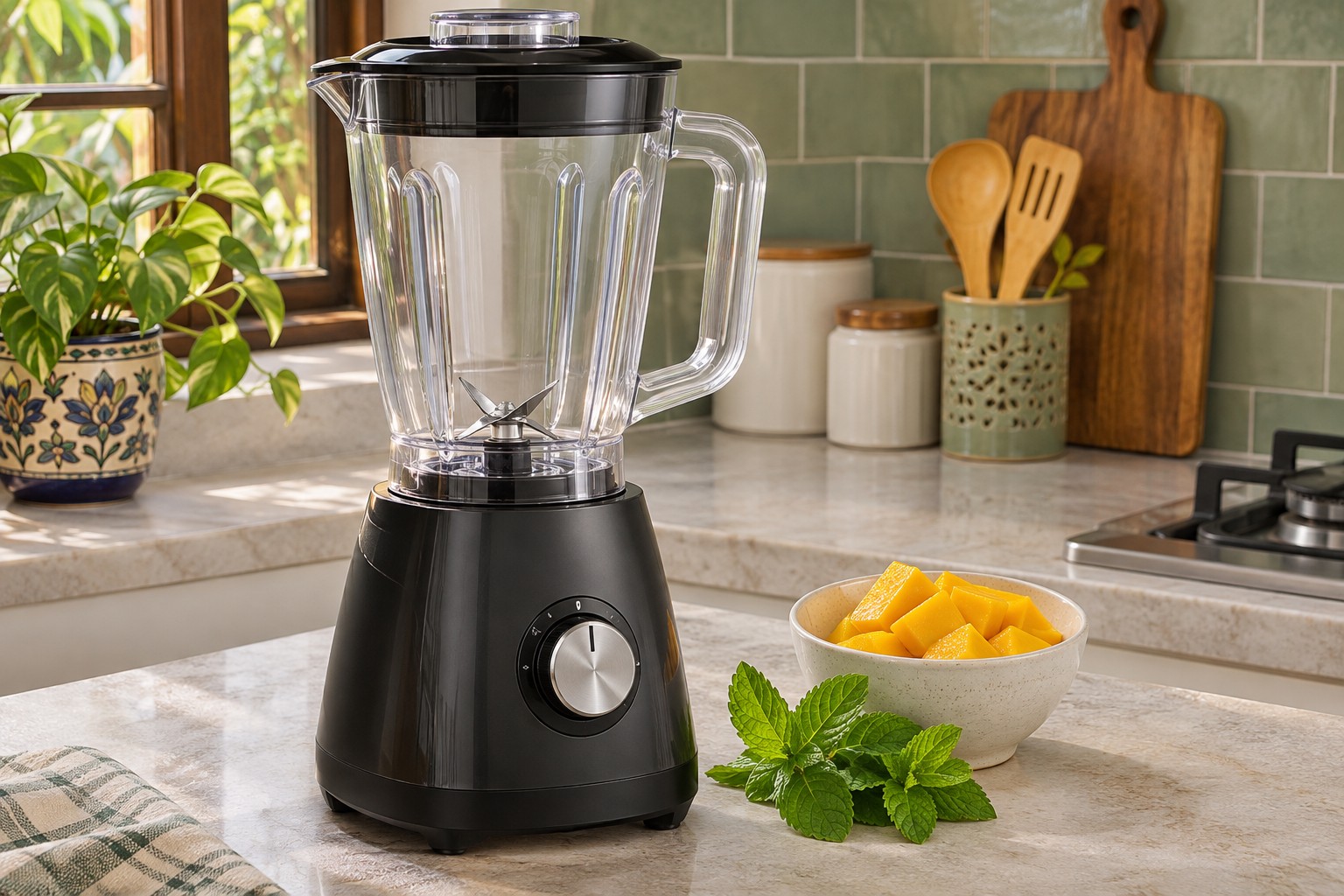
A jug blender has rotating blades near the bottom of a tall container, driven by a motor base. It is designed to circulate suitable ingredients through those blades, usually with enough liquid for the intended recipe. In a Pakistani kitchen it can make lassi, mango milkshake, mint chutney or a smooth tomato mixture. Its strength is producing a flowing mixture; a food processor is often better for a deliberately coarse chop.
A blender is not automatically a dry spice mill, ice crusher or hot-soup machine. Some models support those jobs through a specific jar or programme; others prohibit them. Identify the exact supplied accessories and their approved ingredients before purchase. A powerful-sounding motor rating does not overrule a jar's temperature, load or duty-cycle limits.
Match the jar to your actual batch
Glass jars resist some staining and feel substantial, but are heavier to lift and can break. Plastic jars are lighter; inspect their approved food-contact use, temperature limits and replacement availability rather than judging by appearance alone. Stainless jars hide the contents while blending but can suit specific blender-grinder systems. The lid, gasket, blade assembly and jar together form a designed unit.
As an editorial planning example, compare the household's usual lassi batch with the working fill line, then ask whether a small chutney quantity reaches the blades. A large jar can be awkward for a spoonful of paste. Check handle comfort, pouring control and how the jar locks to the base. Look for a suitable smaller jar only if it is approved for that motor, rather than buying an unrelated attachment that happens to fit physically.
Check safety and serviceability
Read the model's manual before buying, including hot-liquid restrictions, hard-ingredient limitations and the maximum continuous run time. KitchenAid's blender manual warns that hot liquid can be expelled by sudden steaming and specifies safe use of its components. A sealed personal blending cup must not be treated like a vented jug; use only its permitted ingredients and temperatures.
Check for a stable base, secure lid and controls you can stop promptly. Ask about replacement jugs, seals and blade assemblies through an authorised or traceable parts channel. Inspect voltage and electrical rating for local use. Avoid a used unit with cracked glass, damaged coupling teeth, frayed cable or a lid that no longer seats securely. Written warranty and spare-parts support matter more than an unverified claim about blending every ingredient.
Build the mixture in a sensible order
Prepare ingredients by removing stones, hard pits and other inedible parts. Add them in the sequence and quantities recommended for the model; many recipes need liquid to help circulation. Secure the lid and jug, start with the prescribed low setting or pulse, and stop to assess texture. For mint chutney, use an appropriate small batch and avoid adding excessive water merely to make an oversized jar circulate.
Keep hands and utensils out while the motor can run. Stop, disconnect and wait for the blades before scraping down or clearing a blockage. Never press ingredients toward moving blades with a spoon. For hot foods, follow the explicit model limits, permitted fill and venting method; if hot blending is not clearly allowed, cool the food first. Do not hold a poorly secured lid in place as a substitute for repair.
Clean every food-contact area
Empty and rinse the jar promptly so chutney fibres and milk residue do not dry into crevices. Follow the approved cleaning programme or washing method, and only dismantle the blade unit if the manual instructs it. KitchenAid's cleaning guidance separates jar cleaning from wiping an unplugged motor base. Never immerse the base or leave sharp parts hidden in cloudy washing water.
Dry seals and threads before assembly or storage. Leaks beneath the jar, a damaged gasket, loosened blades, persistent burning smell or unusual motor noise warrant service assessment. No fixed lifespan suits every blender. Its advantages are smooth drinks and sauces with little hand effort; its tradeoffs are washing the blade area, noise and poor performance with an unsuitable batch. A mortar can make small chutneys, a hand blender can puree a suitable deep vessel and a food processor can leave more texture. Choose for the mixtures you make repeatedly.
Frequently Asked Questions
Can I grind whole spices in the jug?
Only if the exact jar and appliance instructions permit dry grinding.
Why does a small chutney batch stay above the blades?
The batch or jar geometry may be unsuitable. Use an approved smaller jar or another tool rather than reaching inside.
Can I blend hot daal?
Only within the model’s explicit hot-food instructions; otherwise cool it first.
How we know this
- Type Explainer
- Sources 3
- Reviewed November 2026
- Disputed points None
3 sources
- Blender owner manual, KitchenAid
- Cleaning blender accessories, KitchenAid
- Electrical safety in the kitchen, Electrical Safety First
Photo credits (1)
- Unbranded electric jug blender with sturdy transparent pitcher, fitted black lid and base, unplugged, mint leaves and mango pieces in a small bowl beside., DailyLife.pk, All rights reserved
