
Kitchen item guide
Stockpot: ChoosingUsing and Caring for It
Pick a stockpot by filled weight, usable depth and drainage plans for yakhni, soup and larger boiled batches.
DailyLife.pk kitchen equipment collection
Tall capacity with a purpose
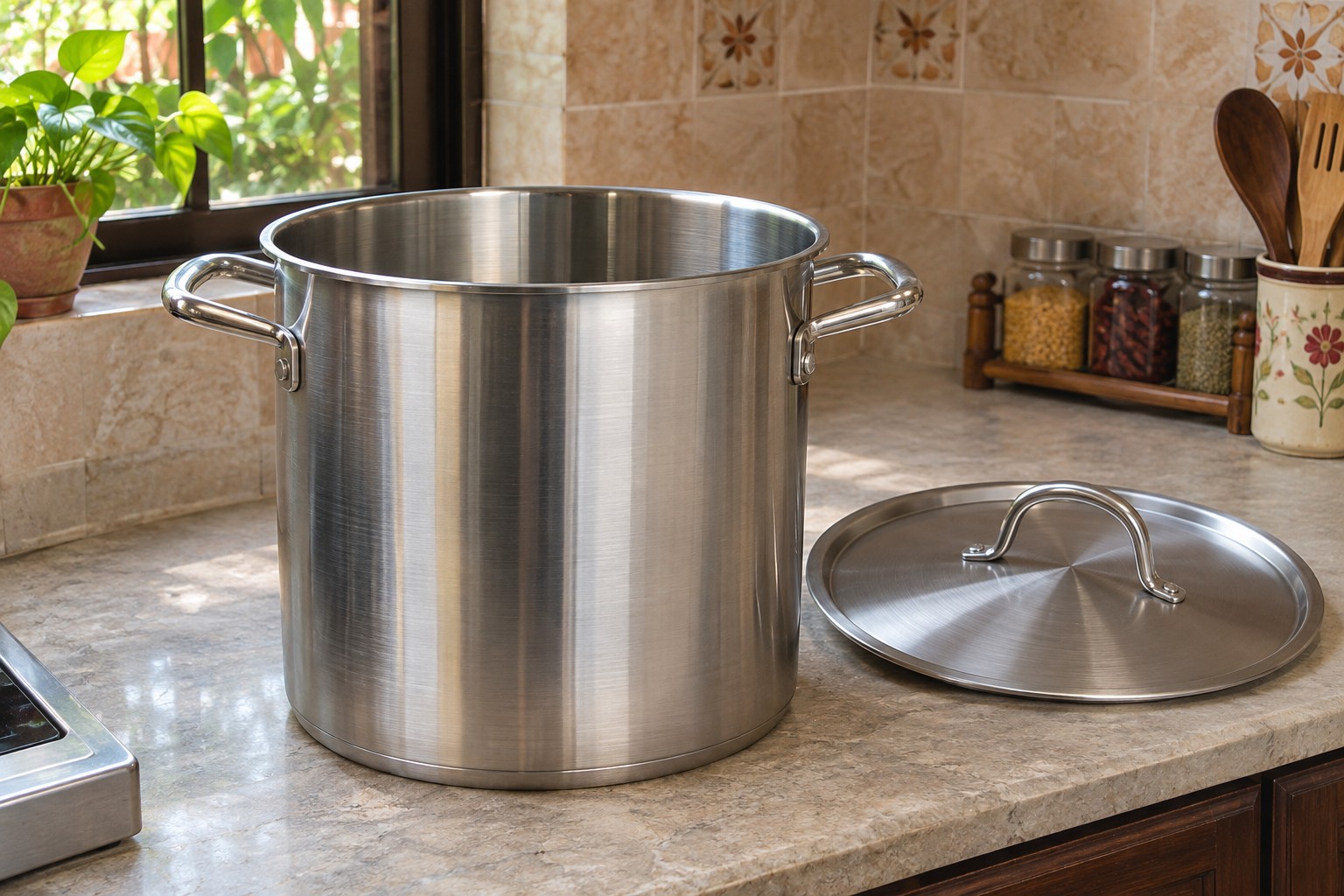
A stockpot is a deep pot with side handles and a lid, chosen to contain a larger volume of water, broth or food than a saucepan. In Pakistan it is useful for chicken yakhni, a generous soup, boiled pasta or a large vegetable batch. Its depth can keep ingredients submerged while limiting the footprint on the stove. That same depth makes stirring a thick masala or lifting a heavy finished batch less convenient. If your main task is bhunai followed by a little gravy, a wide degchi is often easier to work in than a very tall stockpot.
Understand base and wall choices
Stainless steel, aluminium and enamelled metal are common families, and a stockpot may combine layers rather than use one metal throughout. Ask whether the heat-spreading construction is confined to the base or extends up the walls. For a mostly liquid job, weight and secure handles may matter more to you than expensive sidewall construction. Thick food needs particularly careful attention to base heat. Hawkins guidance shows how a manufacturer specifies construction and use together. Do not assume a domestic stockpot is suitable for a catering burner merely because the body is large.
Size it before buying
Editorial comparison sizes might be 6 litres and 10 litres, but the useful choice depends on your recipe and lifting ability. Neither size is a serving promise. Calculate the ingredients and recipe water, then allow room above them for bubbling and stirring. Measure the pot under the hood with the lid lifted, not just closed. The filled pot must also fit the route to a sink or worktop if you intend to move it. Check that the sink can receive it for washing and that your draining equipment can deal with the food without supporting a full pot over the basin.
Build a broth workflow
Set the empty pot on a suitable burner before loading it. Add the recipe ingredients and liquid, bring toward a simmer and skim if the recipe calls for it. Lower the heat once the simmer is established; a violent boil is not automatically a better stock method. Keep a long enough spoon and ladle nearby, and avoid letting a handle project into a walkway. When straining yakhni, prepare a stable receiving vessel and sieve first. Ladle manageable amounts through the strainer instead of attempting an uncontrolled tip of a heavy pot full of hot liquid.
Lids, steam and surfaces
Raise the lid away from your face and keep condensation from dripping across a lit neighbouring burner. Both side handles may become hot. Use dry mitts that let you grasp the handles fully; an oversize decorative handle can still be hard to hold. If you often make tomato-based soups, choose a food-contact surface permitted for that job and check material-specific restrictions in Health Canada guidance. Do not use a stockpot as a sealed pressure system or attach a mismatched pressure lid. For pressure cooking, the complete vessel must be designed, assembled and maintained as a pressure cooker.
Cool the food, clean the pot
A deep pot is a convenient cooking container but an inconvenient way to cool a large quantity. USDA FSIS guidance recommends dividing large batches into smaller containers for refrigeration. Plan those containers before you start. Once empty and cooled, wash the base, rim and handle joints with tools suitable for the material. Remove food residues rather than polishing around them. Inspect for a lifting base disk, deep corrosion, chipped food-contact enamel or insecure handles. Store fully dry with nothing heavy balanced on a loose lid. A sound pot can continue in use despite ordinary cosmetic marks.
Buy for occasional scale
A stockpot makes sense when large liquid jobs recur. For one dawat, borrowing a sound pot of known suitability may be more practical than buying a size your stove cannot support properly. A normal patila can substitute for smaller broth batches; two manageable pots can be easier than one huge filled vessel. At a shop lift the empty stockpot with both hands and inspect the attachments. Online check actual dimensions, capacity, hob compatibility and returns. Account for the cost and space of a matching strainer and storage containers, because those complete the workflow the pot begins.
Frequently Asked Questions
Can I fill a stockpot completely?
Leave appropriate working space; brim capacity does not allow for bubbling or stirring.
Can a stockpot replace a pressure cooker?
It can simmer food conventionally, but cannot safely reproduce pressure cooking.
Should soup cool in the whole pot?
Divide a large batch into smaller containers for prompt refrigeration.
How we know this
- Type Explainer
- Sources 3 (1 official/academic)
- Reviewed November 2026
- Disputed points None
3 sources
- Stainless steel tri-ply cookware manual, Hawkins
- Safe use of cookware and bakeware, Health Canada
- Can you put hot food in the refrigerator?, USDA FSIS
Photo credits (1)
- a tall brushed stainless steel stockpot with straight sides, two strong loop handles and fitted lid beside it, DailyLife.pk, All rights reserved
