
Kitchen item guide
Rangehood grease filter: choosingusing and caring for it
Identify the correct grease filter, clean only as its manufacturer permits and refit it securely before running the hood.
DailyLife.pk kitchen equipment collection
A grease-catching part
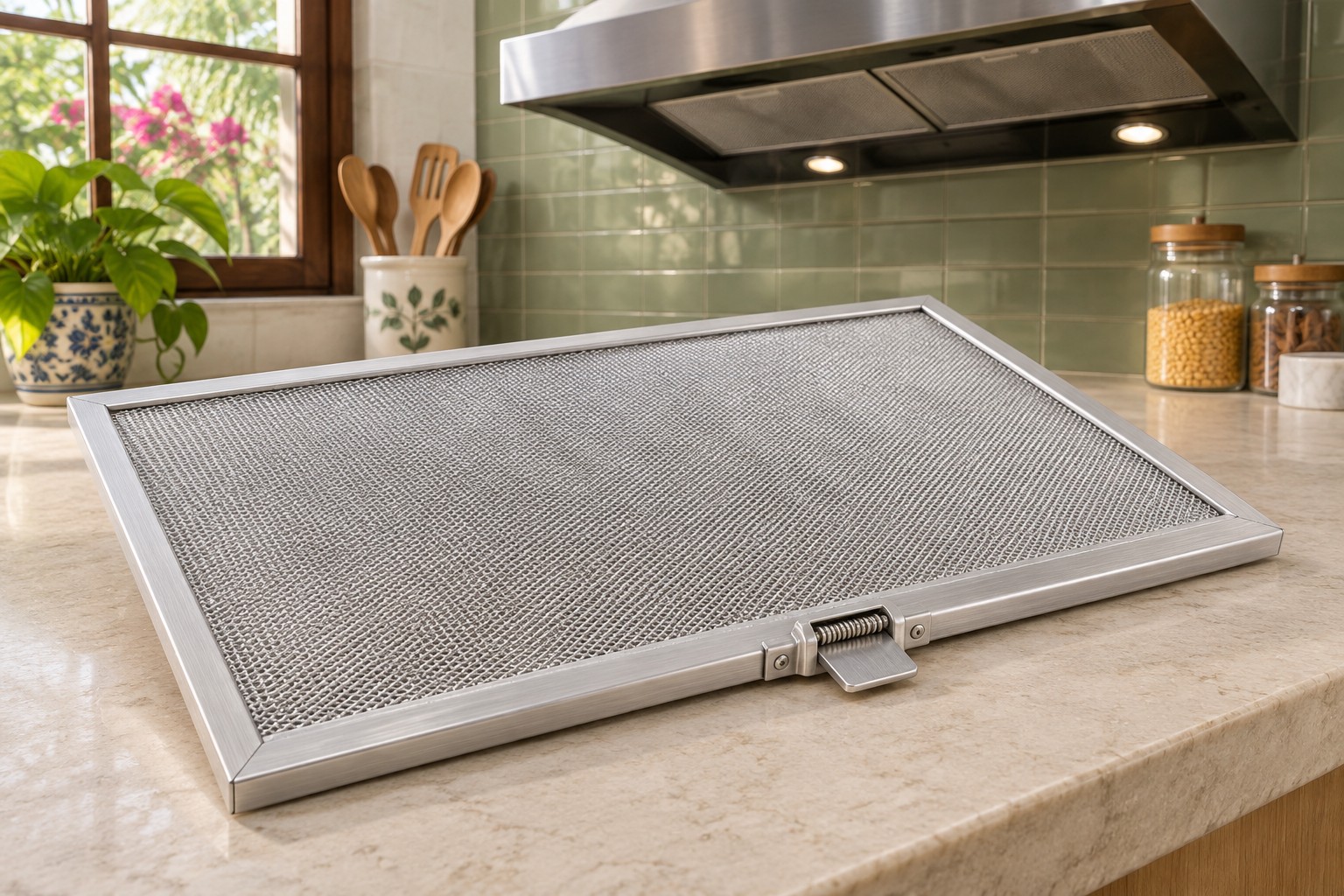
A rangehood grease filter is the panel or cartridge through which cooking air passes near the hood intake. It captures grease droplets before they build up farther inside the appliance or duct system. It is a working component, not merely a decorative grille. In a Pakistani kitchen, frying pakoras, browning onions and making tadka can leave the filter visibly sticky, making inspection part of routine cooker care.
This filter is different from an activated carbon odour cartridge. A recirculating hood may use both; a ducted hood still needs the grease filtration specified by its maker. Removing the grease filter to make suction feel stronger leaves the hood operating in a configuration it was not intended to use. A clean-looking external grille also does not prove an internal filter is clean.
Mesh, baffle and disposable types
Common reusable versions use layered metal mesh or shaped metal baffles. Their cleaning methods and orientation vary. Aluminium mesh may change colour after some cleaning processes without that alone proving failure, while crushed mesh or loose layers can affect serviceability. Stainless baffles have different geometry and often feel heavier. Neither material description establishes compatibility with another hood.
Some hoods use disposable grease media that must be replaced rather than washed. Identify the hood model and its exact filter part number before buying. As an editorial measurement example, record panel width, height, thickness, latch position and quantity, but use those measurements to check a specified replacement rather than to justify cutting an arbitrary panel. A filter that nearly fits can drop, rattle or leave gaps around the intended air path.
Plan a cleaning method before buying
Ask the seller or manufacturer whether the filter is washable, which detergents are permitted, and whether it can go in a dishwasher. Bosch's hood-filter guidance explains the distinction between grease and recirculation filters and the need to disconnect before cleaning. The instruction for one manufacturer's metal panel should not be transferred automatically to another model's coated or disposable filter.
Look at cleaning access while choosing the hood itself. A large panel high above the hob can be awkward to support. Check that replacement latches or complete panels are available through a traceable appliance-parts channel. Buy the documented part with a clear return arrangement, particularly for imported hoods. A low purchase price loses its advantage if every cleaning cycle risks breaking an unavailable clip.
Remove and wash without damage
Stop cooking, let nearby surfaces cool and isolate the hood as instructed. Clear the hob beneath and protect it from drips or a dropped panel. Support the filter with one hand while releasing the latch with the other; note which edge and face go where. If the latch resists, consult the removal diagram instead of pulling the mesh. Do not remove parts while the fan is running.
For a washable filter, follow the permitted soak, detergent, brush and rinsing method. Work gently through greasy areas without bending the frame or forcing layers apart. If dishwasher cleaning is authorised, follow placement and cycle limits and avoid assuming a high-heat programme is always better. Rinse as directed, allow the whole panel to dry thoroughly and clean accessible hood surfaces using the separate appliance instructions. Never flood the motor housing.
Refit, inspect and replace when needed
Refit the panel in the correct orientation, seat all tabs and confirm that the latch holds securely before running the fan. Do not rely on gravity or a strip of household tape to retain it. Inspect after cooking sessions that generate a great deal of grease and follow the manual's maintenance interval or indicator. Reset a filter reminder only after performing the corresponding work; clearing an alert does not clean the panel.
Replace a filter with broken retention, badly distorted frame, torn mesh or uncleanable damage according to service advice. Greasy residue that returns quickly may reflect the cooking load or a cleaning method that did not reach the layers. There is no fixed lifespan shared by every metal filter. Its advantages are repeat use and an accessible maintenance point; its disadvantages are cleaning effort and the need for a precise fit. Carbon cartridges cannot substitute for grease filters, and a window cannot protect the hood's internal components from grease. This small part deserves the same model-specific attention as the fan above it.
Frequently Asked Questions
Can I wash every grease filter?
No. Confirm whether it is reusable metal or disposable media and follow the model instructions.
Can the hood run without the filter?
Use the hood only in the configuration its manufacturer specifies, with its required filters fitted.
What is the most important replacement detail?
The exact compatible part and secure latch arrangement, supported by the hood model number.
How we know this
- Type Explainer
- Sources 3
- Reviewed November 2026
- Disputed points None
3 sources
- Cleaning cooker hood filters, Bosch
- Cleaning your ventilation hood, Bosch
- Electrical safety in the kitchen, Electrical Safety First
Photo credits (1)
- Single rectangular silver aluminium fine mesh rangehood grease filter removed and resting on clean stone counter, small spring latch at edge, hood subtly blurred behind., DailyLife.pk, All rights reserved
