
Kitchen item guide
Solid hotplate: choosingusing and caring for it
Use a solid electric plate as a compact cooking station with flat cookware, secure placement and realistic expectations about cooling.
DailyLife.pk kitchen equipment collection
A simple electric cooking surface
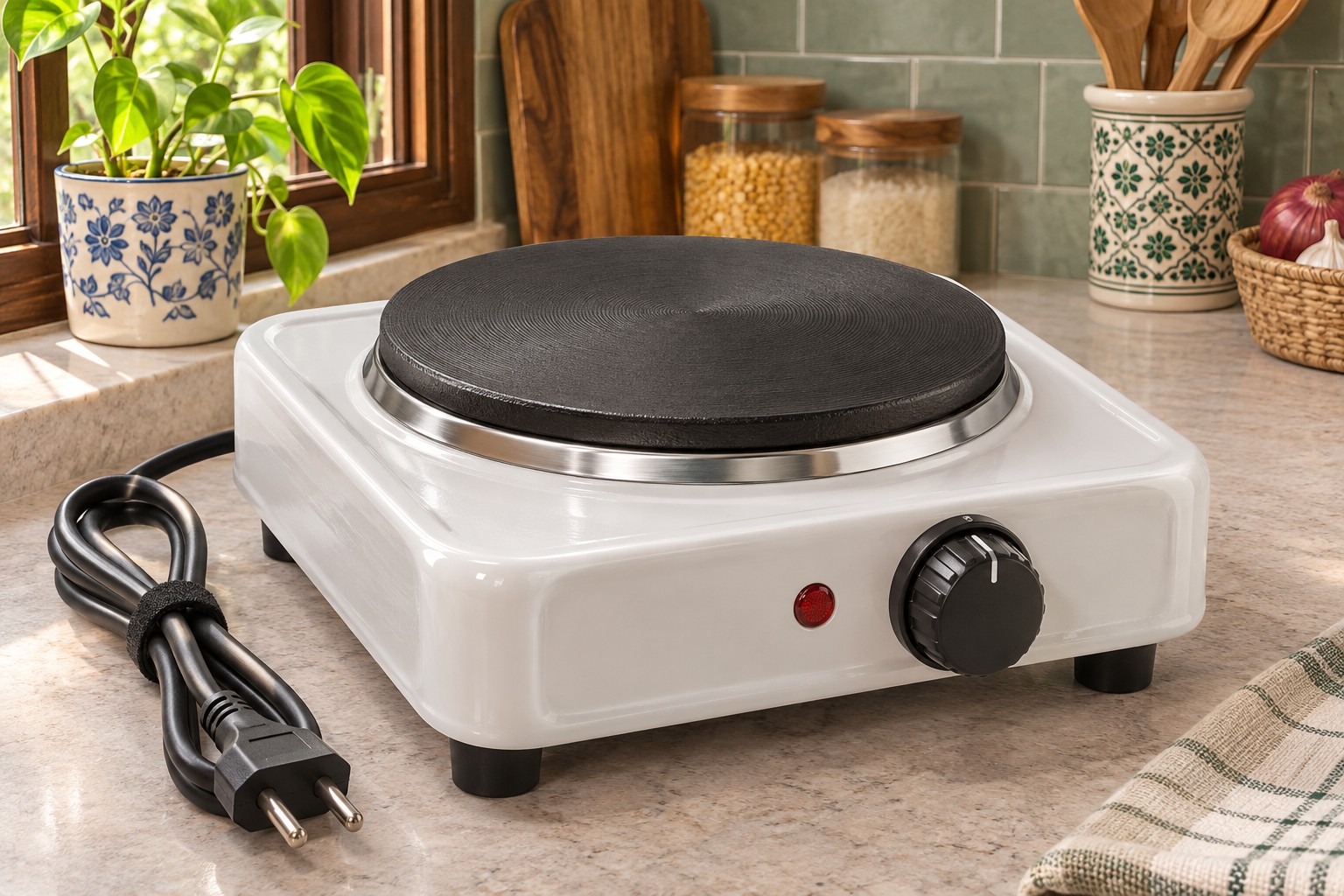
A solid hotplate is an electrically heated metal disc beneath a pan. It may be part of a fitted cooker or a portable single- or double-plate appliance. Unlike induction it does not require a magnetic pan, and unlike a glass radiant hob its principal cooking surface is a solid metal plate. Heat must pass through that plate and the pan base, so temperature changes are rarely as immediate as turning down a flame.
In a Pakistani household it can provide a second station for daal, a small saucepan of chai or a pot of rice when the main cooking area is occupied. It is most useful when the user can watch the pan and accommodate the hot appliance after cooking. Portability means it can be moved when cool; it does not make any table, bed or plastic worktop a suitable cooking location.
Choose by placement and pan contact
Check the manufacturer's intended domestic use, electrical rating, supply voltage and placement requirements. A broad stable base, secure feet and a clearly marked off position matter more than a decorative finish. Single and double units demand different counter space. On a double model, verify whether two of your pots actually fit without colliding or extending dangerously beyond the base.
Use sound, flat-bottomed cookware that fits the plate according to its instructions. As an editorial planning example, try a medium saucepan and your smallest everyday rice pot against the usable disc size. A badly bowed degchi wastes contact and rocks; a rounded karahi should not be balanced precariously. Plate diameter is not a serving-size claim. An appliance that fits one useful pot well can be more practical than two cramped rings.
Prepare a safe cooking station
Put the unit on a dry, stable, heat-resistant surface with the clearances stated by its maker. Keep it away from sink splashes, curtain edges and wall materials that cannot tolerate heat. Cords must not trail across the cooking surface or hang where someone can pull them. Electrical Safety First's kitchen advice explains the risks created by water, heat and appliance cables.
Use the supply connection specified for the model. Do not assume an extension board suitable for a phone charger is suitable for a cooking appliance. If the wall outlet, plug, cable or controls become unusually hot, stop and obtain qualified advice. Before buying an imported hotplate, locate its complete instructions and a service route. Russell Hobbs' manual finder illustrates why identifying the precise model matters: instructions belong to the appliance, not to the general category.
Cook with the retained heat in mind
Check the first-use directions, including any permitted initial heating procedure, before adding a meal. For normal cooking, centre a dry pan on the correct plate, add the ingredients and select the required setting. Reduce heat early when a boil is reached. For chai, leave room above the liquid and watch continuously as milk approaches boiling. For daal, use the lid and setting that maintain a controlled simmer rather than repeated hard boiling.
Avoid chasing a temperature change by turning the dial repeatedly. Allow the plate and pan time to respond, then adjust again if needed. Stay present during frying, and do not use the disc to warm a room or dry cloth. When finished, set the control to off and disconnect as the manual directs. Leave the appliance in a protected cooling position: a dark plate can still burn skin or damage a surface.
Clean, store and decide its limits
Cool and disconnect the unit before cleaning. Wipe the surrounding body rather than immersing it, and follow the maker's method for the plate itself. Cast-iron discs and coated discs may have different care instructions. Do not scrape into seams, pour cleaning liquid into the controls or apply a homemade coating without approval. Dry the appliance thoroughly before storage, and protect the cable from tight bends beneath a heavy unit.
Loose feet, a cracked housing, a damaged cord, unreliable switching or corrosion that affects the cooking surface justify stopping use and seeking repair advice. A fixed lifespan cannot be promised. The hotplate's advantages are compactness and straightforward pan heating; its limitations are residual heat, slow response and dependence on a suitable electrical supply. A gas burner may suit rapid heat adjustment where properly installed, and a portable induction unit may be easier to control when compatible pans are already available. Choose the hotplate when one dependable extra station meets a real cooking need.
Frequently Asked Questions
Does a solid hotplate need magnetic pans?
No, but it needs the type, size and flat base permitted by its instructions.
Can I pack it away as soon as the light goes out?
No. Allow the plate and housing to cool fully before moving or storing.
Is a double hotplate always more useful?
Only when the supply, counter space and pan spacing suit two simultaneous pots.
How we know this
- Type Explainer
- Sources 2
- Reviewed November 2026
- Disputed points None
2 sources
- Electrical safety in the kitchen, Electrical Safety First
- Model-specific user manuals, Russell Hobbs
Photo credits (1)
- Portable single solid cast-iron electric hotplate on a white enamel rectangular base with one control knob, unplugged with cord neatly beside it., DailyLife.pk, All rights reserved
