
Kitchen item guide
Tart pan: ChoosingUsing and Caring for It
Choose a tart pan for crisp pastry, clean edges and safe release, with dimensions matched to your recipe.
DailyLife.pk kitchen equipment collection
The purpose of a shallow pastry pan
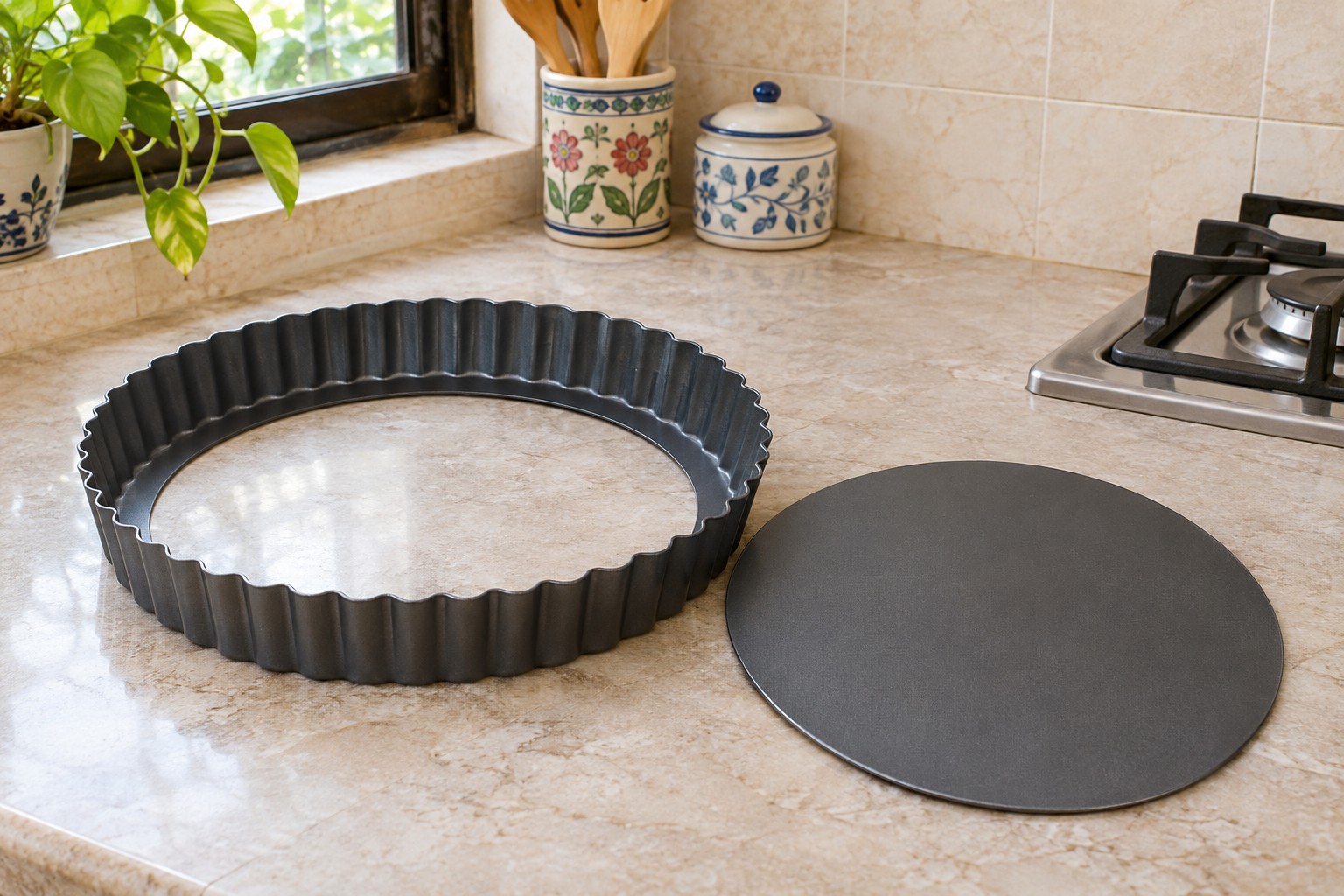
A tart pan supports a shallow pastry shell and its filling. Its fluted walls create a defined edge that can stand on its own after release. In a Pakistani home kitchen it is useful for fruit-and-custard tarts, chocolate tarts and savoury quiches for a tea spread. It differs from a deep pie dish: the proportion of pastry to filling and the way the finished tart is served are different.
An attractive fluted shape does not compensate for a mismatched recipe. Choose the inside diameter and depth first; use the decoration as a secondary consideration. This article gives researched guidance and editorial buying examples, rather than claiming a test bake.
Solid base or removable base
A solid-base tart dish is carried and served as one piece. A loose-base metal pan allows the wall to slide away once the tart is firm, exposing the pastry sides. Individual tartlet tins suit small portions but create more lining and washing work. Rectangular tins can make neat slices, yet require a recipe with an appropriate filling yield.
As an editorial example, a shallow tin around 23 cm across has a different capacity from a deeper tin of the same diameter. Measure depth below the rim. King Arthur’s pan guide explains the importance of material and pan shape; switching between metal, ceramic and glass is not merely a visual change.
Line, blind-bake and release
Roll and lift pastry without stretching it tight across the corners. Ease it down against the base and wall, then trim according to the recipe. Chill when directed. For blind baking, use the stated liner and weights, supported by a pan designed for oven use; follow the recipe for removing weights and finishing the shell. Do not assume every filling should be poured into a raw crust.
Place a loose-base pan on a supporting sheet before filling if its instructions permit. Keep your hand beneath the whole pan rather than pressing upward on the removable disc. After baking, cool enough for the pastry and filling to hold together. Lower the outer ring carefully and transfer using a broad support. The base remains hot long after it leaves the oven. A filled tart can break if lifted only by its rim.
Inspect the fit before paying
Ask a bakery-equipment retailer or online seller for internal dimensions and an explanation of the base construction. Check that the disc sits evenly with no large gaps, the ring is round and the flutes have no sharp burrs. A very loose disc can move during handling. A very tight disc may jam after baking.
Count the space taken by any support tray in your oven. If you plan to serve a quiche directly from ceramic bakeware, check both oven suitability and the weight you can comfortably carry. A “tart plate” intended for display may have no baking approval.
Clean every flute and seam
Cool the components, separate them and wash with warm soapy water and a soft brush. Pay attention to pastry trapped around the disc seat and inside flutes. Do not scrape a coated pan with a knife to free stuck pastry; loosen it by an appropriate gentle wash instead. Follow the maker’s dishwasher instructions for that particular finish.
Dry the disc and ring separately before reassembling. Protect coated faces from stacked metal bases. Replace a pan if its disc no longer seats securely, its edge is dangerously distorted or its surface peels into food. Cosmetic darkening does not itself prove the pan needs replacement. A complicated fluted design that you cannot readily clean may be a poor everyday choice.
Advantages and alternatives
A removable tart pan makes a freestanding presentation possible, but its moving base adds a handling hazard and does not promise a watertight seal. A solid dish avoids this joint but makes neat removal harder. If you rarely make tarts, choose a recipe intended for a pie dish or a small baking pan you already own. Do not improvise a removable base from loose foil under a heavy liquid filling.
Frequently Asked Questions
Can a tart pan hold thin batter?
A loose-base seam can leak. Use the construction and recipe intended for the mixture.
Should I cut the tart on its base?
Transfer when practical, particularly if the base is coated and could be scratched.
Must every tart shell be blind-baked?
No. Follow the filling and pastry recipe; some require a fully or partly baked shell.
How we know this
- Type Explainer
- Sources 3
- Reviewed November 2026
- Disputed points None
3 sources
- Your complete guide to baking pans, King Arthur Baking
- Recipe Success Guide, King Arthur Baking
- Good use and care of bakeware, Wilton
Photo credits (1)
- Fluted metal tart pan with its removable base on a kitchen counter., DailyLife.pk, All rights reserved
