
Kitchen equipment guide
RefrigeratorsFreezers and Coolers: Buy Space You Can Use Safely
Plan refrigerator and freezer space, compare coolers and storage containers, and use thermometers and an outage plan to protect food in everyday Pakistani kitchens.
DailyLife.pk kitchen equipment collection
Plan around shopping and storage
Cold storage should fit how food enters and leaves your kitchen. Daily fresh shopping, a weekly vegetable trip and occasional bulk meat purchases create different needs. List your largest regular items: a covered degchi, milk containers, lunch boxes, water bottles and frozen portions. Then decide how much belongs in the refrigerator and how much genuinely needs freezer space.
Overall litres do not show how easily those items fit. A shelf layout that accepts your covered pot can be more valuable than extra narrow door compartments. Ask the seller to show usable shelf spacing, drawer travel and freezer access. Open the doors as they would open in your kitchen, including a nearby wall and the room needed to remove drawers for cleaning.
Compare cold-storage formats
| Format | Useful reason to choose it | Tradeoff to inspect |
|---|---|---|
| Top-freezer refrigerator | Everyday chilled food with a separate freezer | Reach, shelf flexibility and freezer proportion |
| Bottom-freezer or multi-door refrigerator | Frequently used chilled shelves at a convenient height | Drawer layout, door opening and local service |
| Chest freezer | Bulk frozen storage | Top clearance, baskets and retrieving older packages |
| Upright freezer | Visible shelves and easier category separation | Door access and usable shelf dimensions |
| Insulated cooler | Short transport or temporary cold storage with ice | Insulation, ice space, cleaning and measured temperature |
Pakistan has locally listed refrigerator options; for example, Dawlance lists a 9191WB double-door model on its Pakistan site. Verify the precise model suffix, current stock and repair support directly. A retailer's rounded cubic-foot description should not replace the manufacturer's net compartment capacities and dimensions.
Measure the route and verify the supply
Measure the kitchen position, building entrance, stair turns and narrow doors before delivery. Include handles, required ventilation clearances and the space needed to level the cabinet. Do not squeeze a freestanding refrigerator into cabinetry using only its closed-body dimensions. Follow the model instructions for positioning near heat sources, ventilation and any wait after transport.
As an illustrative planning exercise, compare a 250-litre and a 350-litre layout using your actual containers; these are not recommendations for a specific household size. Compare net refrigerator and freezer volume separately. Check whether shelves can be repositioned without losing support, whether a removable shelf is needed for a tall pot, and whether freezer baskets can be lifted comfortably.
Read voltage, frequency, climate class and rated electrical information on the exact product. Ask a qualified electrician to assess earthing, the outlet and supply conditions. For backup power, obtain compressor starting and operating requirements from the manufacturer and match the complete system. A compressor warranty alone does not describe labour, transport or electronic-board coverage, so request the full written terms.
Use a thermometer, not a dial guess
FDA guidance recommends refrigerator temperatures at or below 40°F, approximately 4°C, and freezer temperatures at 0°F, approximately −18°C. A numbered control dial may not display the temperature. Put appropriate appliance thermometers in the compartments and check after adjusting settings. A food probe and an appliance thermometer do different jobs: one measures food, while the other helps monitor the storage environment.
Choose an easy-to-read instrument suitable for the temperature range. A display with a remote sensor can reduce the need to open a door just to check. For a cooler, leave room for ice or frozen packs and use a thermometer to establish whether it is keeping perishable food cold. A cool-feeling bottle is not a reliable measurement.
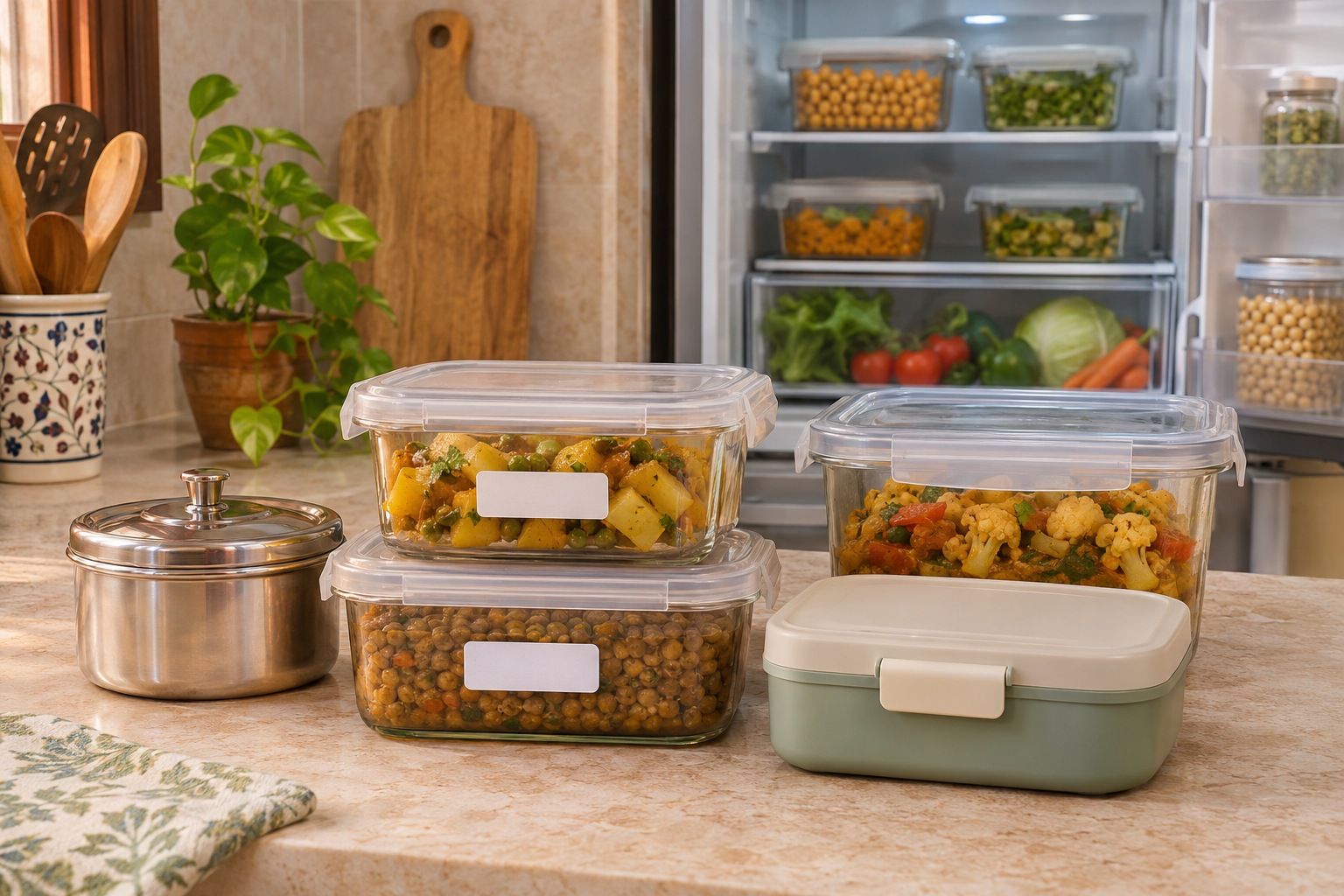
Use covered, food-suitable containers and separate raw items so leaks cannot contaminate ready-to-eat food. Portion leftovers into practical containers rather than planning to reheat the same large pot repeatedly. Label food with its contents and date. Arrange older packages where they will be used first, and keep vents clear according to the refrigerator instructions.
Prepare for a power interruption
Keep a simple outage plan with ice packs, an insulated cooler and a record of when power stopped. FoodSafety.gov gives approximate closed-door holding times of four hours for a refrigerator, 48 hours for a full freezer and 24 hours for a half-full freezer. These are planning guides, not guarantees for every kitchen temperature or appliance. Open doors as little as possible and evaluate food using its temperature and the official food-specific chart.
The same guidance says never taste food to decide whether it is safe. Frozen food that still contains ice crystals or is at or below 4°C may qualify for refreezing, although quality can suffer. Refrigerated perishables require a different decision. Keep the chart accessible and follow its item-specific instructions rather than treating all food as equally safe after an interruption.
Compare ownership cost and maintain access
For running cost, prefer comparable energy labels or a suitable meter measurement over multiplying compressor nameplate watts by every hour of the month. Compressors cycle, and conditions affect consumption. Monthly energy cost equals measured monthly kWh multiplied by your applicable electricity energy charge, with other bill effects considered separately. Total ownership also includes delivery, installation, baskets, maintenance and likely repairs.
Clean spills and door seals using approved methods, and inspect whether a damaged seal is replaceable locally. Defrost manual-defrost appliances as instructed; do not chip ice with sharp tools or apply an improvised heater. Ask about shelves, drawers, thermostats, fans and control-board availability before paying. A well-organised existing refrigerator plus a modest freezer may serve bulk buying better than replacing everything with a larger combined unit.
Keep building your kitchen
Return to the Pakistani kitchen equipment directory for related tools, cookware, appliances and practical buying guides. Then choose a dish from the recipe collection and check its equipment list before buying another gadget.
Frequently Asked Questions
Can I judge cold storage by touching the food?
Use a suitable thermometer and the food-specific safety guidance. Touch and smell cannot establish that food remained safely cold.
Does inverter branding prove the lowest electricity bill?
No. Compare suitable energy data and real usage conditions, including temperature settings, door openings and ambient conditions.
How we know this
- Type Explainer
- Sources 3 (2 official/academic)
- Reviewed November 2026
- Disputed points None
3 sources
- Refrigerator thermometers, US FDA
- Food safety during power outage, FoodSafety.gov/USDA
- 9191WB refrigerator, Dawlance Pakistan
Photo credits (1)
- Lidded glass and steel food containers and a closed lunchbox beside an organised refrigerator., DailyLife.pk, All rights reserved
