
Kitchen equipment guide
OvensMicrowaves and OTGs: Choose the Right Heat for Pakistani Meals
Understand solo and convection microwaves, OTGs and built-in ovens, then compare tray fit, electrical load, safe containers, cleaning and total ownership cost.
DailyLife.pk kitchen equipment collection
Begin with your actual meals
An oven purchase starts with a cooking job, not a litre figure. Reheating one bowl of salan, browning seekh kebabs, baking a birthday cake and cooking several pizza trays are different demands. Write a short weekly menu and mark which task happens most often. This prevents buying a large cavity for occasional reheating or expecting a simple microwave to brown a cake like a conventional oven.
Also decide where the appliance will live. A freestanding countertop oven needs a suitable surface and ventilation; a built-in model needs a cabinet designed around its installation drawing. Neither should be enclosed merely because it physically slides into a shelf. Consider the route from the hot oven to a landing space where a full tray can be set down safely.
Know what each type can do
| Appliance | Best starting role | What to verify |
|---|---|---|
| Solo microwave | Reheating and microwave cooking | Dish diameter, output settings, turntable or flatbed layout |
| Grill microwave | Reheating plus top browning | Supplied rack rules and grill clearance |
| Convection combination microwave | Microwave and hot-air cooking in one cavity | Modes, trays, preheat and mode-specific cookware |
| OTG or mini electric oven | Toast, roast and bake with heating elements | Temperature control, rack positions and useful tray area |
| Built-in oven | Regular baking or larger batches | Cabinet fit, supply, installation and service access |
OTG usually means oven, toaster and griller in retail descriptions. Treat it as a label to investigate rather than proof of a convection fan, accurate thermostat or large usable interior. A fan symbol and named cooking mode should be confirmed in the manual, not inferred from a sales photograph.
Check useful capacity and electrical data
As an illustrative shortlist, compare a 20-litre solo microwave for plate reheating, a 30-litre combination model for mixed tasks and a larger oven for multiple baking tins. These are planning examples, not household-size standards. Take the diameter of your dinner plate and the outside dimensions of your cake tin, including handles. Ask whether the dish can rotate freely and whether a tray can sit at the intended rack height.
A verified local example is the Dawlance DW-550 AF product specification: it lists 30 litres, external dimensions of 52 × 50 × 32.6 cm, and 230 V, 50 Hz. Those external measurements exclude the ventilation allowance required by its instructions. Its listed microwave power is not a basis for assuming the whole appliance's electrical input in every mode. Obtain the input rating and grill/convection loads from the plate or manual before checking the circuit.
Measure counter depth with the plug, cable routing and door movement in mind. A door that hits a wall or blocks a passage can make an otherwise suitable oven frustrating. For built-in products, match the complete model code and drawing before a carpenter cuts anything.
Match cookware to the selected mode
The FDA advises following each microwave manufacturer’s container instructions. Microwave-safe glass or ceramic is useful, but that label alone does not promise suitability for a hot grill or convection setting. Likewise, an oven-safe metal baking tin is not automatically permitted in microwave mode. Use supplied racks only in the modes specifically authorised by the manual.
The FDA also identifies door hinges, latches and seals as damage points requiring manufacturer assistance. Stop using a damaged appliance and arrange assessment instead of attempting a door repair. Be careful with liquids: heating plain water in a microwave can lead to superheating and sudden eruption. Follow the manual's liquid-heating instructions and avoid improvising with sealed containers.
For household reheating, spread food so that it heats evenly and use the recipe or food-safety instructions for stirring, resting and checking temperature. A browned surface is not evidence that a thick portion is hot throughout. Keep a food thermometer available for foods whose safe cooking temperature must be checked.
Estimate ownership cost honestly
Purchase cost should include a suitable installation, any electrical work and trays or dishes genuinely needed. Compare replacement availability for turntables, couplers, door parts, heating elements and controls. Ask who performs warranty repairs in your city and whether transport or installation costs are covered. An imported model with an attractive feature list needs the same scrutiny.
For an illustrative energy calculation, an oven drawing 1.5 kW continuously for 20 minutes would use 0.5 kWh. Actual use depends on preheating, thermostat cycling, cavity size and the food. Multiply measured kWh per cooking session by sessions per month and your applicable electricity energy rate. Add other bill effects separately rather than inventing a universal Pakistani tariff. Compare similar finished meals, including extra batches in a small oven.
Use a model-specific cleaning routine
Let the appliance cool, disconnect it where instructed and remove crumbs and food splashes with suitable materials. Do not cover ventilation openings with a cloth or store items on top without permission in the manual. Avoid abrasive cleaning of door seals or coated interiors. A self-cleaning feature has its own preparation and accessory rules; it is not permission to leave every rack inside.
Dawlance’s manual search uses the model number from the appliance label. Save the correct document when purchasing and check the exact suffix. Before committing, ask the seller to demonstrate controls, explain microwave versus convection settings and show the supplied accessories. For infrequent baking, continuing with a good existing oven and buying a simple microwave may be the more useful combination.
Keep building your kitchen
Return to the Pakistani kitchen equipment directory for related tools, cookware, appliances and practical buying guides. Then choose a dish from the recipe collection and check its equipment list before buying another gadget.
Frequently Asked Questions
Can a solo microwave bake an ordinary cake recipe?
Do not assume it can reproduce conventional baking. Use a microwave-specific recipe or choose a documented convection or oven function.
Does a bigger litre rating mean my tray fits?
No. Check usable width, depth, rack height and turntable clearance with the actual dish dimensions.
How we know this
- Type Explainer
- Sources 3 (1 official/academic)
- Reviewed November 2026
- Disputed points None
3 sources
- Microwave ovens, US FDA
- DW-550 AF specification, Dawlance Pakistan
- User manual search, Dawlance
Photo credits (1)
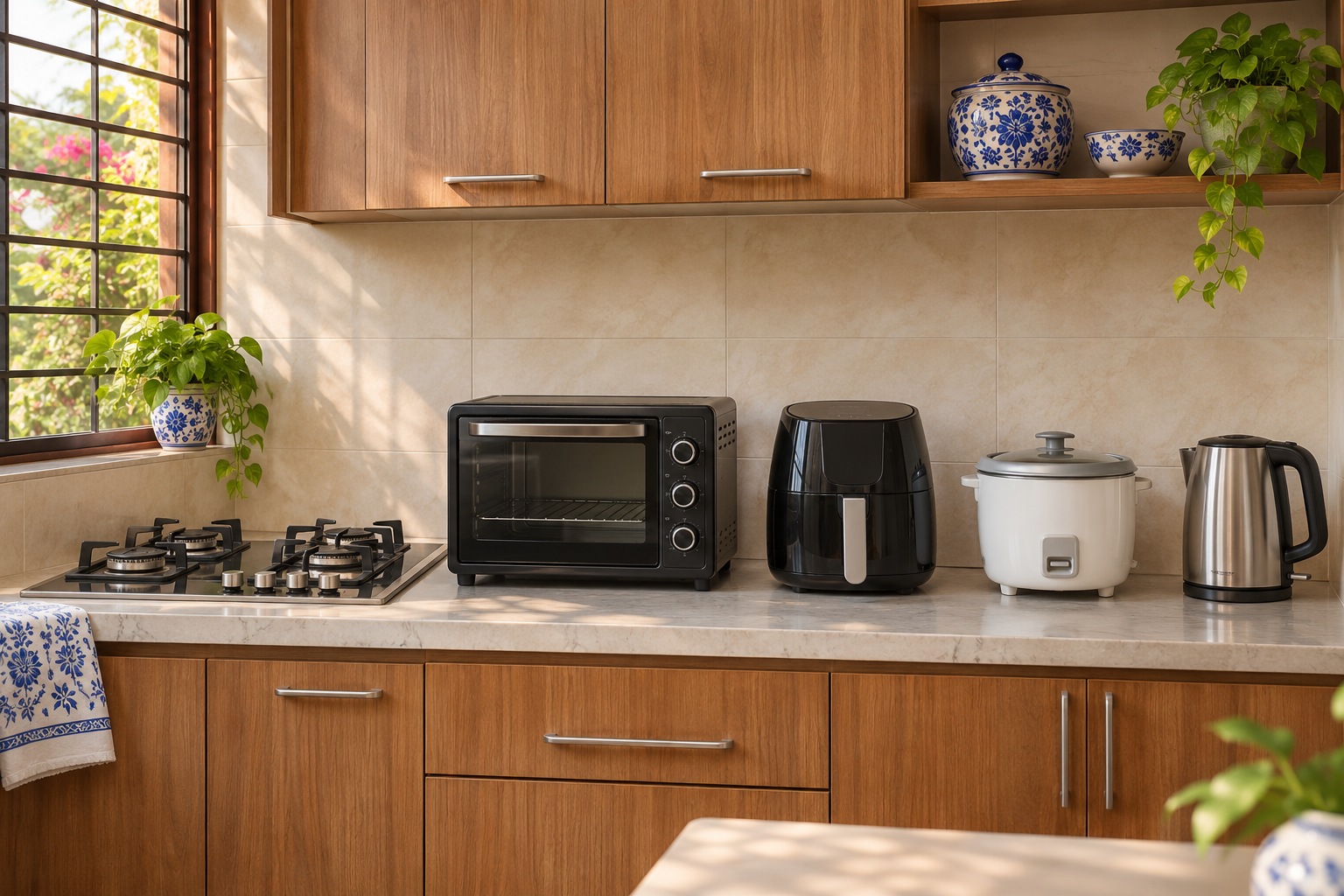
- Gas hob, countertop oven, air fryer, rice cooker and kettle in a sunlit Pakistani kitchen., DailyLife.pk, All rights reserved
