
Kitchen equipment guide
ChaklaBelan, Parat and Roti Presses: Choosing Dough Tools
Build a practical roti-making station with the right chakla, belan, parat, scrapers and presses, including buying checks, cleaning and appliance alternatives.
DailyLife.pk kitchen equipment collection
Plan a comfortable dough-making station
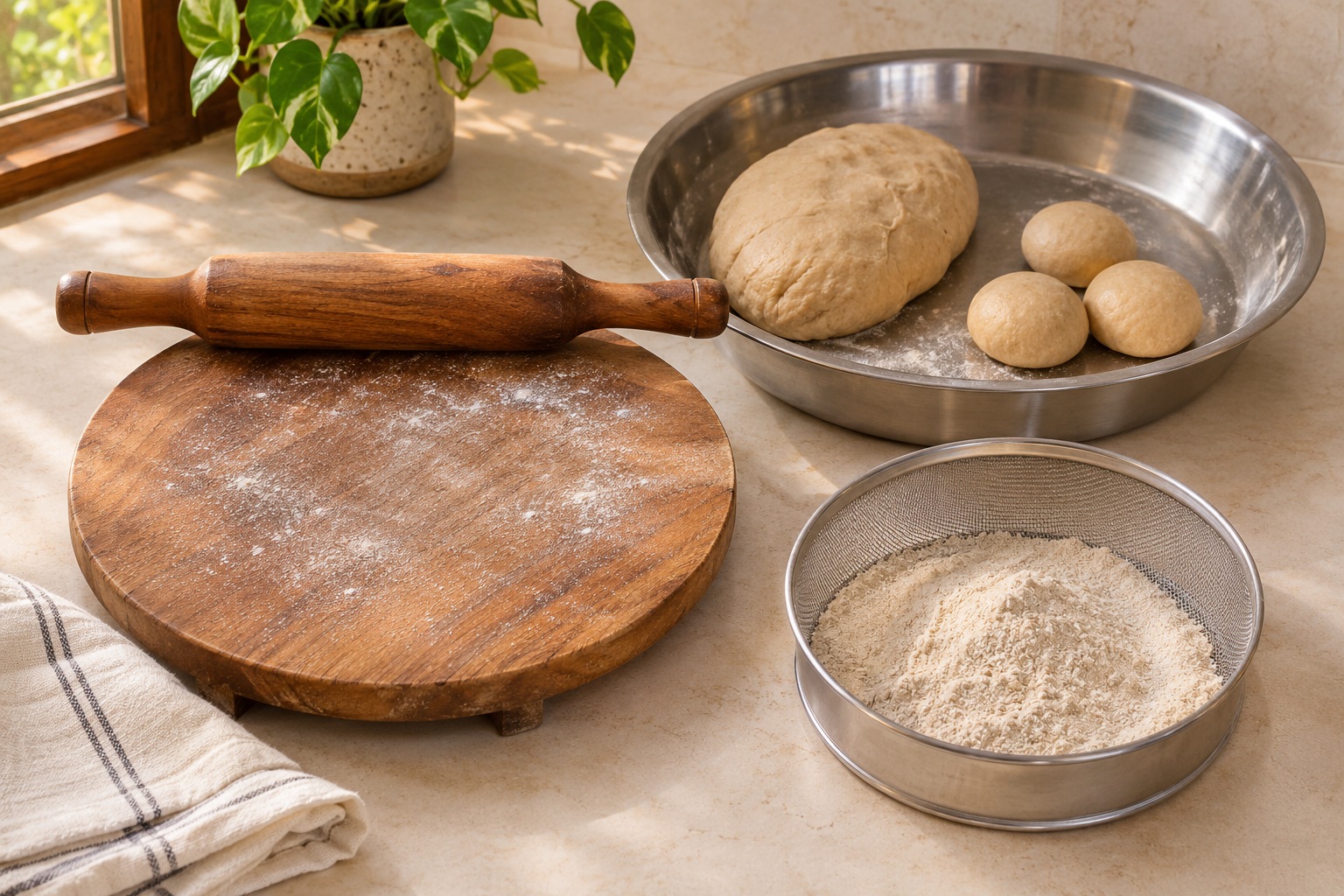
A chakla is the rolling board, a belan the rolling pin, and a parat the broad vessel many households use for mixing and kneading atta. Names and proportions vary, so choose the actual shape that suits your hands. A small kitchen may need only a stable work surface, a comfortable rolling pin and a bowl. A dedicated station becomes worthwhile when it makes daily roti preparation easier to set up and clean.
Before buying, rehearse the sequence: measure flour, add water, knead, rest, divide and roll. There should be somewhere to put the pin without it rolling away, somewhere for dusting flour, and enough clear space to move each rolled roti toward the tawa.
Compare boards, pins and kneading vessels
| Tool | What matters | Possible alternative |
|---|---|---|
| Chakla | Flat surface, stability and usable diameter | Clean, suitable counter or pastry board |
| Belan | Comfortable grip, straightness and rolling width | Another food-contact rolling pin |
| Parat | Room to knead without flour escaping | Wide mixing bowl |
| Dough scraper | Edge shape matched to bowl or counter | Suitable flexible spatula for bowl scraping |
| Roti press | Plate size, hinge clearance and stated function | Belan and tawa |
As a planning example, a board around 30 cm across may suit smaller rotis, but test it against your usual bread diameter and pin travel. This is a layout suggestion, not a standard size. Measure the shelf and sink too; a board that is difficult to wash becomes an everyday nuisance.
Choose a surface you can keep stable and clean
A wooden chakla can be relatively easy to lift, but inspect it for cracks, splinters and loose feet. A stone board may feel steady while being heavy enough to make washing awkward. Look at the underside and edge as carefully as the top. Any rubber feet should hold firmly, and a food-contact surface should arrive without chips or unexplained flaking finishes.
Keep the rolling surface separate from raw meat preparation. Avoid treating decorative stone or a spare building tile as automatically suitable for food. Ask the seller about the material and intended use. If the board wobbles on your counter, resolve that before rolling. Stability is more useful than an elaborate carved rim or an impressive weight.
Buy a belan for control rather than decoration
A straight dowel lets your palms apply pressure along its length; a handled pin offers a different grip and may have moving bearings. Neither style guarantees round rotis. Check that the pin rolls evenly and that handles, if present, turn without wobble or grit. A long barrel helps with larger pastry sheets but needs more counter space. A shorter pin can feel easier for small daily portions.
King Arthur's straight wooden rolling pin is intended for large dough discs and even rolling, illustrating why usable barrel width matters. This does not make a long pastry pin necessary for chapati. Try the hand position that feels comfortable, then select a pin you can wash and store according to its material's instructions.
Use scrapers and a parat to manage sticky dough
A parat should provide enough open space for folding dough without sharp rims digging into the wrists. Check for a stable bottom, smooth edges and seams that can be washed. A deep bowl contains splashes well but may restrict the hand motion you prefer. Choose by your usual flour quantity, leaving room for mixing rather than filling the vessel near its brim.
A flexible bowl scraper follows curved sides; a straighter bench scraper divides dough and gathers residue from a suitable counter. King Arthur distinguishes these two scraper jobs in its baking-tool guidance. Use a plastic scraper on a surface that could scratch, and check compatibility first. Weighing portions can help when you want similarly sized rotis without repeatedly estimating each dough ball.
Understand manual presses and electric roti makers
A manual press flattens dough but does not cook it. A heated roti maker combines pressing and cooking and requires a compatible electricity supply, sound wiring and space around hot plates. The plate opening and hinge can limit bread size and thickness. Ask for a demonstration using the kind of atta dough you prepare; do not assume a tool promoted for another flatbread will behave identically.
Prestige lists the PRM 5.0 as a 900 W electric roti maker; that specification applies to that model. Check the actual rating plate, plug and local service arrangements for any imported appliance. Confirm replacement hinges, handles and coating-related support before purchase. Manual rolling remains a useful alternative where storage, repair access or electricity reliability matters.
Keep flour and dough hygiene in the routine
FDA guidance explains that flour is raw and advises against tasting uncooked dough. Keep dusting flour away from ready-to-eat food and wash hands, utensils and surfaces after dough work. A tool used only for atta still needs cleaning. Avoid presenting raw dough as children's play material.
Lift off loose flour before washing, clean seams carefully and dry tools fully. Follow the maker's wood-care advice rather than soaking a pin or board indefinitely. Allow an electric press to cool and unplug it before cleaning as instructed; do not treat it like an ordinary washable plate. Store the board where air can circulate and the pin where it will not fall onto a hot hob.
Keep building your kitchen
Return to the Pakistani kitchen equipment directory for related tools, cookware, appliances and practical buying guides. Then choose a dish from the recipe collection and check its equipment list before buying another gadget.
Frequently Asked Questions
Will a press automatically make soft rotis?
No tool can guarantee texture across different doughs and techniques. Check the appliance instructions and judge a demonstration with your usual flour before replacing your rolling routine.
Is a parat essential?
A wide mixing bowl can perform the same basic mixing job. A parat is useful if its open shape makes kneading more comfortable for you.
How we know this
- Type Explainer
- Sources 4 (1 official/academic)
- Reviewed November 2026
- Disputed points None
4 sources
- Straight Rolling Pin, King Arthur Baking
- Sourdough Baking Tools, King Arthur Baking
- Prestige PRM 5.0, TTK Prestige
- Handling Flour Safely, FDA
Photo credits (1)
- Wooden chakla and belan beside a parat with dough balls and a flour sieve., DailyLife.pk, All rights reserved
