
Marzan — Quick Whole-Grain Home Adaptation
A thick cooked whole-grain mound with a small well of food-grade apricot kernel oil, inspired by Balti marzan.
Traditional marzan can involve specially prepared grain. This quick cooked-flour version approximates the serving style and does not reproduce extended grain fermentation.
Start cooking ↓ Ingredients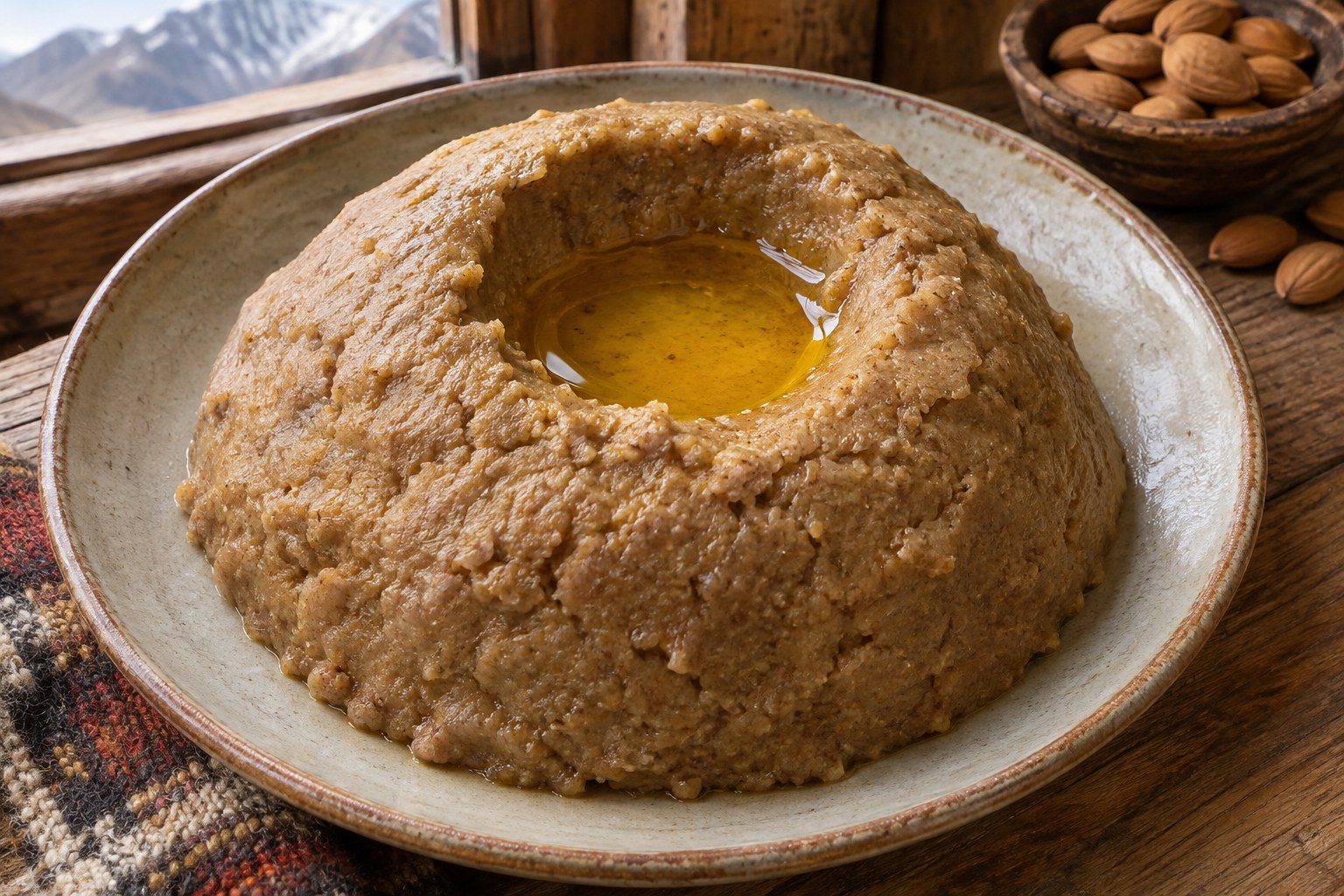
Metric and household measures: 1 tbsp = 15 ml; 1 tsp = 5 ml. The title explicitly identifies a quick adaptation. It should not be presented as the long-prepared grain method used by every Balti household.
Servings
These quantities make 4 servings. Scale the two flours and the starting water together, then add extra hot water gradually as the mixture cooks. Use a heavy pan with room for vigorous stirring; larger batches need more effort and may take longer to cook through.
Before you start
Check ingredients
Use food-grade apricot kernel oil; never substitute cosmetic oil.

Checking a packaged ingredient label before cooking Prepare carefully
Choose a heavy saucepan and a strong wooden spoon.
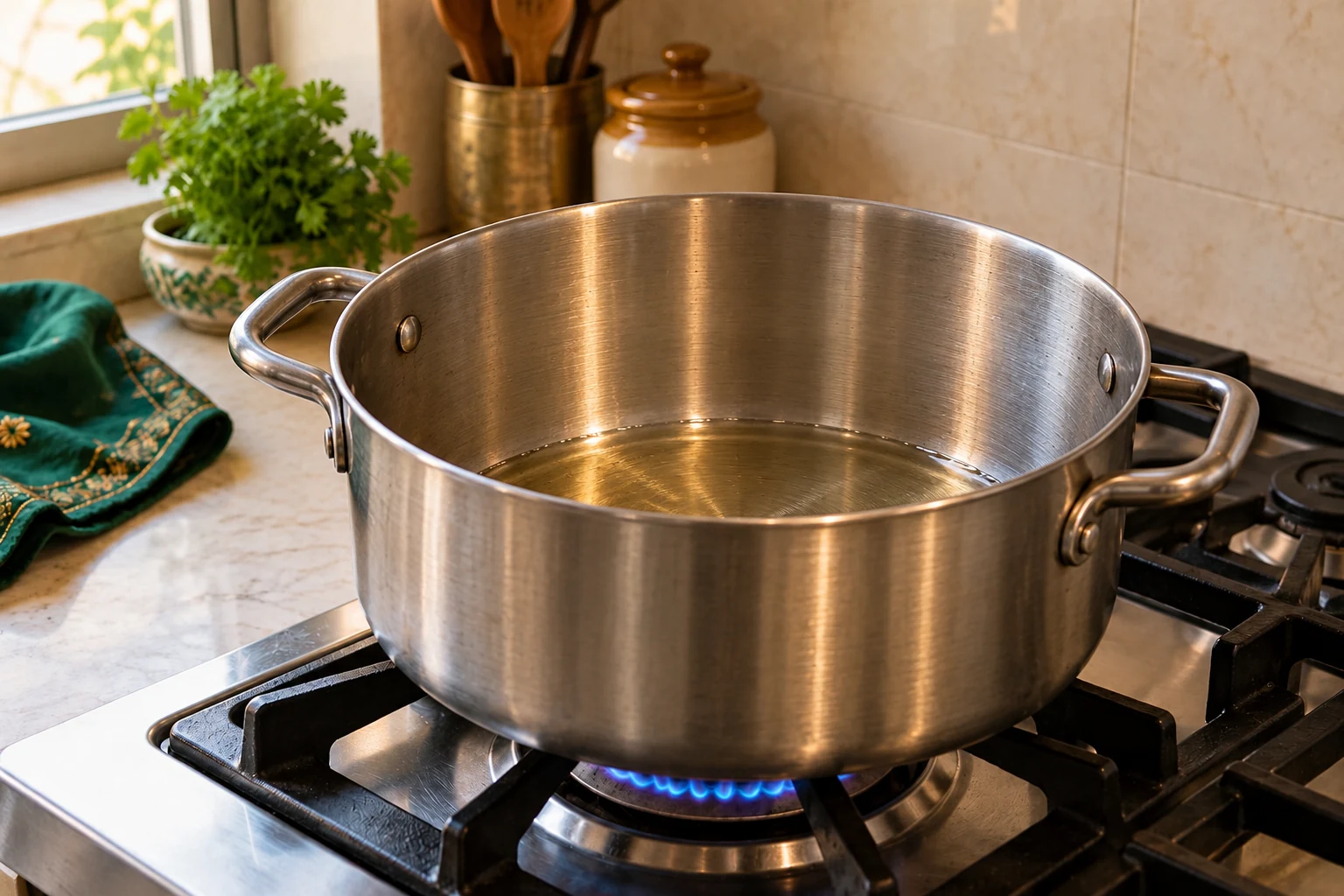
Heavy pot oil Plan the method
Have freshly boiled water available to adjust the stiff mixture.

Measuring water in a jug before cooking Set up the kitchen
This recipe cooks flour directly; no prolonged soaking or home fermentation is required.

Placing a mixing bowl on a digital scale before measuring ingredients
Step-by-step cooking method
1 Measure
Combine the whole-wheat and buckwheat flours in a bowl. Measure 750 ml water for the initial mixture; keep up to another 150 ml water aside in a separate jug for adjusting the texture. Keep this extra portion warm.
Placing a mixing bowl on a digital scale before measuring ingredients 2 Make a smooth slurry
Whisk the flour with 400 ml water from the initial 750 ml supply until smooth, breaking up dry pockets. Keep the liquid cool for this mixing stage.
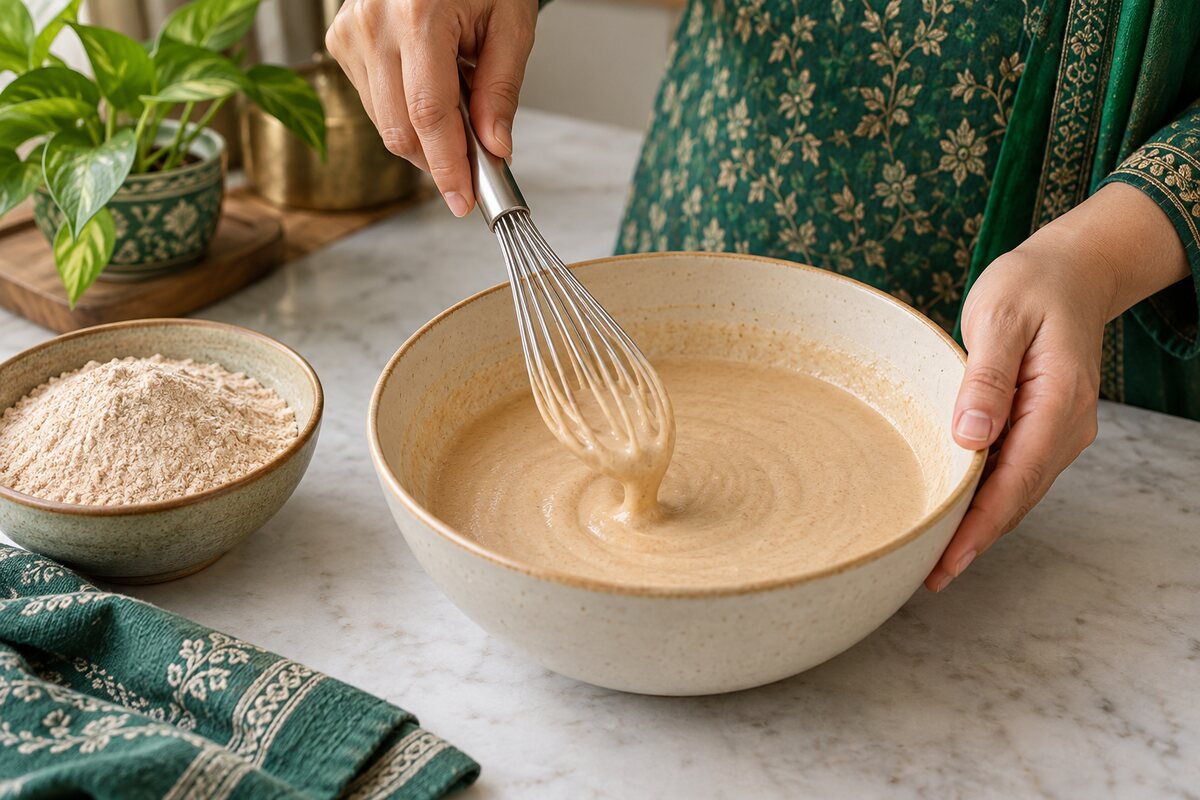
Whisking raw whole wheat atta slurry 3 Heat the liquid
Bring the remaining 350 ml water and salt to a gentle simmer in a heavy pan.
Measuring water in a jug before cooking 4 Add the flour mixture
Lower the heat and pour in the slurry gradually, stirring firmly with a wooden spoon or sturdy whisk.
Whisking raw whole wheat atta slurry 5 Cook through
Cook over low heat for 15–20 minutes, stirring and scraping continuously as it thickens. Add from the reserved jug a little at a time only as needed, so the mixture stays soft enough to stir and cook evenly rather than scorching.
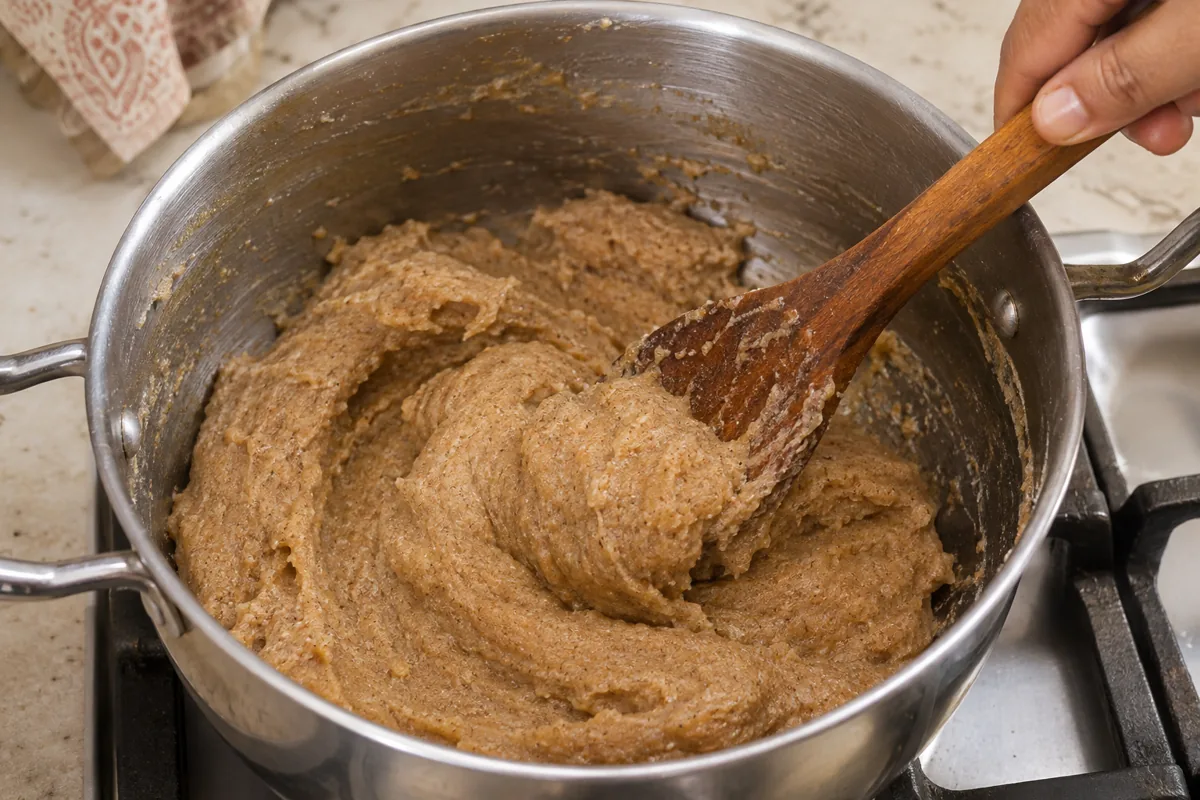
Sturdy wooden spoon stirring a thick cohesive tan wholewheat-and-buckwheat flour mixture in a heavy saucepan over low heat 6 Check texture
After cooking thoroughly, let a small sample cool before tasting. Aim for a soft cohesive mound rather than a dry, crumbly mass. Do not taste the raw slurry or use the absence of a floury taste as proof that uncooked flour is safe.
Sturdy wooden spoon stirring a thick cohesive tan wholewheat-and-buckwheat flour mixture in a heavy saucepan over low heat 7 Shape
Spoon onto a warm serving dish and smooth with a wet spoon. Make a small hollow in the middle.
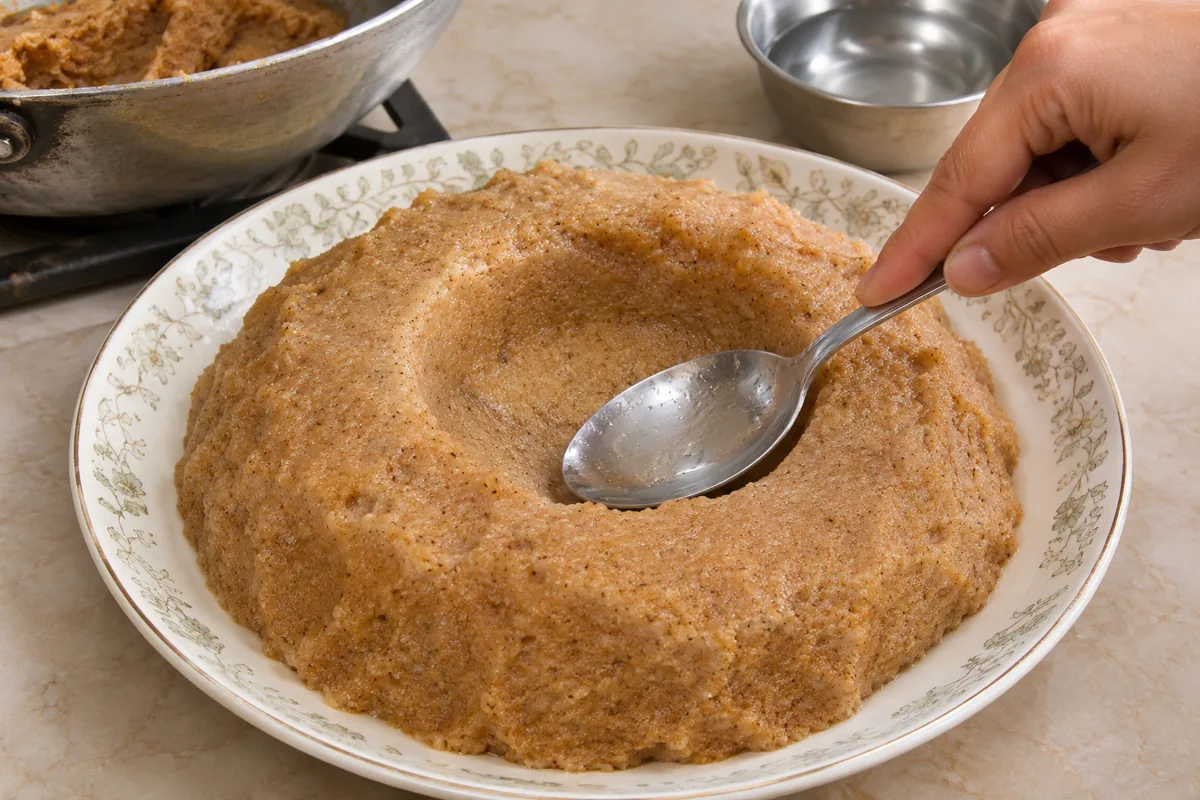
Wet spoon smoothing a warm tan whole-grain marzan mound on a shallow serving dish and forming a small hollow in its centre, before adding oil 8 Finish and serve
Pour the measured culinary apricot oil into the hollow and serve warm. Share portions from the mound, taking a little oil with each spoonful.
Finished dish and serving reference
Tips & fixes
- Raw flour taste: continue low cooking with more hot water.
- Scorched base: move unburnt mixture to a clean pan without scraping the bottom.
- Too stiff: beat in hot water a spoonful at a time.
Heat guide
Bring the measured water to a gentle simmer, then lower the heat before adding the smooth flour slurry. Cook on low heat, stirring and scraping the base continuously. Add hot water in small amounts if the mixture becomes too stiff to stir before the flour has cooked through.
Storage
Cool leftovers promptly in shallow containers, refrigerate and use within 48 hours or freeze. Reheat only the portion needed until steaming hot throughout. Follow ingredient use-by dates if sooner.
Variations
- Whole-wheat only: replace buckwheat with the same weight of whole-wheat flour.
- Butter finish: use butter instead of apricot oil and declare the milk allergen.
Nutrition
Approximate values per serving. Flour brands, the measured apricot oil or alternative butter finish, and portion size affect the estimate.
| Energy | Protein | Carbohydrate | Fat |
|---|---|---|---|
| 310 kcal | 9 g | 53 g | 8 g |
FAQs
Can I prepare this ahead?
Cool leftovers promptly in shallow containers, refrigerate and use within 48 hours or freeze. Reheat only the portion needed until steaming hot throughout. Follow ingredient use-by dates if sooner.
Can I change the ingredients?
You can replace the buckwheat flour with the same weight of whole-wheat flour, as described in the variation. Butter can replace the apricot oil finish, which adds milk as an allergen. This recipe contains wheat and is not gluten-free.
How do I know it is ready?
The mixture should form a soft, cohesive mound and be cooked throughout. Stir and scrape through the full cooking stage, adding a little hot water if it becomes too stiff to cook evenly. Let any tasting sample cool only after thorough cooking; flavour and texture alone do not establish the safety of raw flour.
Explore this cuisine
Gilgit Baltistani food guide · Browse all recipes
References and background
Migrationology: Marzan in Baltistan
Describes a version using specially prepared grain. Our quick cooked-flour adaptation keeps the serving idea while using a different preparation process.
Food Standards Agency: handling flour safely explains why flour mixtures need thorough cooking before tasting. This supports the flour-handling advice, not a claim that the quick adaptation is the traditional grain method. Checked 16 November 2026.
