
Ingredients & Spices · The complete guide
Sev
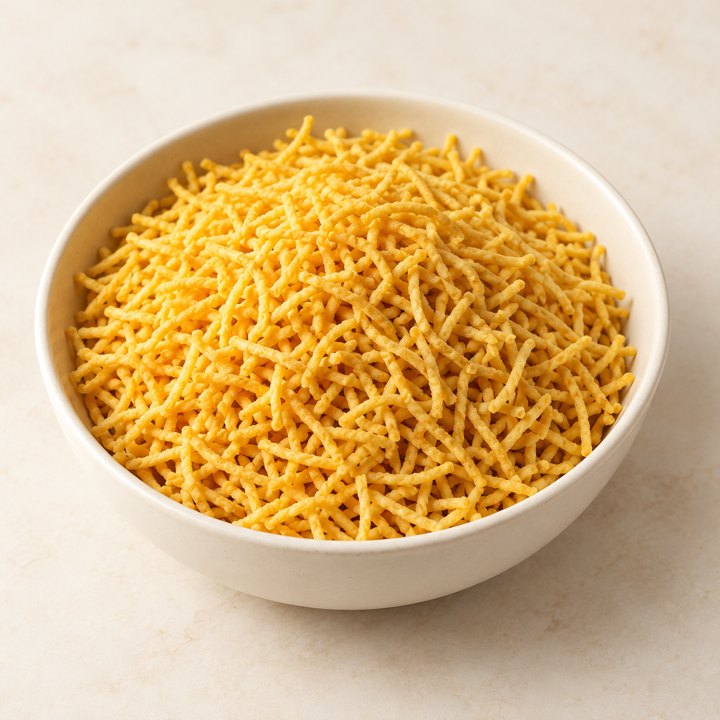
Sev are thin fried strands, commonly made from besan or gram flour, used as a snack and chaat topping. Pakistani shops use the name sev or fine sev.
What it is and local names
Sev are thin fried strands, commonly made from besan or gram flour, used as a snack and chaat topping. Pakistani shops use the name sev or fine sev. Fine plain sev is different from thick gathiya and from a mixed nimco containing many other snacks.
Origins and documented history
It belongs to South Asian extrusion and frying traditions based on pulse flour. Regional forms differ in thickness and seasoning. No securely documented single inventor or exact earliest date is established by the technical standards used for this guide.
Types and manufacture
A seasoned dough is pressed through a perforated die into hot oil, fried and broken into strands. Potato starch, rice flour or other ingredients can alter texture. Fine sev is delicate and disperses quickly; thick strands give a harder bite.
Production, trade and Pakistan
Pakistan and India both produce sev in local shops and packaged-snack factories, with finished snacks also traded to diaspora markets. The package’s manufacturing location and ingredient list are more informative than assigning all sev to one region.
How to use it
For bhel puri, add fine sev at the end so it retains its crunch. Keep a little aside for the top. Do not stir repeatedly after adding wet chutneys, and assemble small batches that can be eaten immediately rather than one large soggy bowl.
Nutrition, benefits and limits
Gram flour contributes some protein, but frying oil and salt materially affect the nutritional profile. A small garnish provides texture efficiently. It should not be described as equivalent to a serving of boiled chickpeas or lentils.
Drawbacks, allergens and precautions
Chickpea allergy is possible and other flours or shared-fryer allergens may occur. Seasoned packs can contain milk, nuts or flavour mixtures. Old oil flavours, dampness and visible contamination are reasons to reject a batch.
Substitutions and storage
Boondi or crushed plain papri provides another crunch but changes the shape and flavour. Toasted chickpeas are a different lower-moisture topping. A verified gluten-free claim is needed if wheat cross-contact matters.
Cool completely before sealing homemade sev. Keep airtight and dry, separate from chutney and yogurt. Once mixed into wet chaat, its crispness and dry-snack storage assumptions no longer apply.
Planning the texture of chaat
A prepared crisp ingredient can soften very quickly when it touches yogurt, chutney or cooking liquid. Decide which part of the dish should remain crisp and which part should absorb flavour. Keep dry garnishes separate until serving, and assemble only the number of portions that will be eaten shortly. Drain cooked chickpeas and other wet components well before combining them. If the dish must travel, pack the wet and dry parts in separate containers so that the intended contrast survives the journey.
Buying prepared ingredients carefully
Choose a supplier with clean covered displays, fresh turnover and clear information about ingredients. Fried foods absorb flavours from old or poorly managed frying oil, and no amount of chutney reliably hides rancidity. Ask whether the batch contains wheat, gram flour, milk, nuts or shared-fryer ingredients if an allergy matters. A traditional name describes a style of food rather than a guaranteed recipe. A packaged version may be baked, fried, salted or seasoned differently from the loose product normally used at home.
Balancing the finished dish
A small amount of a fried topping can give a large improvement in texture, so it need not dominate the serving. Balance a chaat with the pulse, vegetable or yogurt component specified by the recipe and taste before adding more salt. Commercial masalas, chutneys and snack mixtures may all supply sodium. Keep nutrition claims proportionate: the presence of a pulse ingredient does not make a deep-fried snack equivalent to a bowl of boiled lentils. Use fresh portions and avoid repeatedly warming a large communal batch over several days.
Storing components for repeat use
Dry fried snacks and moist cooked dumplings need different storage. Let a dry freshly fried snack cool fully before sealing it so that trapped steam does not soften it. A cooked filling or soaked pulse preparation should be chilled promptly in a covered shallow container. Keep these components separate from chutney and yogurt until required. When reheating a filled item, heat the centre thoroughly and restore crispness with dry heat if appropriate. A quick surface browning cannot demonstrate that a cold filling is heated through; the filling and shell need separate consideration.
Recipes and the Pakistani pantry
Use this ingredient in Bhel Puri. Explore related ingredients in the Pakistani ingredients and spices pantry.
Names and forms used in our recipes
View the recipe names covered by this guide
- fine sev
Frequently Asked Questions
What should I check when buying sev?
Choose fine plain sev for bhel puri, with a fresh crisp texture. Thick gathiya and mixed nimco change the dish.
What can replace sev in a recipe?
Boondi or crushed plain papri provides another crunch but changes the shape and flavour. Toasted chickpeas are a different lower-moisture topping.
How should sev be stored?
Cool completely before sealing homemade sev. Keep airtight and dry, separate from chutney and yogurt.
Keep Exploring
Related places and stories on DailyLife.pk

How we know this
- Type Explainer
- Sources 5 (3 official/academic)
- Reviewed November 2026
- Disputed points None
