
Ingredients & Spices · The complete guide
Holy basil
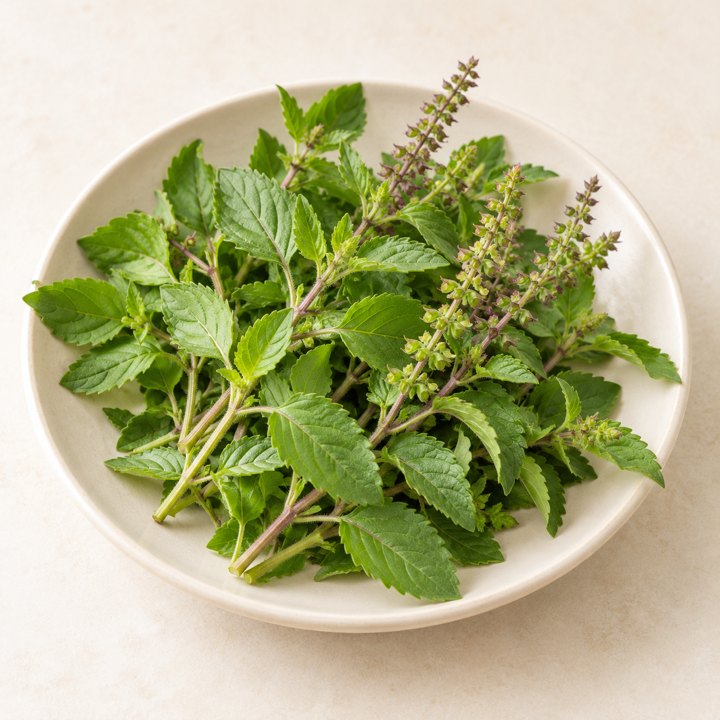
Holy basil or tulsi is usually Ocimum tenuiflorum, also known by the synonym Ocimum sanctum. It is a different species from sweet basil and is used for its strong clove-like, peppery herb character.
What it is and names to know
Holy basil or tulsi is usually Ocimum tenuiflorum, also known by the synonym Ocimum sanctum. It is a different species from sweet basil and is used for its strong clove-like, peppery herb character.
Origins, producing regions and Pakistan context
Tulsi has a long South Asian cultural and traditional medicinal history. Cultural reverence and long use are important context, but do not by themselves prove modern therapeutic claims.
Kews native-range record includes tropical and subtropical Asia, including Pakistan. It is also cultivated in gardens and commercially elsewhere; a tulsi tea packet may contain a blend rather than pure leaf.
Background: Royal Botanic Gardens, Kew: plant identity and range.

Types and buying advice
Identify tulsi or holy basil as Ocimum tenuiflorum rather than assuming every basil plant is interchangeable. A tea blend may contain additional herbs.
How to cook with it
Use food-grade leaves in an infusion or, where the actual variety suits the dish, in a Thai-style stir-fry. Its assertive flavour means a small amount can replace a larger volume of sweet basil only with a noticeable change.
Identify the plant before cooking: common names can overlap. A leaf intended for a strong herbal tea may overwhelm a delicate tomato sauce.
In Thai-style cooking, holy basil is often valued for its peppery edge rather than the sweet anise scent of Thai basil. Regional plant names can make buying confusing, so use the recipe, aroma and label together. A tea product may be selected for a very different intended use from fresh cooking leaves. Do not empty a supplement capsule into a pan to replace an unavailable herb; its composition and concentration are not a culinary substitution.
Try the ingredient in Thai Basil Chicken. Follow each recipes specified form and quantity, since whole pieces and fine powder season food differently.
For related pantry ingredients, see the Pakistani ingredients and spices guide.
For a stir-fry that explicitly calls for holy basil, prepare the leaves before starting the wok and add them only when the main ingredients are nearly cooked. Brief contact with the hot sauce lets them wilt without becoming a prolonged boiled-herb flavour. For an infusion, use correctly identified food leaves and treat it as a beverage with its own strong flavour. A supplement product may include extracts or other herbs, and should not be repurposed as the equivalent of a fresh handful.
Nutrition and realistic benefits
Fresh leaves add aroma, variety and some micronutrients to food. The nutritional contribution depends on whether you eat a few garnish leaves or a substantial chopped-herb portion. They cannot replace the volume and diversity of vegetables in a meal. Their most useful everyday role is making ordinary dishes enjoyable with a fresh aromatic finish. Claims based on isolated oils, extracts or laboratory tests should not be transferred to a spoonful of chopped leaves or an everyday homemade tea.
Disadvantages and precautions
Herbal extracts and tulsi supplements should be assessed separately from leaves in food. Avoid claiming that a household tea treats infection, stress or diabetes.
Clean handling matters even for a small garnish. FDA food-safety guidance explains practical handling. Buying from a traceable food supplier is more dependable than trying to judge safety from appearance alone.
Substitutions and storage
Thai basil gives a different anise-like profile; sweet basil is softer. For a generic fresh-herb garnish, mint or coriander may be more practical than forcing a botanical match.
Choose sound leaves with a clear characteristic aroma, and discard rotten or slimy material. Rinse under fresh running water before use and dry gently; household soap and detergent are unsuitable for washing food. Keep most fresh herbs chilled with their moisture controlled so leaves do not sit wet. Tender basil is particularly sensitive to cold and bruising. Freezing can preserve a surplus for cooked dishes, though thawed leaves usually lose the texture needed for an attractive raw garnish.
Names and forms used in our recipes
View the recipe names covered by this guide
- holy basil leaves
Frequently Asked Questions
Is holy basil the same as Thai basil?
In Thai-style cooking, holy basil is often valued for its peppery edge rather than the sweet anise scent of Thai basil. Regional plant names can make buying confusing, so use the recipe, aroma and label together.
What can I use instead of holy basil?
Thai basil gives a different anise-like profile; sweet basil is softer. For a generic fresh-herb garnish, mint or coriander may be more practical than forcing a botanical match.
What is the main caution with holy basil?
Herbal extracts and tulsi supplements should be assessed separately from leaves in food. Avoid claiming that a household tea treats infection, stress or diabetes.
Keep Exploring
Related places and stories on DailyLife.pk

How we know this
- Type Explainer
- Sources 3 (1 official/academic)
- Reviewed November 2026
- Disputed points None
3 sources
Photo credits (1)
- I-11 Sabze Mande, Islamabad.jpg, Pakieditor, CC BY-SA 4.0, via Wikimedia Commons
