
Ingredients & Spices · The complete guide
Filo
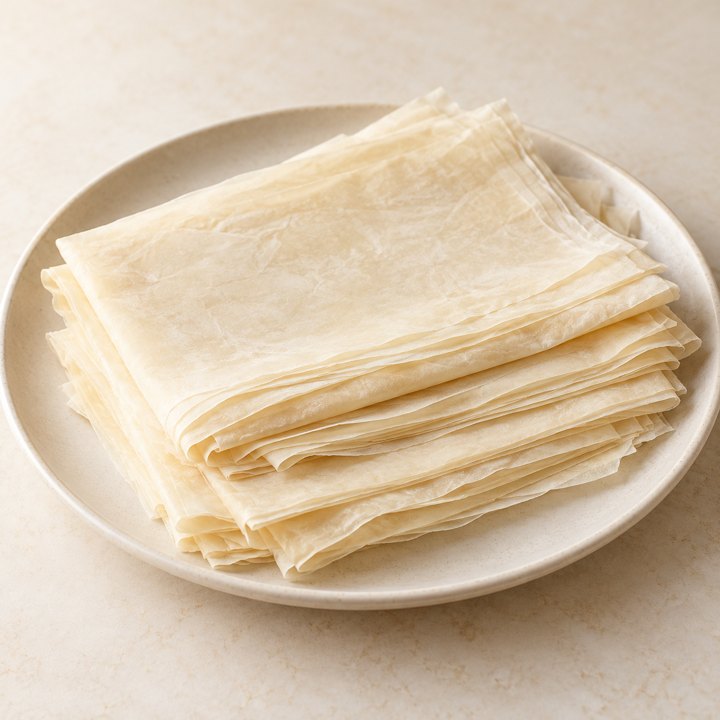
Filo, also spelled phyllo, is tissue-thin pastry used in layered dishes such as baklava. It has no folded-in butter layers like puff pastry.
What it is and names used in Pakistan
Filo, also spelled phyllo, is tissue-thin pastry used in layered dishes such as baklava. It has no folded-in butter layers like puff pastry.
Origin and historical context
Paper-thin dough belongs to overlapping eastern Mediterranean and West Asian traditions. National origin claims are more complicated than a single modern package label suggests.
Types, manufacture and buying
A lean wheat dough is stretched or rolled into very thin sheets; commercial sheets are stacked and chilled or frozen. Butter or oil is usually added between sheets during assembly.
Determine whether the product is raw, part-cooked or ready to eat and whether it needs refrigeration or freezing. Similar-looking pastry can contain butter, margarine, shortening or a blend, affecting flavour and dietary suitability. Inspect wheat, milk, egg and nut statements rather than assuming a plain appearance means a short ingredient list. Choose a pack size that can be used without repeated thawing. Frozen pastry should feel properly frozen when bought, and damaged packaging or evidence of repeated temperature changes can signal poorer quality.
Reference: Athens Foods: Phyllo product information.
Production, trade and the Pakistani pantry
Türkiye, Greece and neighbouring food industries produce filo, and frozen packs reach Pakistan alongside locally made specialty pastry.
Cooking uses and practical substitutions
For baklava, brush layers lightly and keep unused sheets covered to stop cracking. Patch small tears with overlapping sheets. Puff pastry is convenient for some pies but gives a completely different layered dessert.
Set out the filling and equipment before exposing delicate dough to the air. Keep portions covered and work in small batches so the pastry neither dries out nor becomes excessively warm. Moist fillings should normally be cooled before contact with raw pastry, and excess liquid should be drained. Measure added fat rather than saturating every layer automatically. Follow the product’s intended cooking method and oven temperature; appearance alone can conceal a damp or raw centre. For syrup desserts, follow the recipe’s temperature instructions so the final texture is controlled.
Nutrition, benefits and limitations
Pastry is commonly a source of refined carbohydrate, and many versions also contain a substantial amount of fat. Butter or some shortenings can raise saturated-fat intake, while syrup and sweet fillings add sugar. Plain pastry is not nutritionally identical to the completed dessert: nuts, dairy, meat or vegetables change the final meal. A smaller portion with fruit or another less rich accompaniment can be satisfying without requiring a health claim. Baking does not automatically make a pastry low-fat if fat is already incorporated in the dough or between its layers.
The dough may be relatively lean, but finished baklava can contain substantial butter, nuts and syrup.
Practical notes and common mistakes
Filo becomes brittle quickly when exposed. Unroll it only after the filling and brushing fat are ready, and keep the stack covered in the way recommended by the maker. The covering should protect against drying without making the sheets soggy. Small tears are rarely disastrous in a layered dish because the next sheet bridges them. Trim with a sharp knife and avoid pulling stretched sheets out of shape. When assembling baklava, portioning before baking can be easier than cutting a fully crisp stack afterwards, depending on the recipe.
Storage and safe handling
Follow the manufacturer’s thawing instructions, usually allowing frozen dough to soften under controlled chilled conditions rather than on a hot counter. Reseal unused portions promptly when the product permits it. Once filled with meat, dairy or moist cooked vegetables, handle the assembled dish as perishable food. Cool leftovers promptly, refrigerate at 4°C or below and use within the shorter of the recipe guidance or general three-to-four-day leftover window. Dry crisp products need protection from humidity and odours. Discard mouldy or rancid pastry rather than trying to refresh it by baking.
Recipes and related pantry reading
Use the form and quantity specified in each recipe, then adjust for the concentration, salt and moisture of the product you have bought. These dishes show where the ingredient fits in a complete preparation.
For related local names and pantry ingredients, see the Pakistani ingredients and spices guide.
Names and forms used in our recipes
View the recipe names covered by this guide
- filo pastry
Frequently Asked Questions
Is filo the same as puff pastry?
No. Filo uses separate very thin sheets; puff pastry has folded-in fat layers.
Can torn filo still be used?
Usually small tears can be patched or covered by the next layer in a layered dish.
Keep Exploring
Related places and stories on DailyLife.pk

How we know this
- Type Explainer
- Sources 2 (1 official/academic)
- Reviewed November 2026
- Disputed points None
