
Ingredients & Spices · The complete guide
Rice paper
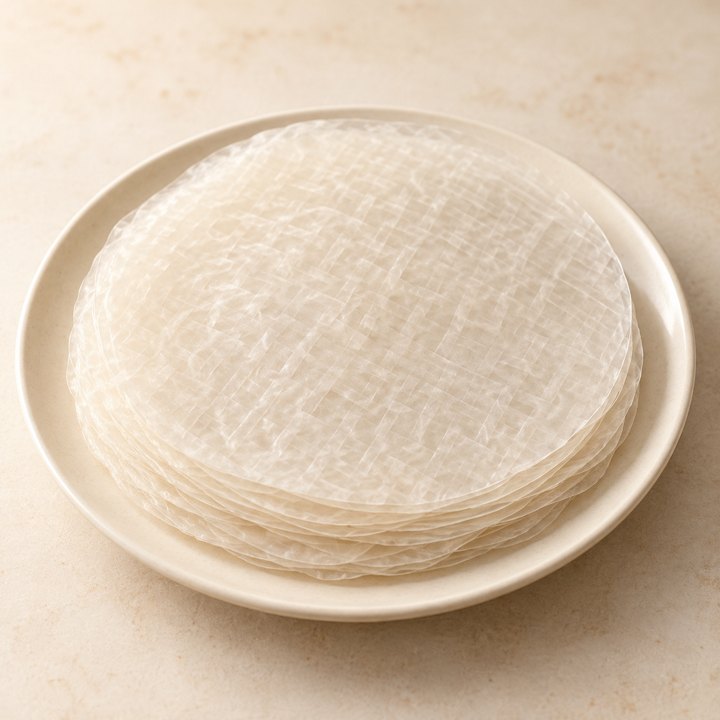
Rice paper wrappers are thin translucent dried rounds or squares used for fresh Vietnamese-style rolls. They are edible wrappers, not paper for baking.
What it is and names used in Pakistan
Rice paper wrappers are thin translucent dried rounds or squares used for fresh Vietnamese-style rolls. They are edible wrappers, not paper for baking.
Origin and historical context
They belong to Vietnamese and neighbouring rice-processing traditions. Their modern export packaging does not establish a precise first use.
Types, manufacture and buying
Rice flour or rice blended with tapioca is spread into thin sheets, cooked and dried. Thickness, starch blend and surface pattern affect elasticity.
Match the wrapper to the dish instead of treating every thin sheet as interchangeable. Read whether it is dry, chilled or frozen, and whether it is raw or already cooked. Ingredient lists can include wheat, rice, tapioca, egg, salt and oil in different combinations. Thickness matters: a delicate sheet suited to a small wonton may tear under a large wet filling. For dietary restrictions, verify both the wrapper and the filling; choosing rice in one component does not make an entire meal gluten-free.
Reference: Roland Foods: Vietnamese rice paper description and use.
Production, trade and the Pakistani pantry
Vietnam is a notable source, alongside other Asian manufacturers; Pakistani shops typically sell imported dry packs.
Cooking uses and practical substitutions
Dip briefly in water, then let the sheet soften on the work surface before filling. Over-soaking makes it sticky and fragile. Lettuce leaves offer a wrapper for some fillings but produce a very different roll.
Prepare the filling before opening or hydrating a full pack. Keep unneeded sheets protected so they do not dry out, and use only modest moisture for sealing unless the wrapper is specifically designed to be soaked. Cool cooked fillings and drain free liquid, because steam and water weaken seams. Leave enough clean edge to close securely without trapping large air pockets. Cooking time depends on filling thickness as well as wrapper type. Raw meat or seafood filling must reach a safe cooked state even if the outside sheet has already become translucent or golden.
Nutrition, benefits and limitations
Wrappers mainly supply carbohydrate and structure, while the filling, cooking method and dipping sauce determine much of the finished meal’s nutritional balance. A fresh roll with vegetables is different from a deep-fried roll filled with fatty meat, even if both use thin sheets. Wheat-based wrappers usually contain gluten; rice-based sheets may be suitable only when their ingredients and cross-contact controls confirm it. Egg can occur in some doughs. Added oil, salt and sugary dips should be considered separately rather than attributing the whole meal’s nutrition to the wrapper.
Dry rice paper is not proof of gluten-free certification, and dipping sauces may contain wheat, soy, peanuts or seafood.
Practical notes and common mistakes
Rice paper often continues softening after it leaves the water. A brief dip followed by a short wait on the work surface can be easier to handle than soaking until fully floppy. Arrange ingredients before beginning, and place any colourful herbs where you want them visible through the finished wrapper. Leave margins clear and roll firmly without stretching until it tears. Finished fresh rolls can stick together, so keep them separated appropriately. Do not confuse the dry sheet’s long cupboard life with the much shorter life of a moist filled roll.
Storage and safe handling
Keep dry sheets protected from moisture and insects; chilled or frozen dough wrappers must remain at the temperature specified on the pack. Thaw frozen stacks as instructed and avoid repeated warming and refreezing. Cover opened stacks while working and return unused portions promptly if the product allows storage. Fresh filled rolls and dumplings are perishable because of their moisture and filling. Refrigerate promptly at 4°C or below and follow the filling’s safe storage limit. If making ahead, freeze suitable uncooked dumplings individually before packing, so they do not stick into a single block.
Recipes and related pantry reading
Use the form and quantity specified in each recipe, then adjust for the concentration, salt and moisture of the product you have bought. These dishes show where the ingredient fits in a complete preparation.
For related local names and pantry ingredients, see the Pakistani ingredients and spices guide.
Names and forms used in our recipes
View the recipe names covered by this guide
- rice paper wrappers
Frequently Asked Questions
Why does rice paper tear after dipping?
It may be over-soaked, stretched or overfilled; it continues softening after leaving the water.
Is rice paper baking paper?
No. It is an edible wrapper, not a liner for trays.
Keep Exploring
Related places and stories on DailyLife.pk

How we know this
- Type Explainer
- Sources 3 (2 official/academic)
- Reviewed November 2026
- Disputed points None
