
Ingredients & Spices · The complete guide
Pickled jalapenos
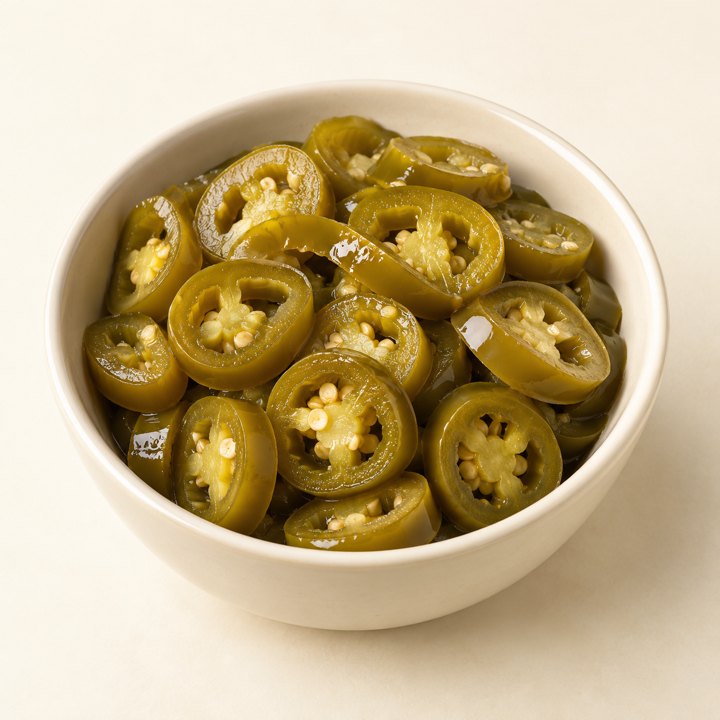
Pickled jalapenos are preserved slices or whole fruits of the jalapeno chilli. They give acidity and crunch as well as chilli heat.
What it is and names used in Pakistan
Pickled jalapenos are preserved slices or whole fruits of the jalapeno chilli. They give acidity and crunch as well as chilli heat.
Origin and historical context
Jalapenos are associated with Mexico, while pickling is a much wider technique. Modern sliced pizza toppings reflect international restaurant demand.
Types, manufacture and buying
Firm peppers are packed in acidified brine, sometimes with carrots, onions or sugar. Heat varies between pepper batches and is not fully predicted by green colour.
Check whether the food is preserved in vinegar, fermented brine, salt or oil, since the surrounding liquid affects flavour, sodium and handling. A chilled fermented product is not necessarily interchangeable with a heat-processed shelf-stable jar. Look for intact seals, clear identification and a storage instruction you can follow. The liquid may contain sugar, spices, mustard or other ingredients absent from the fresh vegetable. Drained weight can be more useful than total jar weight when comparing how much food is actually supplied.
Reference: National Center for Home Food Preservation: General information on pickling.
Production, trade and the Pakistani pantry
Mexico and the United States have established jalapeno industries; Pakistani brands also bottle pickled chillies, sometimes using locally grown varieties.
Cooking uses and practical substitutions
Drain slices before using on pizza, nachos or sandwiches. For similar texture, use another pickled green chilli; fresh jalapeno supplies heat but lacks the sour brine note.
Take out portions with a clean utensil and let excess liquid drain before putting them into bread or onto a pizza base. Add a small quantity first, because preserved ingredients season the dish as well as adding texture. If rinsing to soften saltiness, rinse only the portion about to be eaten rather than diluting the whole storage jar. Do not return food from a serving plate to the jar. Use fresh acid and seasonings for homemade substitutes, recognising that a quick flavour adjustment is not a validated long-term preservation process.
Nutrition, benefits and limitations
Preserved vegetables and fruits can bring useful variety and flavour, but small condiment portions usually supply fewer nutrients than a full serving of fresh produce. Sodium often comes from the cure or brine, and sweet versions can also contain substantial added sugar. Draining and rinsing may reduce surface salt, though the result is not salt-free. Fermented products are not automatically probiotic, particularly after heat processing. The nutritional value of an oily pickle also includes its oil; a thin coating and a large spoonful of oil are quite different portions.
Avoid rubbing eyes after handling peppers. The preserving brine contributes salt and should not be treated as an unrestricted drink.
Practical notes and common mistakes
For pizza, distribute drained jalapeno slices rather than piling a wet cluster in the middle. This gives more even heat and avoids a patch of softened crust. If using them in a mayonnaise-based sauce, chop finely and add some brine only if the sauce needs additional acid and liquid. Removing visible seeds does not guarantee a mild pepper, since heat is not confined to the seeds. Start with a few slices for an unfamiliar jar and keep extra available separately for people who prefer more.
Storage and safe handling
Follow the product’s refrigeration instructions after opening and keep food covered by its intended preserving medium where the label requires it. Avoid adding water, fresh vegetables or leftover brine from another jar, because that changes the formulation. For home canning, use a tested recipe with specified acid strength and proportions; sour taste alone is not a safety test. A refrigerator pickle is not automatically safe on a pantry shelf. Discard mouldy, leaking or unexpectedly swollen products, and never taste a suspicious preserved food to decide whether it is safe.
Recipes and related pantry reading
Use the form and quantity specified in each recipe, then adjust for the concentration, salt and moisture of the product you have bought. These dishes show where the ingredient fits in a complete preparation.
For related local names and pantry ingredients, see the Pakistani ingredients and spices guide.
Names and forms used in our recipes
View the recipe names covered by this guide
- pickled jalapeños
Frequently Asked Questions
Should pickled jalapenos be drained for pizza?
Yes. This limits wet patches and excess surface brine.
Does removing seeds guarantee mild chilli?
No. A pepper’s heat is not confined to its seeds.
Keep Exploring
Related places and stories on DailyLife.pk

How we know this
- Type Explainer
- Sources 2 (2 official/academic)
- Reviewed November 2026
- Disputed points None
