
Ingredients & Spices · The complete guide
Basil pesto
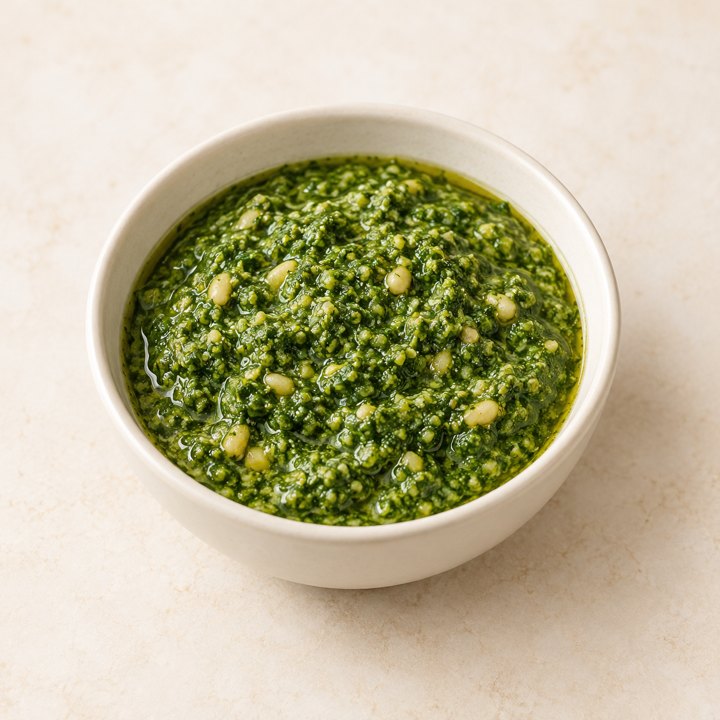
Basil pesto is an oil-rich crushed basil sauce, associated with pesto genovese. The familiar green colour should come principally from herbs.
What it is and names used in Pakistan
Basil pesto is an oil-rich crushed basil sauce, associated with pesto genovese. The familiar green colour should come principally from herbs.
Origin and historical context
The basil version is rooted in Genoa and Liguria; older crushed sauces are predecessors, not proof that modern pesto has one ancient inventor.
Types, manufacture and buying
Traditional ingredients include basil, olive oil, garlic, pine nuts, hard cheeses and salt. Commercial versions may use cashew nuts, seed oils, potato or other greens.
Read the first few ingredients to understand what supplies most of the sauce’s body: vegetables, water, sugar, oil, fermented paste or starch. Compare a regular serving rather than only the front-label claims. A product described as mild, natural or premium can still be salty or sweet. Heat ratings and thickness are not standardised across all manufacturers, so opening a new brand is a good time to taste cautiously. Small packs can be useful when an unfamiliar sauce will only be used occasionally.
Reference: Pesto Genovese Consortium: Traditional ingredients.
Production, trade and the Pakistani pantry
Italy is an important source of packaged pesto; Pakistani cooks can make fresh versions with locally grown basil and appropriately labelled cheese.
Cooking uses and practical substitutions
Spread a modest layer inside chicken panini or loosen with a little cooking water for pasta. Add after intense frying rather than scorching the herbs. Coriander-nut chutney can supply a green sauce but changes the flavour completely.
Measure concentrated sauce into a small bowl before adding it to a hot pan. This helps control the quantity and avoids pouring steam or splashes back into the bottle. Start with less than expected, then taste the complete mixture because salt, sweetness and acidity interact with other ingredients. Sugary sauces need particular care over direct heat: a glossy coating can darken quickly and turn bitter. Add water or another recipe liquid in small amounts if a paste needs loosening. Use a fresh spoon for tasting and a clean utensil for the storage container.
Nutrition, benefits and limitations
Fresh herbs supply aroma and some micronutrients, although a small spoonful of sauce is not a substitute for a substantial vegetable serving. The nutritional profile can change greatly with added oil, nuts, cheese, yogurt or sugar. Oil-rich versions provide concentrated energy; dairy and nuts introduce protein but also relevant allergens. Blending does not create detoxifying properties, and neither garlic nor herbs make an untested sauce safely preserved. For a less rich accompaniment, adjust the portion or choose a recipe designed with less oil, rather than diluting a storage jar unpredictably.
Milk and nuts are common allergens. Vegetarian suitability and halal suitability depend partly on cheese and its rennet.
Practical notes and common mistakes
Pesto loosens effectively when stirred with a little warm pasta water in the serving bowl, which helps spread a small quantity across the strands. Do this gradually; pouring in too much water can leave a thin green liquid. For a pressed sandwich, keep pesto away from the outer crust, where loose herb and nut particles can scorch against the grill. Taste the cheese and pesto together before adding salt, since both can already contribute a strong salty flavour to the filling.
Storage and safe handling
Fresh blended herb sauces need careful refrigeration and clean handling. Wash herbs with potable water, drain well and use clean equipment. Follow commercial labels for opened jars, including any use-within period. Homemade sauces, especially those containing raw garlic, dairy or nuts, should be made in small batches and kept at 4°C or below. Do not assume an oil layer or squeeze of lemon makes a sauce shelf-stable. Freeze suitable small portions if the recipe permits. Unexpected mould, deterioration or prolonged warm storage is a reason to discard the sauce.
Recipes and related pantry reading
Use the form and quantity specified in each recipe, then adjust for the concentration, salt and moisture of the product you have bought. These dishes show where the ingredient fits in a complete preparation.
For related local names and pantry ingredients, see the Pakistani ingredients and spices guide.
Names and forms used in our recipes
View the recipe names covered by this guide
- commercial basil pesto
Frequently Asked Questions
Must basil pesto contain pine nuts?
Traditional genovese recipes use them, but commercial alternatives may contain cashews or other nuts.
Should pesto be fried hard?
Usually no. Gentle warming or mixing after cooking better preserves the herbs’ aroma.
Keep Exploring
Related places and stories on DailyLife.pk

How we know this
- Type Explainer
- Sources 3 (2 official/academic)
- Reviewed November 2026
- Disputed points None
