
Ingredients & Spices · The complete guide
Custard powder
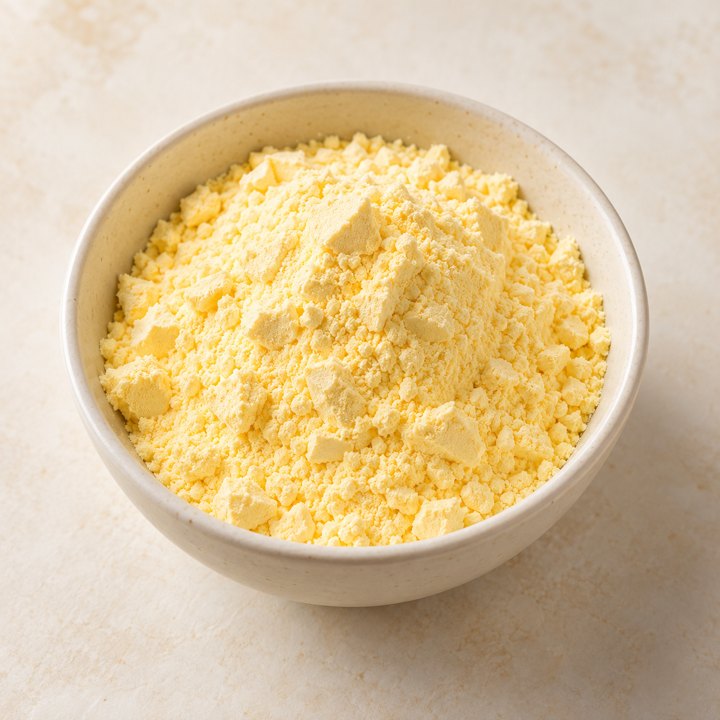
Custard powder is commonly a starch-based mix with flavouring and colour that thickens milk into a custard-style sauce. It is widely sold under that English name in Pakistan.
What it is and local names
Custard powder is commonly a starch-based mix with flavouring and colour that thickens milk into a custard-style sauce. It is widely sold under that English name in Pakistan. Traditional egg custard, instant cold-mixing custard and cooking custard powder are different products.
Origins and documented history
The Wellcome Collection preserves Alfred Bird and Sons material stating the business was established in 1837, a documented milestone in commercial custard powder. That packaged starch product is distinct from older egg-thickened custards and should not be presented as the invention of custard itself.
Reference: Wellcome Collection: Alfred Bird and Sons advertising archive.
Types and manufacture
Cooking powders often use maize starch with vanilla-type flavour and yellow colour. Instant mixes use modified ingredients intended to thicken without ordinary cooking. Some contain sugar or milk solids; others require both milk and sugar to be added.
Production, trade and Pakistan
Powders are blended in many countries from traded starch and flavour ingredients. Pakistan stocks local and imported dessert mixes. The packet’s directions are more useful than the assumption that every brand contains the same starch concentration.
How to use it
Make a smooth slurry with a portion of cold milk, then whisk into the heated milk as directed. For lab-e-shireen, allow for cooling and the liquid from fruit or jelly. A hot thin custard may thicken further after chilling.
Nutrition, benefits and limits
The powder itself is mainly a functional starch ingredient. Milk supplies much of the protein and calcium in the finished sauce; sugar contributes energy. Egg-free does not mean dairy-free once milk is added.
Drawbacks, allergens and precautions
Check milk, wheat cross-contact, flavours and colours. Cook the type that requires cooking; do not assume every powder is ready to eat. Cool prepared custard promptly in a shallow covered container.
Substitutions and storage
Cornflour with a suitable vanilla flavour can replace a plain cooking powder, adjusting sugar and colour separately. An egg custard has a different method and texture. Agar or gelatin does not give the same creamy starch-thickened sauce.
Keep the dry powder sealed and dry. Refrigerate cooked custard and follow the dairy ingredients’ handling needs. A skin is a surface drying effect, but visible mould or mishandling requires discarding it.
Setting a dessert predictably
A set dessert depends on the gelling ingredient, liquid quantity, acidity, sugar concentration and cooling conditions. Measure the liquid rather than adding an approximate jugful. Dissolve the ingredient according to its own instructions and allow sufficient chilling time before deciding that it has failed. A shallow mould cools faster than a deep bowl. If fruit or another ingredient releases water after assembly, the finished dessert can become softer than a plain test batch even when the original mixture appeared firm.
Assembly and alternatives
Let hot liquid cool as directed before pouring it over delicate fruit, cream or cake. To make clean layers, allow one layer to set enough to support the next and add the next layer gently while it is no longer hot. Do not assume that agar, pectin, starch and gelatin are interchangeable by the spoonful; they respond differently to heat and make different textures. Choose a tested recipe designed for the replacement rather than treating every gelling powder as a universal substitute.
Labels, dietary needs and serving
A gelling product may be a single ingredient or a complete dessert mix containing sugar, acids, colours and flavourings. Those additions matter when calculating sweetness and checking dietary suitability. Animal-derived ingredients require a source check for vegetarian, halal and allergy needs; a product that looks clear is not automatically plant-based. Sweet jelly provides an enjoyable texture but little fibre or protein unless other foods supply them. Use clean moulds, cover while chilling and follow the pack instructions for storage after preparation.
Troubleshooting before remaking a whole dessert
If a gel is too soft, first check whether it has had enough time in a cold refrigerator. Confirm the liquid measurement and whether any wet fruit or syrup was added beyond the formula. Some fresh fruits contain enzymes that interfere with certain protein gels; a canned or suitably heated fruit can behave differently. If the texture is too rubbery, the dose may be excessive rather than the chilling time too long. Test a small cup before preparing a large layered dessert, especially when using a different brand or a replacement gelling agent.
Recipes and the Pakistani pantry
Use this ingredient in Lab E Shireen. Explore related ingredients in the Pakistani ingredients and spices pantry.
Names and forms used in our recipes
View the recipe names covered by this guide
- custard powder
Frequently Asked Questions
What should I check when buying custard powder?
Check whether the powder requires cooking or instant mixing, and whether sugar or milk is already included.
What can replace custard powder in a recipe?
Cornflour with a suitable vanilla flavour can replace a plain cooking powder, adjusting sugar and colour separately. An egg custard has a different method and texture.
How should custard powder be stored?
Keep the dry powder sealed and dry. Refrigerate cooked custard and follow the dairy ingredients’ handling needs.
Keep Exploring
Related places and stories on DailyLife.pk

How we know this
- Type Explainer
- Sources 4 (2 official/academic)
- Reviewed November 2026
- Disputed points None
