
Ingredients & Spices · The complete guide
Wheat vermicelli (Seviyan)
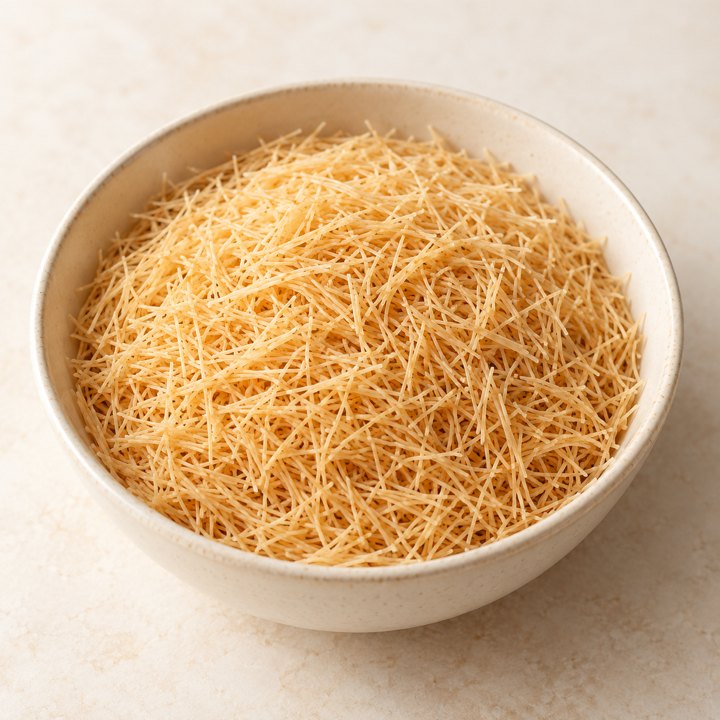
Wheat vermicelli, or seviyan, are very fine wheat strands used in sheer khurma and other Pakistani desserts. They differ from rice vermicelli and starch-based falooda sev.
What it is and names used in Pakistan
Wheat vermicelli, or seviyan, are very fine wheat strands used in sheer khurma and other Pakistani desserts. They differ from rice vermicelli and starch-based falooda sev.
Origin and historical context
Thin pasta and noodle traditions have multiple regional histories. South Asian seviyan acquired a distinctive role in festive sweets, including Eid meals.
Types, manufacture and buying
Wheat dough is formed into thin strands and dried. Packs may be raw, roasted, very fine or thicker; pre-roasted strands require less browning in ghee.
Identify whether the pack is dry, fresh, precooked or instant before planning the recipe. These forms can look similar after cooking but have quite different preparation requirements. Check strand thickness, ingredient list and any separate seasoning sachets. A plain noodle can be comparatively simple while its accompanying powder introduces salt, sugar, milk or seafood ingredients. Where egg content or gluten matters, use explicit ingredient and allergen information rather than relying on the product’s yellow colour or an informal shop description.
Production, trade and the Pakistani pantry
Pakistan and India have established vermicelli manufacture, with local and export brands supplying South Asian markets.
Reference: Trade Development Authority of Pakistan: FoodAg 2025 manufacturer directory.
Cooking uses and practical substitutions
Break long strands gently for sheer khurma and add late enough to retain texture. Watch closely during roasting because fine seviyan burn quickly. Thin broken wheat pasta substitutes with a different cooking time.
Use enough space for strands to separate and stir gently early in cooking. Test the texture rather than assuming every brand follows the same minute count. Noodles that will finish in a hot sauce or soup should generally be slightly firmer at the first stage. Drain thoroughly for stir-fried fillings so water does not dilute seasoning. For a clearer soup, cooking noodles separately can keep loose starch out of the broth. Cut exceptionally long strands only when the dish benefits from easier portioning; avoid crushing a dry block into uneven fragments unless intended.
Nutrition, benefits and limitations
Most plain noodles are primarily a carbohydrate food, with protein and fibre determined by the flour and any added egg or pulses. They do not become a complete balanced meal simply because a packet includes vegetable flavouring. Pair them with a meaningful portion of vegetables and a protein source such as lentils, tofu, chicken, fish or eggs as appropriate. Added oil and concentrated sauces can contribute more fat and sodium than the plain strands. Compare nutrition on the same basis, since dry weights and cooked weights differ greatly after water absorption.
Plain seviyan are largely carbohydrate; much of a rich dessert’s sugar and fat comes from the milk, sweetener and added ghee.
Practical notes and common mistakes
Seviyan can move from pale to burnt quickly when roasted in ghee. Use controlled heat and stir evenly, taking account of whether the packet is already roasted. Add hot liquid carefully to avoid splashing. In sheer khurma, remember that dried fruit, nuts and sweetened milk all affect the final richness; the thin noodle is only one component. Cook a little less if the dessert will stand briefly before serving, because fine strands continue absorbing liquid. Plain rice vermicelli is not an identical replacement for the wheat flavour and texture.
Storage and safe handling
Store dry noodles sealed in a cool dry cupboard, protected from insects and moisture. Fresh and chilled precooked noodles need the refrigeration stated on the pack; vacuum-packing does not necessarily mean shelf stability. Cool cooked leftovers promptly in shallow containers and refrigerate at 4°C or below. General leftover guidance is three to four days, but follow any shorter packet instruction. Freeze portions if appropriate for the product rather than keeping a large cooked batch warm for repeated meals. Reheat thoroughly; heating does not undo every hazard created by poor temperature control.
Recipes and related pantry reading
Use the form and quantity specified in each recipe, then adjust for the concentration, salt and moisture of the product you have bought. These dishes show where the ingredient fits in a complete preparation.
For related local names and pantry ingredients, see the Pakistani ingredients and spices guide.
Names and forms used in our recipes
View the recipe names covered by this guide
- fine wheat vermicelli
- thin vermicelli
- very fine wheat vermicelli (seviyan)
Frequently Asked Questions
Are seviyan the same as rice vermicelli?
No. Seviyan generally means fine wheat strands in these Pakistani dessert recipes.
Should pre-roasted seviyan be browned again extensively?
Usually not. Check the packet and avoid burning already roasted strands.
Keep Exploring
Related places and stories on DailyLife.pk

How we know this
- Type Explainer
- Sources 3 (3 official/academic)
- Reviewed November 2026
- Disputed points None
3 sources
Photo credits (1)
- Bread Dough.jpg, Krish Dulal, CC BY-SA 4.0, via Wikimedia Commons
