
Ingredients & Spices · The complete guide
Fresh thyme
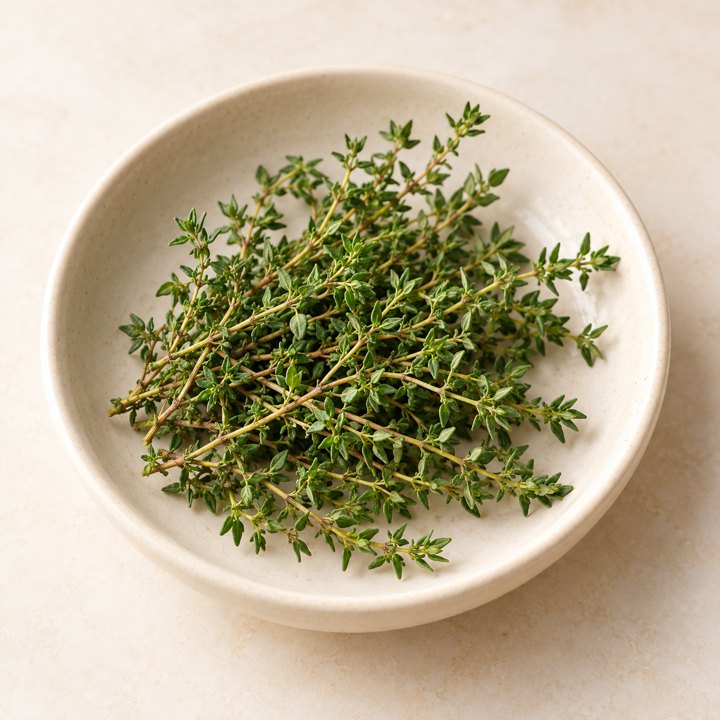
Thyme usually means Thymus vulgaris in cooking. Its tiny leaves have a warm, savoury, slightly minty aroma and grow on slender woody stems.
What it is and names to know
Thyme usually means Thymus vulgaris in cooking. Its tiny leaves have a warm, savoury, slightly minty aroma and grow on slender woody stems. Lemon thyme is a different cultivar choice with a citrus note.
Origins, producing regions and Pakistan context
Thyme belongs to Mediterranean herb traditions and has long been used for food and fragrance. Traditional medicinal associations should be distinguished from evidence for the effect of a few leaves in dinner.
It is grown around the Mediterranean and commercially in many other countries. In Pakistan it is a speciality fresh herb or a small kitchen-garden plant; dried thyme is often easier to source. For dried thyme, CBI identifies Egypt as a producer and exporter supplying European importers. This dried-herb trade is different from the short local chain for fresh sprigs.
Background: Spices Board: crop and ingredient reference.
Trade context: CBI: spice production and trade context.

Types and buying advice
Choose leaf-bearing aromatic sprigs rather than mostly bare woody stems. Lemon thyme and ordinary culinary thyme are distinct flavour choices.
How to cook with it
Add a sprig to chicken stock, beans, tomato sauce or a roast tray. Strip leaves for chopped mixtures and remove woody stems from finished soup. It tolerates simmering better than basil.
Use a few sprigs to begin with. A long stem carries variable leaf quantity, so a recipe calling for a teaspoon of leaves cannot be replaced by a teaspoon of chopped woody stem.
A sprig is a convenient unit for infusion, but it is imprecise for a finely chopped filling because sprigs vary greatly in size. Strip and measure the leaves when that quantity matters. Young stems can be tender; older woody stems should come out before serving. If a roast contains several strong herbs, start with less thyme than you would use alone. It should support the food rather than create a dense, dried-herb coating.
Try the ingredient in Mushroom Pizza. Follow each recipes specified form and quantity, since whole pieces and fine powder season food differently.
For related pantry ingredients, see the Pakistani ingredients and spices guide.
For a simple bean soup, add a small thyme sprig during the simmer and remove the stem before serving. Finish with fresh parsley only if that extra freshness is wanted. The two herbs then serve separate roles rather than competing as a heavy mixed-herb addition.
Nutrition and realistic benefits
Fresh leaves add aroma, variety and some micronutrients to food. The nutritional contribution depends on whether you eat a few garnish leaves or a substantial chopped-herb portion. They cannot replace the volume and diversity of vegetables in a meal. Their most useful everyday role is making ordinary dishes enjoyable with a fresh aromatic finish. Claims based on isolated oils, extracts or laboratory tests should not be transferred to a spoonful of chopped leaves or an everyday homemade tea.
Disadvantages and precautions
Food-grade leaves and concentrated thyme oil are different products. Do not ingest garden or aromatherapy oil as if it were a culinary seasoning.
Clean handling matters even for a small garnish. FDA food-safety guidance explains practical handling. Buying from a traceable food supplier is more dependable than trying to judge safety from appearance alone.
Substitutions and storage
Dried thyme is the most direct substitute. Oregano provides a stronger Mediterranean note; ajwain is more intense and should be used only in a very small amount.
Choose sound leaves with a clear characteristic aroma, and discard rotten or slimy material. Rinse under fresh running water before use and dry gently; household soap and detergent are unsuitable for washing food. Keep most fresh herbs chilled with their moisture controlled so leaves do not sit wet. Tender basil is particularly sensitive to cold and bruising. Freezing can preserve a surplus for cooked dishes, though thawed leaves usually lose the texture needed for an attractive raw garnish.
Working with other forms of this ingredient
Dried thyme
Thyme usually means Thymus vulgaris in cooking. Its tiny leaves have a warm, savoury, slightly minty aroma and grow on slender woody stems. Lemon thyme is a different cultivar choice with a citrus note.
Dried thyme is the dried leaf of culinary thyme. Strip out obvious woody stalks, rub lightly and add early enough to hydrate in soup, beans or a tomato sauce. It is more compact by spoonful than fresh sprigs.
Add a sprig to chicken stock, beans, tomato sauce or a roast tray. Strip leaves for chopped mixtures and remove woody stems from finished soup. It tolerates simmering better than basil.
Use a few sprigs to begin with. A long stem carries variable leaf quantity, so a recipe calling for a teaspoon of leaves cannot be replaced by a teaspoon of chopped woody stem.
A sprig is a convenient unit for infusion, but it is imprecise for a finely chopped filling because sprigs vary greatly in size. Strip and measure the leaves when that quantity matters. Young stems can be tender; older woody stems should come out before serving. If a roast contains several strong herbs, start with less thyme than you would use alone. It should support the food rather than create a dense, dried-herb coating.
Try the ingredient in Vegetable Soup. Follow each recipes specified form and quantity, since whole pieces and fine powder season food differently.
For related pantry ingredients, see the Pakistani ingredients and spices guide.
Names and forms used in our recipes
View the recipe names covered by this guide
- dried thyme
- fresh thyme leaves
Frequently Asked Questions
Is a sprig a precise measure of thyme?
A sprig is a convenient unit for infusion, but it is imprecise for a finely chopped filling because sprigs vary greatly in size. Strip and measure the leaves when that quantity matters.
What can I use instead of fresh thyme?
Dried thyme is the most direct substitute. Oregano provides a stronger Mediterranean note; ajwain is more intense and should be used only in a very small amount.
What is the main caution with fresh thyme?
Food-grade leaves and concentrated thyme oil are different products. Do not ingest garden or aromatherapy oil as if it were a culinary seasoning.
Keep Exploring
Related places and stories on DailyLife.pk

How we know this
- Type Explainer
- Sources 5 (2 official/academic)
- Reviewed November 2026
- Disputed points None
5 sources
Photo credits (1)
- I-11 Sabze Mande, Islamabad.jpg, Pakieditor, CC BY-SA 4.0, via Wikimedia Commons
