
Ingredients & Spices · The complete guide
Fresh red chilli
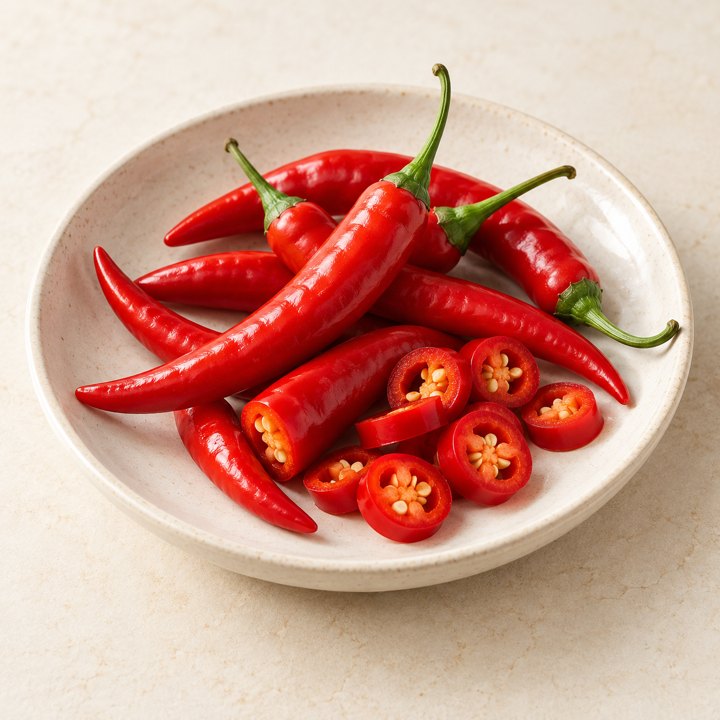
Fresh red chilli is ripe Capsicum fruit, usually from the same broad crop group as green chillies. Red colour indicates maturity in many varieties, not a guaranteed increase or decrease in heat.
What it is and names to know
Fresh red chilli is ripe Capsicum fruit, usually from the same broad crop group as green chillies. Red colour indicates maturity in many varieties, not a guaranteed increase or decrease in heat.
Origins, producing regions and Pakistan context
Chillies originated in the Americas and spread globally after the fifteenth century. Their central place in Pakistani and other Asian cuisines developed through local cultivation and adaptation after that exchange.
Pakistan, India, China and many other countries cultivate chillies. For fresh fruit, cultivar and freshness matter more than assuming an imported chilli must be hotter.
Background: Royal Botanic Gardens, Kew: plant identity and range.

Types and buying advice
Choose a cultivar suitable for your heat tolerance. Ripe red colour is a useful appearance cue but an unreliable measure of pungency.
How to cook with it
Slice for stir-fries, chutney, noodle dishes and garnishes. Use thin rings for visible colour, or mince for even heat. Remove the pale internal membranes when a milder effect is wanted, recognising that heat will remain.
Try a tiny cooked piece from an unfamiliar variety before adding several. Gloves are useful for a large batch. Wash the knife and board before preparing a mild garnish.
For a bright garnish, remove the stalk, rinse, dry and slice thinly just before serving. For cooked sauce, chop evenly so the heat spreads consistently. A red chilli may be pleasantly fruity or fiercely hot; appearance alone is an unreliable test. If heat matters to different diners, reserve part of the food before adding chilli. Removing garnish rings afterwards cannot remove the capsaicin that has already dispersed into oil or sauce during cooking.
Try the ingredient in Thai Basil Chicken, Baingan Bharta, Thai Soup. Follow each recipes specified form and quantity, since whole pieces and fine powder season food differently.
For related pantry ingredients, see the Pakistani ingredients and spices guide.
A fresh red chilli can be kept as rings for a visual finish or blended into a smooth sauce. For the latter, remove the stalk and any damaged tissue before blending; include only sound fruit. A strained sauce removes coarse skin pieces but does not guarantee mildness. When adding chilli to a cold dressing, allow it to disperse and taste the dressing on the actual food. Tasting only a bare drop may exaggerate its effect compared with a complete mouthful.
Nutrition and realistic benefits
The fresh ingredient adds aroma and can contribute small amounts of nutrients, depending on the quantity eaten. A few slices or a spoonful shared across a family pan are not the same dietary exposure as a large vegetable serving. Use it as part of a varied meal rather than increasing the amount to seek a therapeutic effect. Research involving extracts, capsules or isolated active compounds does not establish what the normal cooking portion will do.
Disadvantages and precautions
Capsaicin-rich tissue irritates eyes and skin. Chillies provide some vitamins, but the amount eaten and any cooking losses determine the nutritional contribution.
Clean handling matters even for a small garnish. FDA food-safety guidance explains practical handling. Buying from a traceable food supplier is more dependable than trying to judge safety from appearance alone.
Substitutions and storage
Green chilli is practical but has a grassier flavour. Dried flakes or powder supplies heat without the fresh texture; add gradually.
Buy firm sound produce and reject obvious rot or mould. Wash under running water before cutting so the knife does not carry dirt into the flesh; do not use household detergent. Store the fresh ingredient appropriately chilled when it needs refrigeration, and freeze small prepared portions if a surplus would otherwise spoil. A frozen aromatic is often useful in a cooked dish even when it no longer has the texture of a fresh garnish. Keep it separate from raw meat juices.
Names and forms used in our recipes
View the recipe names covered by this guide
- fresh red chilli
- fresh red chillies
- red chilli, optional
Frequently Asked Questions
How should I prepare red chilli for a garnish?
For a bright garnish, remove the stalk, rinse, dry and slice thinly just before serving. For cooked sauce, chop evenly so the heat spreads consistently.
What can I use instead of fresh red chilli?
Green chilli is practical but has a grassier flavour. Dried flakes or powder supplies heat without the fresh texture; add gradually.
What is the main caution with fresh red chilli?
Capsaicin-rich tissue irritates eyes and skin. Chillies provide some vitamins, but the amount eaten and any cooking losses determine the nutritional contribution.
Keep Exploring
Related places and stories on DailyLife.pk

How we know this
- Type Explainer
- Sources 4 (2 official/academic)
- Reviewed November 2026
- Disputed points None
4 sources
Photo credits (1)
- I-11 Sabze Mande, Islamabad.jpg, Pakieditor, CC BY-SA 4.0, via Wikimedia Commons
