
Ingredients & Spices · The complete guide
Dried lime
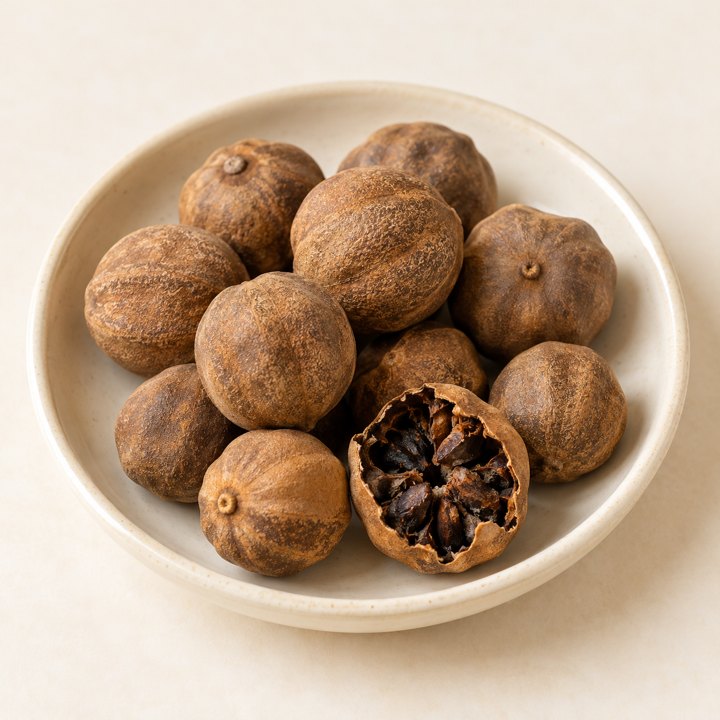
Dried lime, loomi or limoo amani, is a whole lime dried until hard and light, sold tan to very dark brown or black. Ground dried lime is also available.
What it is and names to know
Dried lime, loomi or limoo amani, is a whole lime dried until hard and light, sold tan to very dark brown or black. Ground dried lime is also available. Its sourness carries aged citrus and gently bitter rind notes.
Origins, producing regions and Pakistan context
The ingredient is firmly associated with Gulf and Iranian food traditions. Stories that locate the exact first dried lime in one household are not verifiable; preservation and trade explain its spread more convincingly than an invented discoverer.
Iran and Gulf markets are associated with commercial dried lime. In Pakistan it is more likely to be found in speciality or imported-food shops than among the everyday souring powders. Whole and processed forms can cross borders separately: a spice may be imported, milled and repacked before sale in Pakistan. The growing countries listed here are not a claim about the direct supplier of a particular Pakistani packet.
Background: Najmieh Batmanglij: dried limes in Cooking in Iran.

Types and buying advice
Choose whole dry lightweight limes for infusion, or clearly labelled powder for direct seasoning. Reject damp, mouldy or dirty fruit.
How to cook with it
Pierce a whole lime and simmer it in kabsa, a bean stew or ghormeh sabzi. Crushed flesh gives a stronger effect; remove seeds and large hard fragments before serving.
Begin with one small lime in a family pot. Taste as it infuses and remove it if the broth becomes too bitter. Powder acts more quickly and cannot easily be removed.
Pierce a dried lime carefully with a skewer or the tip of a small knife while it rests securely on the board; do not hold a hard rolling fruit against your palm. Whole pierced fruit is easier to remove than powdered lime. For a milder first trial, steep one lime in a little hot stock and add the strained liquid gradually. This gives more control than letting several unfamiliar limes simmer throughout the entire cooking time.
Try the ingredient in Chicken Kabsa, Ghormeh Sabzi. Follow each recipes specified form and quantity, since whole pieces and fine powder season food differently.
For related pantry ingredients, see the Pakistani ingredients and spices guide.
In a lentil or bean stew, add a pierced lime after the legumes have begun to soften and taste the broth during the remaining simmer. Removing the lime controls further extraction. This is easier to manage than adding an uncertain quantity of powder that cannot be retrieved.
Nutrition and realistic benefits
At the quantities usually used in a household dish, the main benefit is flavour rather than a large contribution of protein, vitamins or minerals. Composition tables often describe 100 grams, far more than an ordinary serving. A small seasoning quantity should not be advertised as a practical way to meet a daily mineral requirement. Aromatic food can help make simple lentils, vegetables and rice appealing, but the whole meals balance of ingredients, salt and fat still matters.
Disadvantages and precautions
Too much rind or long aggressive boiling can make a dish bitter. Buy clean dry fruit without mould; drying is not permission to use a visibly spoiled citrus product.
Dry spices are not sterile foods. FDA food-safety guidance explains practical handling. Buying from a traceable food supplier is more dependable than trying to judge safety from appearance alone.
Substitutions and storage
Lime juice plus a little zest provides fresh acidity but lacks the aged character. Amchur can supply dry sourness; add it gradually.
Keep in a clean, tightly closed food container in a cool dry cupboard, away from the cooker and direct sun. Whole pieces generally retain aroma better than the same spice left ground. Date the jar when opened and buy an amount you can use while fragrant. Crush a small sample periodically: fading aroma means weaker flavour, while dampness, insects or a musty smell are reasons to discard it. Never tip a wet spoon into a dry-spice jar.
Names and forms used in our recipes
View the recipe names covered by this guide
- dried lime
- dried persian limes
Frequently Asked Questions
How can I control dried-lime bitterness?
Pierce a dried lime carefully with a skewer or the tip of a small knife while it rests securely on the board; do not hold a hard rolling fruit against your palm. Whole pierced fruit is easier to remove than powdered lime.
What can I use instead of dried lime?
Lime juice plus a little zest provides fresh acidity but lacks the aged character. Amchur can supply dry sourness; add it gradually.
What is the main caution with dried lime?
Too much rind or long aggressive boiling can make a dish bitter. Buy clean dry fruit without mould; drying is not permission to use a visibly spoiled citrus product.
Keep Exploring
Related places and stories on DailyLife.pk

How we know this
- Type Explainer
- Sources 3 (1 official/academic)
- Reviewed November 2026
- Disputed points None
3 sources
Photo credits (1)
- Spice market @ Walled City @ Lahore (15449651456).jpg, Guilhem Vellut from Annecy, France, CC BY 2.0, via Wikimedia Commons
