
Ingredients & Spices · The complete guide
Pita bread
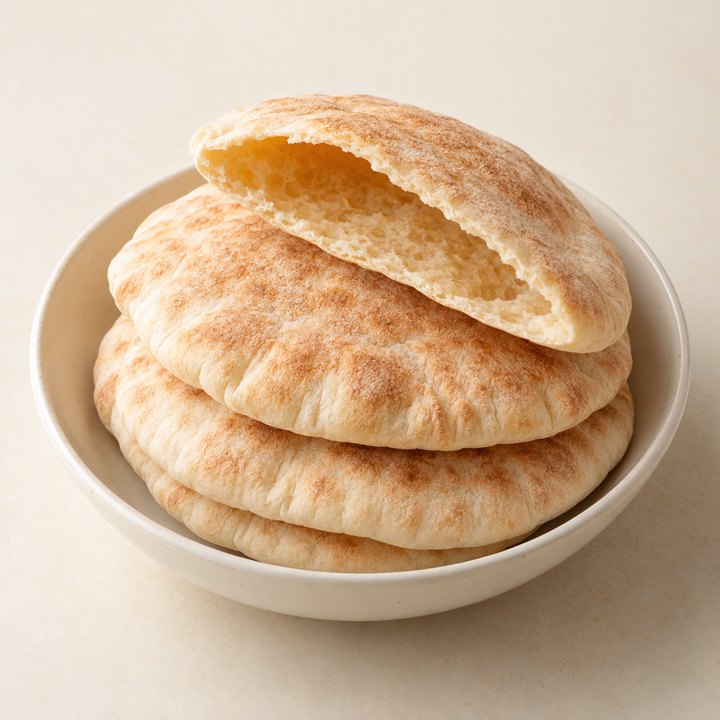
Pita is a round wheat flatbread that often forms an internal pocket during high-heat baking. Not every regional pita is pocketed.
What it is and names used in Pakistan
Pita is a round wheat flatbread that often forms an internal pocket during high-heat baking. Not every regional pita is pocketed.
Origin and historical context
It belongs to eastern Mediterranean and West Asian bread traditions; modern national names overlap and do not establish one exclusive origin.
Types, manufacture and buying
Yeast dough is rolled into rounds and baked quickly so steam separates the layers. White and wholemeal versions differ in fibre and flexibility.
Choose the bread by crumb and crust rather than by the shape alone. A roll for a juicy filling needs enough structure to hold together, whereas a lightly filled sandwich can use a softer crumb. Compare the weight of pieces: a large bakery roll may be several times the size of a small dinner roll. Wholemeal versions can provide more fibre, but brown colour alone is not evidence of wholegrain flour. If buying loose bread for someone with an allergy, ask the baker about the full dough recipe and shared equipment.
Reference: King Arthur Baking: Pita manufacture and pocket formation.
Production, trade and the Pakistani pantry
Türkiye, Lebanon, other regional countries and international bakeries produce pita; Pakistani restaurants and bakeries often source it locally.
Cooking uses and practical substitutions
Warm briefly for shawarma, falafel or stuffed sandwiches, then open carefully without tearing the base. Thin flatbread can wrap the same filling, but cannot reproduce the pocket.
Warm bread briefly rather than heating until the crumb dries out. Toasting the cut face makes a useful barrier against moist fillings, but it does not make a completed sandwich safe for prolonged room-temperature storage. Drain wet salad and sauces before assembly. When scaling a recipe, account for the size of the bread as well as the number of pieces: one very large roll can need considerably more filling than the recipe assumes. Add strong sauces in thin layers so the bread remains manageable to eat.
Nutrition, benefits and limitations
Wheat bread supplies carbohydrate for energy and some protein; its fibre depends mainly on how much wholegrain flour it contains. Fortification, where used, changes vitamin and mineral content, so the packet is the best guide. Refined bread can fit into an ordinary diet, especially beside vegetables, pulses, eggs or meat, but it should not be presented as a special health food. Added fat, sugar and salt vary with the recipe. Buttering, frying or filling the bread can change the finished meal more than a small difference between plain loaves.
A pocket is a structural feature rather than a sign of a low-calorie serving. Wheat and possible sesame toppings remain relevant.
Practical notes and common mistakes
A pita pocket opens more readily when the bread is warm and still flexible. Cut an opening carefully rather than tearing a large hole, and begin with a small amount of filling so the base remains intact. Spread sauces thinly and keep wet salad toward the centre. If the pocket refuses to open, the bread can still wrap or accompany the food. That is often more practical than forcing a split through a thick or non-pocketed regional style and ending up with two torn layers.
Storage and safe handling
Keep bread protected from dust and excessive humidity and follow the packaged product’s storage instructions. Allow homemade bread to cool before sealing, otherwise condensation encourages deterioration. Freeze portions while still fresh if they will not be used soon; thaw only what is needed. Refrigeration can slow mould in hot humid conditions but often makes bread stale faster, so freezing is useful for longer quality retention. Discard a mouldy loaf or connected batch rather than cutting away a visible spot: bread is porous and contamination can extend beyond what can be seen.
Recipes and related pantry reading
Use the form and quantity specified in each recipe, then adjust for the concentration, salt and moisture of the product you have bought. These dishes show where the ingredient fits in a complete preparation.
For related local names and pantry ingredients, see the Pakistani ingredients and spices guide.
Names and forms used in our recipes
View the recipe names covered by this guide
- pita bread
- pita or thin flatbread
- plain turkish pide bread or pita
Frequently Asked Questions
Why does pita form a pocket?
Rapid high-heat baking generates steam that can separate the dough layers.
Is a pita without a pocket unusable?
No. It can still wrap or accompany food, and some regional styles are not pocketed.
Keep Exploring
Related places and stories on DailyLife.pk

How we know this
- Type Explainer
- Sources 3 (1 official/academic)
- Reviewed November 2026
- Disputed points None
3 sources
Photo credits (1)
- Bread Dough.jpg, Krish Dulal, CC BY-SA 4.0, via Wikimedia Commons
