
Ingredients & Spices · The complete guide
Baking soda
Baking soda is food-grade sodium bicarbonate, also called bicarbonate of soda. In Pakistan, meetha soda commonly refers to it.
What it is and local names
Baking soda is food-grade sodium bicarbonate, also called bicarbonate of soda. In Pakistan, meetha soda commonly refers to it. It is a single alkaline ingredient, unlike baking powder, which also contains its own acid component.
Origins and documented history
Alkaline materials were used in food before standardized bicarbonate was manufactured. Nineteenth-century industrial chemistry made consistent commercial bicarbonate widely available. No household or nationality can responsibly be named as the discoverer of all alkaline cooking.
Reference: American Chemical Society: Development of Baking Powder.
Types and manufacture
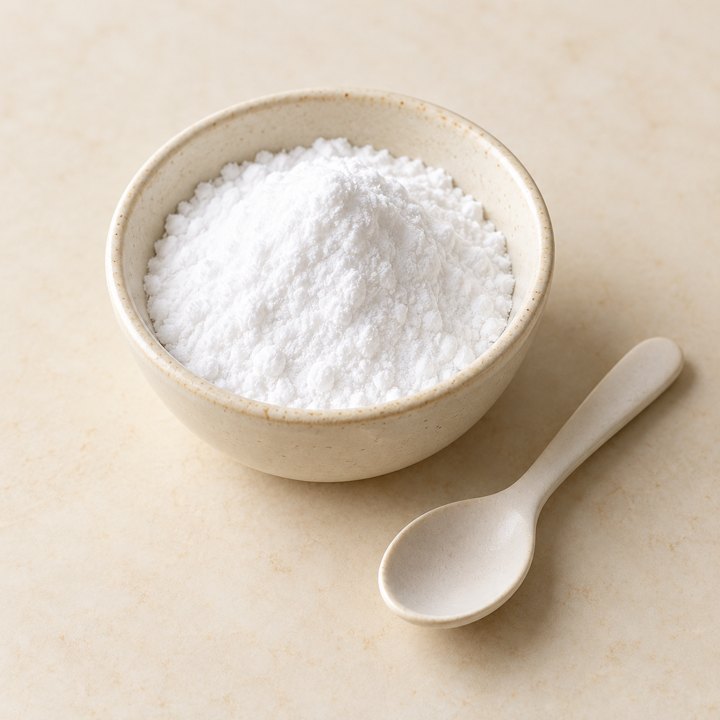
Food manufacturers purify and package sodium bicarbonate to a defined specification. The small crystals are usually sold as a white powder. Cleaning soda, washing soda and caustic soda are chemically different products and must not be confused with it.
Production, trade and Pakistan
Bicarbonate is an industrially manufactured ingredient traded internationally. Pakistan has food-grade retail supplies from local packers and imports. A culinary pack’s label and quality controls matter more than an unsupported claim about a producing country’s rank.
How to use it
It releases carbon dioxide when it reacts with an acid in moist batter. In Kashmiri chai a controlled alkaline step affects tea colour; excessive soda tastes soapy. It can soften pulses, but too much may make them mushy and change flavour.
Nutrition, benefits and limits
It contributes sodium without supplying useful energy, fibre or vitamins. Its kitchen role is chemistry, not nourishment. Drinking it as a routine remedy is outside normal culinary use and can introduce a substantial sodium load.
Drawbacks, allergens and precautions
Measure precisely. Excess alkalinity can spoil flavour and texture. People limiting sodium should account for the complete recipe, and should not assume a tiny-looking spoonful is nutritionally irrelevant.
Substitutions and storage
Baking powder may replace it only with adjusted quantities and attention to the recipe’s acidity. For chai colour, there is no universal equivalent; use a tested version of the drink instead of an improvised chemical substitution.
Keep dry and sealed, away from strong odours. A small amount should fizz when wetted with an acid such as vinegar. Do not return a tested wet portion to the container.
Measuring for reliable results
Measure a chemical or biological raising ingredient carefully because a small quantity controls a large change in structure. A heaped spoon can give excessive gas, an unpleasant flavour or a dough that rises before its structure can support it. Stir dry ingredients thoroughly when a recipe calls for an even distribution. Keep the packet away from steam while measuring. A warm, damp kitchen can damage an open raising ingredient even before the printed date, so the condition of the pack and the result of an appropriate activity test both matter.
Reading the recipe as a system
Flour quantity, acidity, liquid, mixing and temperature all affect the result of a raising ingredient. A cake batter needs to trap gas until heat sets its structure; bread dough needs enough time and elasticity to expand. Changing the raising agent while leaving every other ingredient untouched can produce a different crumb. When adapting a recipe, make a small trial and note the weight used, resting time and oven conditions. More raising ingredient does not fix a batter that is too thin or a dough that has been poorly developed.
Storage and sensible expectations
Use a clean dry spoon and close the container immediately. Keep small quantities in active use and leave the reserve tightly sealed under the conditions on its label. Raising agents are functional ingredients used in small amounts, not a practical source of vitamins or minerals. Products meant for cleaning, laboratory work or supplements should not be assumed suitable for cooking merely because a familiar chemical or microorganism appears in the name. Buy food-grade stock, read added ingredients and check certification if the formulation matters to your diet.
Diagnosing a disappointing batch
A dense result does not prove that a raising ingredient was inactive. Check the oven temperature, liquid measurement, mixing and the time between mixing and cooking. If the ingredient is old, perform the test appropriate to it: a chemical powder and a living yeast require different checks. Keep notes on the packet used and the conditions. Avoid adding more to an already mixed batch without a recipe-specific reason, since that can create an uneven concentration and a bitter taste. Starting a small fresh batch often gives a clearer answer than repeatedly altering a failed mixture.
Recipes and the Pakistani pantry
Use this ingredient in Red Velvet Cake, Kashmiri Chai. Explore related ingredients in the Pakistani ingredients and spices pantry.
Names and forms used in our recipes
View the recipe names covered by this guide
- baking soda
- bicarbonate of soda
Frequently Asked Questions
What should I check when buying baking soda?
Buy a food-grade pack labelled sodium bicarbonate. Washing soda and caustic soda are different chemicals and are unsuitable substitutes.
What can replace baking soda in a recipe?
Baking powder may replace it only with adjusted quantities and attention to the recipe’s acidity. For chai colour, there is no universal equivalent; use a tested version of the drink instead of an improvised chemical substitution.
How should baking soda be stored?
Keep dry and sealed, away from strong odours. A small amount should fizz when wetted with an acid such as vinegar.
Keep Exploring
Related places and stories on DailyLife.pk

How we know this
- Type Explainer
- Sources 4 (2 official/academic)
- Reviewed November 2026
- Disputed points None
