
Ingredients & Spices · The complete guide
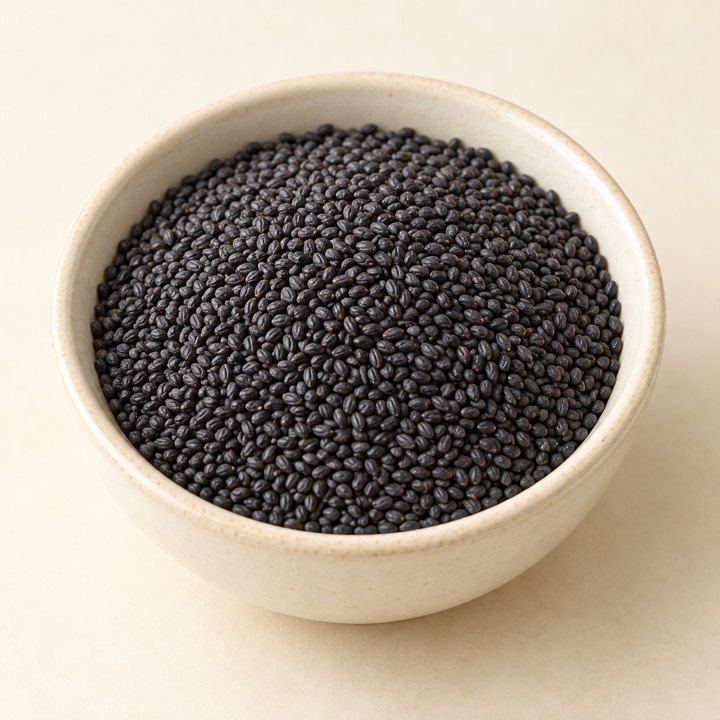
Basil seeds (Tukh malanga)
The recipe calls for food-grade sweet basil seeds rather than chia, planting seed or an unidentified local mixture.
What it is and what to buy
The recipe calls for food-grade sweet basil seeds rather than chia, planting seed or an unidentified local mixture. Hydrated basil seeds develop a clear gel around a darker centre and have relatively little flavour, so they contribute texture more than herb aroma. They do not taste like a spoonful of chopped basil leaves. Sellers may use sabja or tukh malanga loosely; the species and suitability for eating should be confirmed before purchase.
Food-grade sweet basil seeds are normally the seeds of Ocimum basilicum, an aromatic herb of the mint family. They are often called sabja and are sold in Pakistan under names including tukh malanga or tukhm-e-balanga. Those local names are not botanically consistent across sellers and can also be applied to other mucilaginous seeds. Confirm the species on the packet rather than relying only on a familiar name or a black colour.
Origins and food history
Basil has a long history of cultivation and use across warm parts of Asia and other regions. Kew documents Ocimum basilicum and the complexity of its relationship with similar basil species. Seed-based drinks developed within regional food traditions, but a reliable first inventor or exact earliest date for falooda-style use is not established here. It is more accurate to describe a longstanding culinary practice than attach an unsupported discovery story.
Reference: Kew: Ocimum basilicum.
Growing regions, trade and Pakistan
Basil is cultivated in countries including India, Pakistan, Thailand and other warm-region producers, but leaf-herb production and edible-seed production are different businesses. Retail seed may be cleaned, packed or re-exported elsewhere. There is no basis for assuming a current global rank from the availability of a local packet. Buy specifically food-grade seed from a traceable seller; seed intended for planting may have treatments or quality specifications inappropriate for food.
Reference: Kew: Ocimum basilicum.
How to prepare and cook it
Soak a small quantity in ample clean water until the seeds have expanded evenly and no dry clusters remain, following the packet’s directions. Stir during hydration to separate clumps. Drain excess water if the recipe requires, then add the softened seeds to falooda close to assembly. Do not add dry seeds straight into a thick dessert and assume they will hydrate evenly there. Keep the milk, ice cream and hydrated seeds cold, and assemble individual servings so texture and food safety remain easier to control.
Put this form of the ingredient to work in Falooda. The method in each recipe determines whether it should be raw, soaked, ground, freshly cooked or chilled before it enters the dish.
Nutrition, benefits and their limits
The seed surface develops a mucilaginous gel when hydrated, contributing soluble fibre and a distinctive slippery texture. The seeds also contain fat, protein and minerals, although the small quantity normally added to a drink limits the serving’s total nutrient contribution. The sweetness, energy and saturated fat in falooda depend mainly on the entire recipe. Basil seeds do not make a heavily sweetened dessert a treatment for diabetes or a guaranteed weight-loss food.
Allergies, disadvantages and safe handling
Do not swallow spoonfuls of dry expanding seed. Soak fully in ample clean water and ensure the hydrated texture suits the diner; people with swallowing difficulties and young children need particular care. Allergy and digestive discomfort are possible, especially with excessive quantities. Laboratory findings about extracts should not be converted into treatment claims for ordinary drinks. Soaking creates a moist food, so use clean equipment and avoid leaving hydrated seeds warm for prolonged periods.
Practical substitutions
Chia can provide a gel but needs its own hydration method and has a different size and mouthfeel. Agar or jelly pieces add texture without being seed substitutes nutritionally. If the seed identity is uncertain, omit it rather than replacing food-grade basil seed with planting seed.
Keeping it fresh
Dry food-grade seeds should be stored airtight in a cool, dark cupboard and kept away from moisture. Inspect for dust, insects and a stale or musty smell. Hydrate only what the recipe needs with potable water, refrigerate promptly if not used immediately, and follow conservative leftover handling. Keep the dry packet’s label so the botanical identity is not lost when seed is transferred into a jar. Discard hydrated seeds if their storage history is uncertain.
For related ingredients and shopping terms, see the Pakistani ingredients and spices pantry guide.
Names and forms used in our recipes
View the recipe names covered by this guide
- food-grade sweet basil seeds
Frequently Asked Questions
Are basil seeds the same as chia?
No. Chia is Salvia hispanica; food-grade sweet basil seed is normally Ocimum basilicum. Their gel and texture differ.
Can I eat them dry?
Do not swallow spoonfuls of dry expanding seeds. Fully hydrate them in clean water and use a texture appropriate for the diner.
Keep Exploring
Related places and stories on DailyLife.pk

How we know this
- Type Explainer
- Sources 4 (3 official/academic)
- Reviewed November 2026
- Disputed points None
