
Ingredients & Spices · The complete guide
Whole trout
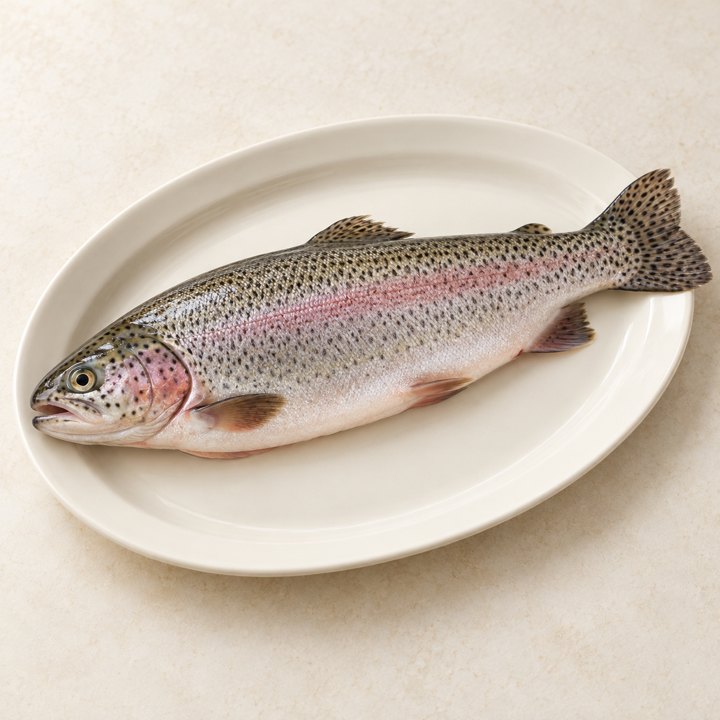
Whole trout is a gutted fish retained with its head, skin and backbone, usually rainbow trout in farmed supply. It differs from fillets in yield, presentation and the way heat reaches the flesh.
What it is and what to ask for
Whole trout is a gutted fish retained with its head, skin and backbone, usually rainbow trout in farmed supply. It differs from fillets in yield, presentation and the way heat reaches the flesh.
Ask for gutting and scaling as appropriate, then inspect the cavity and gills. Similar-sized fish cook more predictably together than a batch mixing very small and very large trout.
History, production and the Pakistan context
Rainbow trout is native to North America and has been introduced widely for farming and fishing. FAO documents introductions and hatchery development in Pakistan's northern cold-water regions.
Pakistan has trout farms in suitable northern areas; Türkiye, Chile and European countries also produce trout. Wild and farmed supply should be identified rather than assumed from a restaurant's mountain setting.
How to use it successfully
Dry the skin and cavity before grilling, season inside and support the fish when turning. Check the thickest flesh beside the backbone; small fish can go from moist to dry quickly under fierce heat.
A clean cavity and dry skin make a whole trout easier to cook neatly. Add herbs loosely rather than packing the body tightly, and support the fish under its centre when turning. At serving, lift flesh away from the backbone carefully and check for remaining pin bones; the removed skeleton does not guarantee a boneless portion.
Nutrition, benefits and limits
Trout provides protein and useful fish fats, with amounts affected by feed and species. Whole-fish service needs careful removal of the backbone and fine bones before offering portions to children.
Choosing a replacement
Trout fillets are convenient and faster but lose the whole-fish presentation. Another similar-sized whole fish can work with adjusted heat and careful bone checking.
When changing seafood, compare thickness, firmness, bones or shells and whether it is raw or already cooked. Preserve the recipe’s cooking logic rather than only its purchase weight. Ask for the actual species, because a similar market name does not establish identical allergy, mercury or nutrition considerations.
Safe handling and storage
Buy fish from an effective cold display and keep it cold on the journey home. FDA advises using refrigerated seafood within two days or freezing it. Store raw fish in a leakproof container separate from foods served without further cooking, and thaw frozen portions in the refrigerator rather than leaving them on a warm counter.
Check for scales, pin bones and packaging instructions before seasoning. Acidic marinades can change the surface texture, but lemon juice does not reliably make raw fish safe. A fresh smell and firm flesh are useful quality observations, not laboratory tests for every pathogen or contaminant. Avoid using an unidentified common name to assign exact mercury advice.
FoodSafety.gov lists 63°C/145°F for finfish. Measure the thickest flesh with a thermometer without touching the pan or a bone. For whole fish, check more than one thick area if needed. Refrigerate leftovers promptly, and follow FDA–EPA species-specific fish advice for pregnancy, breastfeeding and children. Vary the species eaten; removing skin or cooking longer does not reliably remove mercury from the flesh.
Planning, portions and serving
A whole trout offers presentation and skin, while fillets offer convenience. Make that choice before shopping and clarify whether the quoted weight includes the head and viscera. Prepare side dishes first so the cooked fish can go straight to the table. For children or people needing bone-free portions, lift and check the flesh separately under good light, and do not let a decorative whole-fish presentation take priority over easy, careful eating.
Recipes and pantry links
Use whole trout according to the form specified in the linked recipe: raw versus cooked, bone-in versus boneless, sweetened versus plain, and the stated cut or processing style all affect the result. The ingredient discussion above explains which differences matter most here. Read the complete recipe before shopping, then measure the prepared usable quantity rather than assuming every package has the same yield.
For related ingredient names, local terminology and flavour pairings, browse the Pakistani ingredients and spices pantry guide.
Names and forms used in our recipes
View the recipe names covered by this guide
- whole cleaned rainbow trout
- whole cleaned trout
Frequently Asked Questions
Is rainbow trout native to Pakistan?
No. Rainbow trout originated in North America and was introduced to Pakistan for cold-water culture and fisheries. Its established local production should be distinguished from native origin.
What should I check before buying whole trout for these recipes?
Ask for gutting and scaling as appropriate, then inspect the cavity and gills. Similar-sized fish cook more predictably together than a batch mixing very small and very large trout. Keep the recipe’s cut and prepared weight in mind, because changing them affects cooking and serving yield.
What is a practical substitute for whole trout?
Trout fillets are convenient and faster but lose the whole-fish presentation. Another similar-sized whole fish can work with adjusted heat and careful bone checking. Make a small test where binding, melting or a delicate final texture is central, and adjust the recipe rather than treating different ingredients as identical.
Keep Exploring
Related places and stories on DailyLife.pk

How we know this
- Type Explainer
- Sources 8 (4 official/academic)
- Reviewed November 2026
- Disputed points None
8 sources
- FAO GLOBFISH: species production and trade analysis
- FAO: edible yield and composition of commercial fish species
- FDA: selecting and serving fresh and frozen seafood safely
- FDA–EPA: advice about eating fish
- FoodSafety.gov: cold food storage chart
- FDA: food allergies
- FAO: history and culture of trout in northern Pakistan
- European Commission: aquaculture types and farmed species
