
Ingredients & Spices · The complete guide
Peanuts (Moongphali)
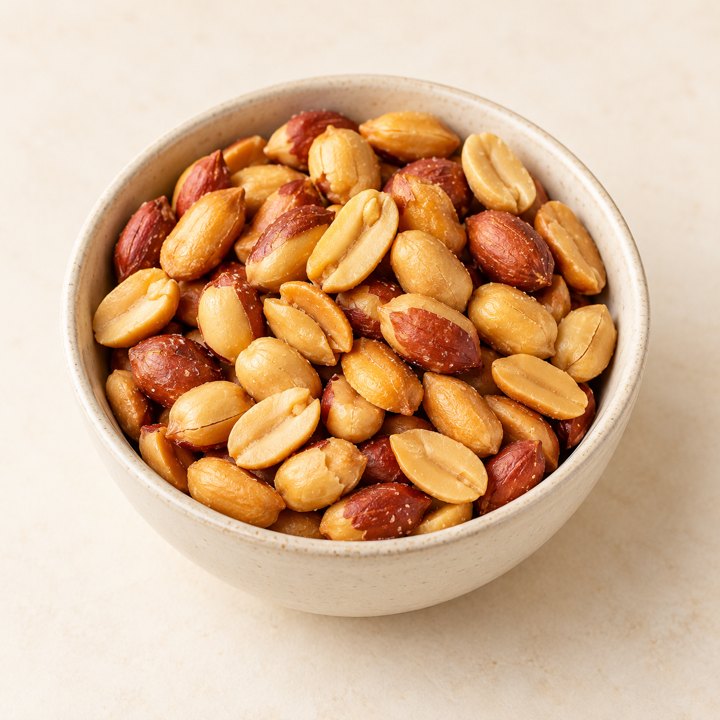
Whole peanuts can be raw, dry-roasted, oil-roasted, salted or coated. Skin-on kernels bring a little extra colour and a faintly bitter note; peeled kernels make a smoother, paler paste.
What it is and what to buy
Whole peanuts can be raw, dry-roasted, oil-roasted, salted or coated. Skin-on kernels bring a little extra colour and a faintly bitter note; peeled kernels make a smoother, paler paste. Moongphali is a familiar winter snack in Pakistan, but the same crop is useful in sauces and rice dishes. For the recipes here, select the stated plain or roasted form rather than a flavoured packet whose salt, oil and spices are difficult to control.
Peanuts, moongphali in Urdu, are seeds of Arachis hypogaea. Although cooks group them with nuts, they belong to the legume family. Following flowering, the developing fruit is carried into the ground, where the pods mature. Raw kernels, roasted nuts, ground peanuts and peanut butter are different processing forms of the same crop. Salt, sugar, added oils and how finely the kernels are ground can change a product’s behaviour considerably.
Origins and food history
Peanuts originated in South America. Their domestication history involves Indigenous farming and the ancestors of the modern cultivated peanut, followed by spread to other continents through trade and migration. They were not invented by a modern food manufacturer. Peanut-butter brands and later industrial patents describe particular manufacturing histories, not the discovery of the plant or the first human use of ground peanuts.
Reference: Kew: peanut.
Growing regions, trade and Pakistan
China, India, Nigeria, the United States, Argentina and Brazil are established peanut-producing countries. Pakistan also grows groundnuts, especially in parts of the Potohar region. International trade includes in-shell nuts, shelled kernels, oil and processed foods. The largest crop producer and the leading supplier of a particular processed grade need not be the same country. Commercial buyers pay close attention to moisture, kernel size, aflatoxins, traceability and roasting consistency.
Reference: CBI: groundnut market entry.
How to prepare and cook it
Roast raw food-grade kernels evenly before using them as a dry garnish, allowing for carry-over heat after the pan is removed. For lemon rice, add roasted nuts where they keep their crunch. In mirchi ka salan, a ground peanut mixture helps form a rich sauce and needs gentle cooking so it does not stick. For vada pav chutney, the degree of grinding controls whether the mixture remains crumbly or becomes an oily paste. Cool nuts before grinding and pulse rather than running the machine continuously.
Put this form of the ingredient to work in Lemon Rice; Vada Pav; Mirchi Ka Salan. The method in each recipe determines whether it should be raw, soaked, ground, freshly cooked or chilled before it enters the dish.
Nutrition, benefits and their limits
Peanuts contribute protein, unsaturated fats, fibre and minerals. They are more fat-rich than most boiled pulses, so should not be nutritionally equated with a bowl of plain lentils. A modest portion can be a useful snack or sauce ingredient. Peanut butter varies: some jars contain only peanuts, while others add salt, sugar or stabilising fats. Compare labels per equal weight rather than assuming that all smooth spreads or all products marked natural have the same composition.
Allergies, disadvantages and safe handling
Peanut allergy can cause severe reactions, and roasting or grinding does not make peanuts safe for someone with that allergy. Shared grinders and frying oil can cause cross-contact. Aflatoxins from certain moulds are a supply-chain concern; buy sound, properly stored food from reliable sellers and discard mouldy or suspect nuts. Home roasting is not a dependable aflatoxin remedy. Whole peanuts and thick spoonfuls of peanut butter are choking hazards for small children; use appropriate finely ground or thinned preparations.
Practical substitutions
Roasted cashews or suitable seeds can provide crunch, but the flavour, price and allergy implications differ. Peanut butter can work in some sauces if its sugar and salt are accounted for, yet it cannot reproduce a dry crumbly chutney or whole-nut garnish. Raw dry pulses are not a direct substitute.
Keeping it fresh
Keep raw or roasted kernels sealed, cool and dry, preferably refrigerated or frozen for longer storage in warm weather. Ground peanuts oxidise more quickly than whole kernels. Follow a peanut-butter label’s refrigeration directions after opening, use a clean dry spoon, and stir natural oil separation back in if the product is otherwise sound. Discard stale, rancid or musty products. A tightly closed container protects flavour but cannot restore peanuts that were already poorly handled before purchase.
For related ingredients and shopping terms, see the Pakistani ingredients and spices pantry guide.
Working with other forms of this ingredient
Ground peanuts
Ground peanuts in this recipe means roasted peanuts ground finely for a stuffing or sauce. They may remain a loose meal or begin to clump as oils emerge. This is not automatically identical to sweetened commercial peanut butter, defatted peanut powder or raw peanut flour. A roasted, unsalted kernel gives the most predictable savoury flavour. Fine grinding thickens a sauce more evenly, while a slightly coarser meal adds bite to a vegetable stuffing.
Peanuts, moongphali in Urdu, are seeds of Arachis hypogaea. Although cooks group them with nuts, they belong to the legume family. Following flowering, the developing fruit is carried into the ground, where the pods mature. Raw kernels, roasted nuts, ground peanuts and peanut butter are different processing forms of the same crop. Salt, sugar, added oils and how finely the kernels are ground can change a product’s behaviour considerably.
Cool roasted kernels and grind in brief pulses to avoid making a fully smooth butter unless the recipe needs it. For bharwan baingan, combine the ground nuts with the prescribed spices and other stuffing ingredients before filling the aubergines. Keep enough moisture in the pan for the vegetables to soften without burning the peanut mixture. Turn gently so the stuffing stays in place. A nut-rich masala can release oil as it cooks; judge both vegetable tenderness and sauce consistency before finishing.
Put this form of the ingredient to work in Bharwan Baingan. The method in each recipe determines whether it should be raw, soaked, ground, freshly cooked or chilled before it enters the dish.
Peanut butter
Peanut butter is roasted peanuts ground into a spread, sold smooth or crunchy. Smooth peanut butter is the form specified for this shake. Some jars contain only peanuts; others include sugar, salt and stabilising fats. Natural oil separation can be normal, while a uniform spread may use stabilisers. Defatted peanut powder, peanut-flavoured confectionery spread and a nut-free seed butter are separate products with different fat, sweetness and allergen properties.
Peanuts, moongphali in Urdu, are seeds of Arachis hypogaea. Although cooks group them with nuts, they belong to the legume family. Following flowering, the developing fruit is carried into the ground, where the pods mature. Raw kernels, roasted nuts, ground peanuts and peanut butter are different processing forms of the same crop. Salt, sugar, added oils and how finely the kernels are ground can change a product’s behaviour considerably.
Stir separated oil back into a sound natural peanut butter before measuring so each spoon has a representative texture. For a shake, blend a small amount with some liquid first to prevent a thick lump sticking to the jug, then add the remaining ingredients. Taste before adding extra sugar if the spread is already sweetened. Thick peanut butter can also enrich a savoury sauce when loosened gradually with warm water or stock. Do not use an entire dry spoonful as a serving for a small child; mix or spread it thinly in an age-appropriate food.
Put this form of the ingredient to work in Peanut Butter Shake. The method in each recipe determines whether it should be raw, soaked, ground, freshly cooked or chilled before it enters the dish.
Names and forms used in our recipes
View the recipe names covered by this guide
- raw peanuts
- roasted peanuts
- roasted peanuts, finely ground
- roasted unsalted peanuts
- smooth peanut butter
Frequently Asked Questions
Are peanuts a tree nut?
No. They are legumes, although peanut allergy is distinct and can be severe.
Can salted peanuts replace unsalted ones?
Sometimes, but reduce other salt and consider any added oil or flavouring. Plain unsalted kernels give the most control.
Keep Exploring
Related places and stories on DailyLife.pk

How we know this
- Type Explainer
- Sources 5 (3 official/academic)
- Reviewed November 2026
- Disputed points None
5 sources
Photo credits (1)
- Pecans, hazelnuts, walnuts, almonds, Brazil nuts on a table with logs 1.jpg, Baileynorwood, CC0, via Wikimedia Commons
