
Ingredients & Spices · The complete guide
Cauliflower (Phool gobhi)
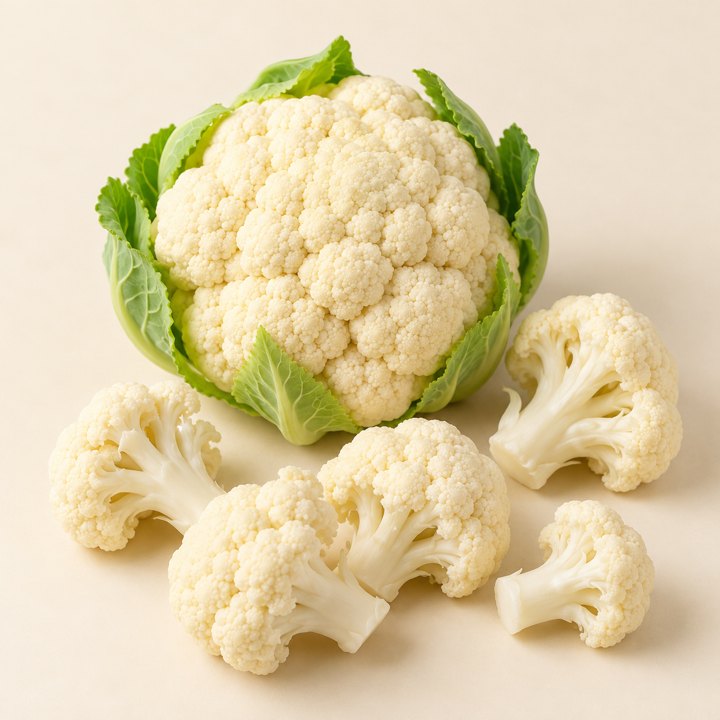
Cauliflower is Brassica oleracea, the cauliflower group; phool gobhi is the compact immature flowering head. Its eating character is mild and nutty when browned; prolonged moist cooking gives a stronger cabbage aroma.
What is cauliflower? Names, flavour and types
Cauliflower is Brassica oleracea, the cauliflower group; phool gobhi is the compact immature flowering head. Its eating character is mild and nutty when browned; prolonged moist cooking gives a stronger cabbage aroma.
The main forms to recognise are white, purple, orange and green varieties; Romanesco has pointed spiral florets. Choose the form and ripeness specified by the recipe.
Origins, cultivation and the Pakistan market
Selected from Mediterranean brassicas; the modern curd is a cultivated feature rather than a wild flower head. The relevant botanical or crop background is documented in Brassica oleracea L. | Plants of the World Online | Kew Science.
Growing conditions and producing countries: A cool-season crop with varieties adapted to different temperatures; China, India, Spain and Pakistan grow it. A winter staple in aloo gobi, gobi matar and stuffed paratha. Heads and florets travel in fresh chilled supply chains; frozen florets form a separate processed market. A label identifying origin describes where that batch was produced, while a supermarket brand may simply identify the packer or distributor.

How to prepare, cook and substitute it
Cut even florets and dry thoroughly. Roast for browned edges or cook covered briefly in masala; grated cauliflower for paratha should not leave the filling wet
Wet florets, a crowded pan and too much added water can all leave liquid around the vegetable after the centre has softened. Drain florets well after washing and use a pan that gives room to stir without breaking them. Cover only as long as needed to cook through, then uncover to evaporate surplus moisture. For gobhi paratha, grated cauliflower releases water after salting, so prepare and squeeze the filling according to the recipe before rolling rather than adding salt far in advance.
Separate the vegetable into pieces that will finish cooking together. Dense ribs and thick stalks need smaller cuts than delicate leafy edges or florets. A little water under a lid can help cook the centre, but remove the lid when excess moisture needs to evaporate. For rolls, dumplings or paratha, cool and drain the cooked filling before enclosing it in dough. Hot, wet filling weakens wrappers and makes sealing difficult. A quick stir-fry and a long-simmered curry need different levels of initial tenderness.
A useful starting substitute is broccoli in most floret dishes; cabbage in shredded fillings with moisture adjusted. Adjust the recipe for the replacement’s texture and moisture.
Buying and storing it well
Look for compact firm curds without extensive brown soft spots or sour smell. Buy an amount that can be used while its texture is still suitable for the intended dish. Trim away ordinary damaged portions where appropriate, but reject a product showing active decay or an abnormal smell rather than hiding it in a strongly spiced preparation.
For storage, refrigerate dry; blanch florets before freezing for cooked dishes. Keep prepared portions separate from unwashed produce and raw animal foods. Use a clean covered container for cut or cooked food, and label frozen portions so the oldest batch is used first. The condition at purchase, kitchen temperature and packaging all affect keeping quality; a fixed number of days is not a guarantee of safety.
Nutrition, benefits and practical cautions
The nutritional contribution is vitamin C, folate and fibre; a vegetable rather than a protein replacement. USDA FoodData Central distinguishes raw, cooked, dried and processed forms. Recipe totals must also account for added oil, cream, sugar or syrup.
Can cause gas; allergy is possible though uncommon. Its role in a balanced meal depends on portion size and preparation. Whole foods and concentrated supplements are different products and should not be treated as interchangeable.
Recipes using cauliflower
Use the linked recipes to match preparation to the finished dish. Check whether the ingredient quantity means whole purchased weight, peeled edible weight, drained weight or a cooked portion before shopping. This is especially helpful when a recipe needs a thick filling or a carefully balanced drink.
For related Urdu names, pantry ingredients and cooking combinations, see the Pakistani ingredients and spices guide.
Names and forms used in our recipes
View the recipe names covered by this guide
- cauliflower
- cauliflower florets
- cauliflower florets, 3-4 cm
- cauliflower florets, rinsed and grated
- cauliflower, bite-size florets
Frequently Asked Questions
Why does cauliflower sometimes stay watery in a dry sabzi?
Wet florets, a crowded pan and too much added water can all leave liquid around the vegetable after the centre has softened. Drain florets well after washing and use a pan that gives room to stir without breaking them. Cover only as long as needed to cook through, then uncover to evaporate surplus moisture. For gobhi paratha, grated cauliflower releases water after salting, so prepare and squeeze the filling according to the recipe before rolling rather than adding salt far in advance.
How should I store cauliflower?
Refrigerate dry; blanch florets before freezing for cooked dishes.
What should I consider before serving cauliflower?
Can cause gas; allergy is possible though uncommon.
Keep Exploring
Related places and stories on DailyLife.pk

How we know this
- Type Explainer
- Sources 5 (2 official/academic)
- Reviewed November 2026
- Disputed points None
5 sources
Photo credits (1)
- I-11 Sabze Mande, Islamabad.jpg, Pakieditor, CC BY-SA 4.0, via Wikimedia Commons
